



| Color: | |
|---|---|
| Size: | |
| Material: | |
| Quantity: | |
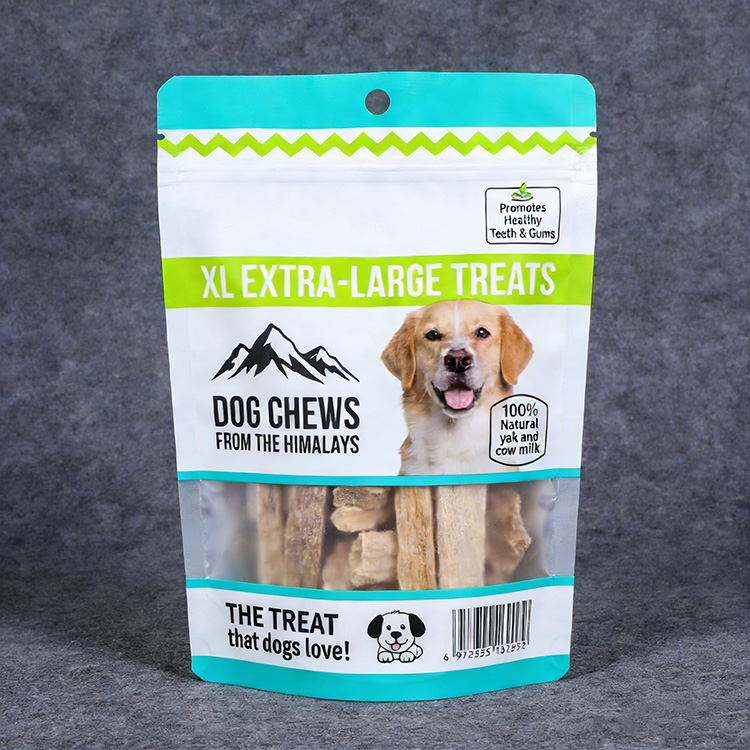
Pet food packaging is more than just a container; it's a "preservative film" for product quality and the primary medium for communication between the brand and consumers. In today's increasingly sophisticated pet industry, the choice of packaging materials directly determines the food's shelf life, nutrient retention, and the user's feeding experience.
Depending on the product form (dry food, wet food, snacks), the choice of packaging materials varies greatly:
1. PET / AL / PE (Aluminum Foil Composite Material)
This is currently the most commonly used structure for high-end pet food.
Application Advantages:
Ultimate Barrier: The aluminum foil layer (AL) has excellent light-blocking, oxygen-barrier, and moisture-proof properties, effectively preventing fat oxidation and rancidity.
Why Choose Multi-Layer Composite Packaging?
"Quality Protection, Nutritional Storage." Pet food is typically high in fat and protein, making it highly susceptible to environmental influences. Through scientific material formulation, our packaging achieves:
Zero Nutrient Loss: Protects the activity of vitamins and probiotics.
Zero Quality Risk: Prevents mold, bacterial growth, and oil leakage.
Brand Longevity: Perfect printing quality ensures your brand story resonates deeply.
Flavor Locking: It can lock in the natural aroma of meat ingredients to a great extent, ensuring that your pet can still enjoy the same delicious taste as when first opened, even at the end of the shelf life.
Premium Texture: The bag is sturdy, with matte or glossy finishes, giving it a strong brand image.
Commonly used in mid-to-high-end pet food or large packaging, it is a balanced choice that considers cost and performance.
Application Advantages:
Good Physical Strength: Excellent puncture and drop resistance, suitable for large packages weighing 10kg-15kg.
Metallic Luster: The metallized layer (VMPET) gives the packaging a good reflective effect, enhancing the product's visual appeal on the shelf.
Moisture Protection: Compared to ordinary plastics, its ability to block moisture is significantly improved.
Commonly used for fresh meat, freeze-dried snacks, or packaging requiring vacuum sealing.
Application Advantages:
Strong and Puncture-Resistant: Nylon material has excellent flexibility, effectively preventing sharp bone fragments or hard dry food particles from puncturing the packaging and causing air leakage.
Low Temperature Resistance: Will not crack in frozen environments, ideal for fresh food packaging.
New Industry Trend: Green packaging that responds to environmental protection and sustainable development.
Application Advantages:
Environmental Benefits: The all-PE structure allows for 100% recyclability, enhancing the brand's image among environmental advocates.
Lightweight: Reduces carbon footprint while maintaining basic barrier properties.
Beyond the material itself, the functional details of the packaging are key to increasing user loyalty:
Sliding Zipper/Velcro: Solves the sealing problem after multiple openings and closings for large pet food bags, effectively preventing moisture and mold.
One-Way Vent Valve: Releases residual gas inside the bag, preventing bursting during stacking and preventing outside air from entering.
Wide Handle Design: Ergonomically designed, making it easier and less strenuous for consumers to carry heavy food bags.
"Quality Protection, Nutritional Storage." Pet food is typically high in fat and protein, making it highly susceptible to environmental influences. Through scientific material formulation, our packaging achieves:
Zero Nutrient Loss: Protects the activity of vitamins and probiotics.
Zero Quality Risk: Prevents mold, bacterial growth, and oil leakage.
Brand Longevity: Perfect printing quality ensures your brand story resonates deeply.
Pet food packaging is more than just a container; it's a "preservative film" for product quality and the primary medium for communication between the brand and consumers. In today's increasingly sophisticated pet industry, the choice of packaging materials directly determines the food's shelf life, nutrient retention, and the user's feeding experience.
Depending on the product form (dry food, wet food, snacks), the choice of packaging materials varies greatly:
1. PET / AL / PE (Aluminum Foil Composite Material)
This is currently the most commonly used structure for high-end pet food.
Application Advantages:
Ultimate Barrier: The aluminum foil layer (AL) has excellent light-blocking, oxygen-barrier, and moisture-proof properties, effectively preventing fat oxidation and rancidity.
Why Choose Multi-Layer Composite Packaging?
"Quality Protection, Nutritional Storage." Pet food is typically high in fat and protein, making it highly susceptible to environmental influences. Through scientific material formulation, our packaging achieves:
Zero Nutrient Loss: Protects the activity of vitamins and probiotics.
Zero Quality Risk: Prevents mold, bacterial growth, and oil leakage.
Brand Longevity: Perfect printing quality ensures your brand story resonates deeply.
Flavor Locking: It can lock in the natural aroma of meat ingredients to a great extent, ensuring that your pet can still enjoy the same delicious taste as when first opened, even at the end of the shelf life.
Premium Texture: The bag is sturdy, with matte or glossy finishes, giving it a strong brand image.
Commonly used in mid-to-high-end pet food or large packaging, it is a balanced choice that considers cost and performance.
Application Advantages:
Good Physical Strength: Excellent puncture and drop resistance, suitable for large packages weighing 10kg-15kg.
Metallic Luster: The metallized layer (VMPET) gives the packaging a good reflective effect, enhancing the product's visual appeal on the shelf.
Moisture Protection: Compared to ordinary plastics, its ability to block moisture is significantly improved.
Commonly used for fresh meat, freeze-dried snacks, or packaging requiring vacuum sealing.
Application Advantages:
Strong and Puncture-Resistant: Nylon material has excellent flexibility, effectively preventing sharp bone fragments or hard dry food particles from puncturing the packaging and causing air leakage.
Low Temperature Resistance: Will not crack in frozen environments, ideal for fresh food packaging.
New Industry Trend: Green packaging that responds to environmental protection and sustainable development.
Application Advantages:
Environmental Benefits: The all-PE structure allows for 100% recyclability, enhancing the brand's image among environmental advocates.
Lightweight: Reduces carbon footprint while maintaining basic barrier properties.
Beyond the material itself, the functional details of the packaging are key to increasing user loyalty:
Sliding Zipper/Velcro: Solves the sealing problem after multiple openings and closings for large pet food bags, effectively preventing moisture and mold.
One-Way Vent Valve: Releases residual gas inside the bag, preventing bursting during stacking and preventing outside air from entering.
Wide Handle Design: Ergonomically designed, making it easier and less strenuous for consumers to carry heavy food bags.
"Quality Protection, Nutritional Storage." Pet food is typically high in fat and protein, making it highly susceptible to environmental influences. Through scientific material formulation, our packaging achieves:
Zero Nutrient Loss: Protects the activity of vitamins and probiotics.
Zero Quality Risk: Prevents mold, bacterial growth, and oil leakage.
Brand Longevity: Perfect printing quality ensures your brand story resonates deeply.


