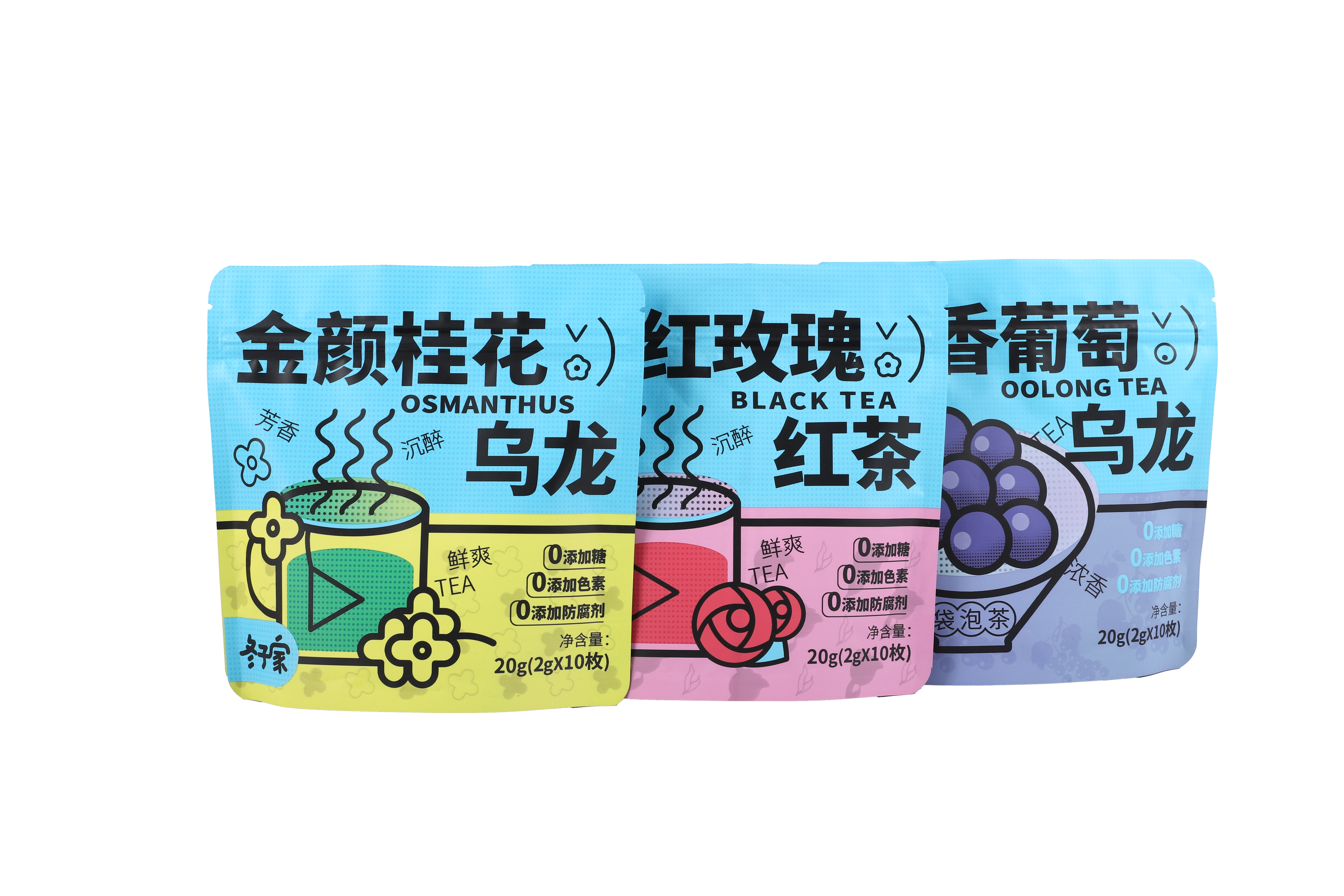
Author: Site Editor Publish Time: 26-06-2026 Origin: Site
In a saturated retail and e-commerce beverage market, outer box designs and individual sachet formats dictate initial perceived value. Beverage brands fight aggressively for consumer attention across crowded grocery aisles and endless digital storefronts. Generic wrapping commoditizes high-quality blends, directly leading to lower profit margins and poor shelf visibility. Exceptional ingredients lose their premium appeal when they sit inside unremarkable wrappers. Buyers instinctively equate cheap exteriors to inferior flavors.
We provide a structured evaluation framework for brands looking to upgrade their visual assets to improve market positioning. You will learn how to balance modern sustainability demands against strict freshness requirements. We also detail the operational realities of structural design. Finally, we explain how to select the right custom printing solutions to elevate your next product launch.
Brands must move beyond viewing wrapping as mere containment. Successful companies treat every layer as active brand storytelling. You establish stronger market positioning when you upgrade these elements thoughtfully. You should measure success across three distinct operational pillars.
The unboxing experience dictates customer retention. The tactile feel of the outer box sets the initial mood. A sturdy carton implies luxury. Next, the inner envelope must tear cleanly. Finally, the actual Tea Bag must look pristine. These sensory touchpoints drive word-of-mouth recommendations heavily. Every physical interaction reinforces your brand promise.
However, visual presentation introduces structural risks. Brands frequently debate visual transparency versus UV protection. Clear window panels showcase beautiful whole-leaf blends perfectly. They allow buyers to inspect botanical ingredients before purchasing. Yet, light degradation destroys delicate volatile oils quickly. UV exposure dulls vibrant leaf colors rapidly. You must weigh aesthetic appeal against essential shelf-life protection. Opaque materials preserve flavor profiles much better than transparent windows.
Selecting the right structural format defines your product tier. Different extraction profiles suit different market segments. You must align your bag type directly to your target demographic.
Manufacturers typically use standard flat formats for high-volume lines. These suit mass-market or value-driven SKUs perfectly. They run efficiently on fast packaging machinery. However, they carry distinct limitations. Flat designs restrict whole-leaf expansion during steeping. They offer lower perceived value overall. Extraction rates remain fairly basic. You should reserve flat formats for finely ground dust or fannings.
Premium brands rely heavily on pyramid shapes. These structures suit whole-leaf teas, botanicals, and specialty infusions beautifully. The three-dimensional shape offers superior visual presentation. The extra interior volume allows large leaves to expand fully. Better water flow mimics the traditional loose-leaf experience. Consumers enjoy gourmet extraction quality inside a highly convenient format.
Distribution channels dictate your secondary packaging choices. Hospitality and cafe environments require individually wrapped envelopes. Standalone branding is mandatory in food service. Consumers often take individual envelopes home. Conversely, Direct-to-Consumer (D2C) brands often prefer bulk pouches. Bulk formats embrace environmental minimalism. They reduce unnecessary material waste significantly. You must evaluate these trade-offs based on where customers consume your beverage.
| Format Type | Ideal Brand Tier | Key Benefit | Primary Limitation |
|---|---|---|---|
| Flat Filter | Value / Mass Market | High-speed production efficiency | Restricts leaf expansion |
| Pyramid Mesh | Premium / Specialty | Superior water flow & visual appeal | Higher per-unit manufacturing cost |
| Individual Envelope | Hospitality / Retail | Maintains strict hygiene & freshness | Generates more packaging waste |
| Bulk Pouch | D2C / Eco-Friendly | Minimal environmental impact | Faster oxidation once opened |
Strategic graphic design separates successful labels from stagnant inventory. You must treat every printable surface as valuable marketing real estate. E-commerce platforms and retail shelves demand aggressive visual differentiation.
You maximize real estate by utilizing individual envelopes effectively. Do not leave them blank. Outer boxes and inner wrappers serve as prime educational space. You can print detailed steeping instructions directly on the sachet. You can share compelling origin stories. You can highlight nuanced tasting notes. Engaging copy turns a simple drink into a curated experience. Your printed tea packaging essentially acts as a silent salesperson.
Cautious buyers judge quality through physical touch. Print finishes signal premium positioning instantly. Incorporate these tactile elements to boost perceived value:
Maintaining strict color consistency across multiple substrates proves difficult. Your Pantone colors must match perfectly everywhere. The cardboard outer carton must align perfectly with the foil inner envelope. Inconsistent coloring makes a brand look cheap. You must demand precise physical proofs from your printer.
Furthermore, digital storefronts require distinct design strategies. High-contrast colors photograph exceedingly well. Bold typography remains legible on small mobile screens. You must optimize designs for social media scrolling. If your box looks dull on Instagram, online sales will suffer. Always test your graphic renders on mobile devices before authorizing production.
Aesthetic appeal means nothing if the ingredients degrade rapidly. Material selection forms the backbone of product integrity. Brands face intense pressure to balance freshness against environmental responsibility.
You must understand oxygen transfer rates (OTR) and moisture vapor transfer rates (MVTR). High OTR allows oxygen to penetrate the wrapper. Oxygen destroys volatile flavor oils quickly. High MVTR lets humidity ruin crisp leaves. Moisture causes premature spoilage. Regardless of how stunning the artwork looks, weak barriers destroy the product. You must select substrates offering robust protection.
Sustainability presents a complex spectrum of choices. The industry lacks a perfect, universally applicable solution.
| Material Category | Barrier Performance | Environmental Impact | Best Use Case |
|---|---|---|---|
| Traditional Plastics/Foils | Maximum protection (Low OTR/MVTR) | Zero eco-appeal. Landfill bound. | Long retail shelf life (2+ years). |
| Industrial Compostable (PLA) | Moderate protection. | High brand appeal. Requires industrial facilities. | Quick-turnaround D2C models. |
| Home Compostable | Weakest barrier protection. | Maximum eco-appeal. Biodegrades naturally. | Hyper-local distribution. |
Traditional plastics and multi-layer foils offer incredible freshness. They block light, oxygen, and moisture completely. However, they carry zero eco-appeal. Conversely, Polylactic Acid (PLA) offers high brand appeal. PLA derives from renewable resources like corn starch. Yet, compostable films present distinct shelf-life limitations. They break down faster naturally. You must evaluate whether your supply chain can handle shorter expiration dates. Furthermore, you must clarify industrial versus home compostable certifications clearly to consumers.
Regulatory compliance is strictly non-negotiable. You must verify that all materials meet FDA or EFSA food-contact safety standards. This includes the filter paper, strings, tags, and sealing glues. Some overseas suppliers use uncertified industrial adhesives. These chemicals can migrate into the hot water. Always demand up-to-date compliance certificates. Avoid suppliers who cannot provide documented safety reports.
Executing a redesign involves significant financial risk. Procurement teams must navigate complex manufacturing constraints carefully. Supplier vetting dictates the success of your entire rollout.
Minimum Order Quantities (MOQs) dictate your capital allocation heavily. Custom rotogravure printing requires massive volume commitments. High MOQs tie up cash flow uncomfortably. They also increase dead-stock inventory risks if a flavor fails. You can mitigate this through gang-running. Gang-running involves printing multiple SKUs on the same master roll. This strategy lowers individual unit costs significantly. Alternatively, digital printing accommodates low MOQs effortlessly, though at a higher per-unit price.
You must factor manufacturing lead times into your launch schedule accurately. Plate-making and digital proofing often take weeks. Ocean freight shipping adds several months to the timeline. Supply chain resilience requires flexibility. Many smart brands utilize hybrid sourcing. They purchase unprinted primary sachets overseas to save money. They then procure localized, short-run secondary packaging closer to home. This hybrid approach balances overall cost against rapid speed-to-market.
Never bypass rigorous structural testing. You must prototype thoroughly before approving mass production.
If you rush the prototyping phase, you risk catastrophic product recalls. Physical validation protects your brand reputation.
Effective retail presentation perfectly intersects structural integrity, aesthetic differentiation, and material compliance. Upgrading your visual assets is a mandatory step for brands seeking premium market positioning. Generic wrappers simply cannot command higher retail prices or build lasting consumer loyalty.
To implement these upgrades successfully, focus on these immediate next steps:
A: MOQs vary drastically by print technology. Digital printing accommodates low runs, often starting around 1,000 to 5,000 units. It costs more per piece but minimizes inventory risk. Traditional rotogravure or flexographic printing typically demands 30,000 to 50,000 units per design. These traditional methods require custom metal plates but deliver massive unit-cost savings at scale.
A: No, it depends entirely on your tea grade. Fine dust or fannings perform perfectly well in standard flat bags. However, whole leaves, large botanicals, and real fruit pieces require the extra spatial volume of a pyramid shape. The 3D structure allows large ingredients to expand and extract properly.
A: You must explicitly request third-party migration test reports from your packaging manufacturer. These documents prove that harmful chemicals will not bleed through the envelope into the consumable product. Always specify the use of certified low-migration, food-grade inks in your initial supplier contracts.
A: Yes, but it requires careful sourcing. Standard heat-sealed bags often contain polypropylene micro-plastics to melt the edges together. To be 100% plastic-free, you must utilize PLA (corn-starch based) materials or natural cotton strings. Additionally, the manufacturing process must rely on sonic welding or folding techniques rather than traditional plastic-based heat sealing.