Author: Site Editor Publish Time: 15-06-2026 Origin: Site
Shifting to flexible packaging involves significant operational and branding stakes for your business. Choosing the wrong packaging format can easily lead to compromised shelf life, inefficient logistics, or brand misalignment on the retail shelf. A strategic decision-stage evaluation requires moving far beyond simple visual aesthetics. You must carefully assess critical technical factors to guarantee product integrity.
Packaging failures often stem from ignored details. You need to scrutinize barrier properties, accurate fill volumes, supply chain scalability, and strict material compliance. Without a rigorous approach to these elements, you risk product degradation and frustrated end-users. We know how overwhelming these packaging transitions feel.
This guide breaks down the technical and commercial criteria you need for a successful launch. We will show you exactly how to confidently source and specify the ideal flexible packaging for your specific product line. You will learn to navigate material choices, sizing calculations, and supplier negotiations like an expert.
Replacing rigid containers with flexible alternatives fundamentally changes your operational logistics. We must compare the warehousing footprint and freight weight of flexible packages against rigid containers like glass or plastic jars. Rigid jars ship full of air, eating up valuable pallet space and maximizing shipping costs. Unfilled flexible packages store completely flat. You can fit thousands of them into a single corrugated box. This spatial efficiency slashes inbound freight weights and drastically reduces your warehouse footprint.
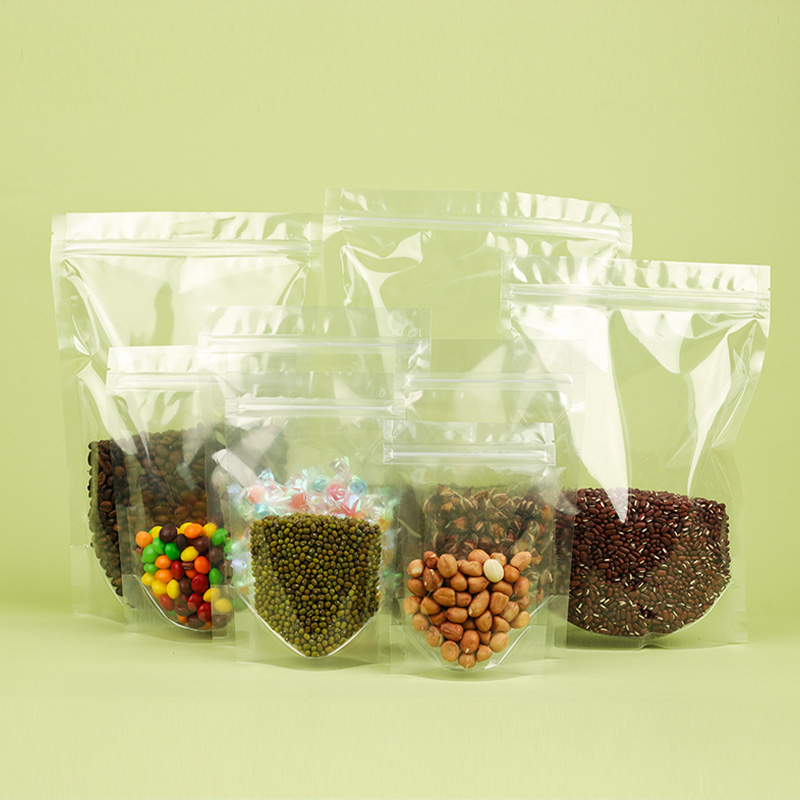
Shelf impact directly influences consumer purchasing decisions. You must evaluate the bottom gusset structure to maximize merchandising effectiveness. The gusset determines how well the package stands under different fill weights. Common styles include the K-Seal, Doyen, and Plow Bottom. The Doyen seal folds into a U-shape, providing excellent stability for lightweight items under one pound. The K-Seal features diagonal seals at the corners, making it perfect for heavier volumes up to five pounds. Plow Bottoms lack a bottom seal entirely, relying on the product weight to flatten the base. They work flawlessly for heavy bulk goods.
Filling line compatibility determines your production efficiency. You must assess whether your current co-packing equipment handles pre-made formats or requires rollstock film. Pre-made Stand up Pouches load seamlessly onto automatic rotary pouch packers. However, form-fill-seal (FFS) machines demand continuous rollstock. Check your machinery capabilities before finalizing any packaging format. Ignoring this step often leads to expensive equipment retrofits.
Protecting your product requires a precise understanding of material science. The physical environment constantly threatens product freshness through oxygen, moisture, and ultraviolet light exposure. You must build a defensive film structure tailored exactly to your product.
Understanding Oxygen Transmission Rates (OTR) and Moisture Vapor Transmission Rates (MVTR) is vital. These metrics define how much gas or liquid passes through the film over 24 hours. You must match the shelf-life demands of your food, supplements, or chemicals to the right film structure. A roasted coffee bean needs high oxygen barriers to prevent staling. Beef jerky demands absolute moisture control to avoid mold.
Let us look at common barrier layers:
Puncture resistance dictates structural integrity. You must evaluate material thickness in mils based on your product shape. Powders or fine liquids perform well in standard 3.5 to 4.0 mil structures. Sharp-edged items like granola, hardware, or dried pasta require 5.0 mils or thicker. Thicker films resist the internal abrasion caused by transit vibration.
| Material Structure | OTR/MVTR Level | Ideal Product Applications |
|---|---|---|
| Standard PET/PE | Low Barrier | Short shelf-life goods, non-food items, apparel |
| PET/VMPET/PE | Medium-High Barrier | Snacks, baked goods, protein powders, pet treats |
| PET/ALU/PE | Maximum Barrier | Coffee, sensitive supplements, chemicals, liquids |
| PET/EVOH/PE (Clear) | High Oxygen Barrier | Premium jerky, visible snacks, fresh foods |
Safety regulations protect both your consumers and your brand reputation. Identifying requirements for FDA-approved food-grade materials is non-negotiable. Your supplier must guarantee regulatory compliance across all film layers. Ensure the internal sealing layer remains BPA-free, odor-free, and migration-compliant. Linear Low-Density Polyethylene (LLDPE) serves as the industry standard for this inner food-contact layer. It creates strong heat seals without leaching chemicals into your product.
Getting the physical dimensions wrong ranks among the most expensive packaging mistakes. Brands frequently assume liquid volume directly translates to dry volume. This assumption causes disastrous manufacturing delays.
Product density completely redefines volume requirements. A standard "16 oz pouch" holds exactly 16 fluid ounces of water. However, it only holds about 8 ounces of whole bean coffee. Coffee beans trap significant air between them, drastically reducing density. Heavy powders like whey protein settle compactly, while light snacks like popcorn take up massive space. You cannot rely on liquid ounce labels when packing dry goods.
Calculating the correct dimensions requires a practical methodology. Follow these structured steps to determine your ideal size:
The critical necessity of requesting sample pouches cannot be overstated. You must perform physical fill tests before finalizing your dimensions. Order unprinted sizing kits from your supplier. Fill them with your actual product using a kitchen scale. Zip them closed and handle them roughly to simulate shipping. This real-world validation prevents ordering 50,000 units that simply do not fit your product.
A smart design strategy merges aesthetic appeal with mechanical performance. Beautiful graphics capture attention, but user experience secures repeat purchases. Every feature you add must solve a specific consumer problem.
Choosing the correct closure mechanism defines the daily user experience. Press-to-close zippers work perfectly for dry goods, snacks, and pet food. They keep moisture out after the initial opening. Regulated products, such as pharmaceuticals or CBD edibles, demand child-resistant (CR) zippers. These specialized closures require two-handed dexterity to open, satisfying legal safety mandates. Spout closures transform flexible packaging into rigid bottle replacements, ideal for beverages, purees, or automotive fluids.
Small functional additions yield massive usability improvements. custom stand up pouches often feature specialized conveniences. Consider these essential upgrades:
Your printing method heavily influences brand perception and upfront costs. You must evaluate digital versus plate printing based on your SKU count. Digital printing requires no setup plates. It allows unlimited colors and seamless changes between multiple SKUs. Plate printing (flexographic or rotogravure) requires expensive metal plates for each color. However, it delivers unmatched clarity and the lowest per-unit cost for massive runs.
Surface finishes communicate brand positioning instantly. Gloss finishes pop under retail lighting and resist scuffing. Matte finishes convey organic, premium, or artisanal qualities. Soft-touch finishes provide a luxurious, velvet-like tactile experience. Choose the finish that aligns perfectly with your target demographic.
Brands face immense pressure to adopt environmentally friendly materials. However, matching sustainability goals with strict barrier requirements involves difficult engineering compromises. Transparency matters more than greenwashing.
You must acknowledge the structural limitations of eco-friendly packaging. Traditional multi-layer barrier pouches use distinct plastics and metals fused together (e.g., PET, Aluminum, LLDPE). Recycling facilities cannot separate these bonded layers. Consequently, standard high-barrier films usually end up in landfills. Solving this problem requires switching to alternative materials, each carrying distinct operational trade-offs.
| Material Category | Key Benefit | Functional Trade-off |
|---|---|---|
| Recyclable (PE/PE) | Easily recycled via store drop-off | Lower oxygen barrier; slightly cloudy appearance |
| PCR (Post-Consumer Recycled) | Reduces virgin plastic consumption | Requires thick virgin inner layer for food safety |
| Compostable (PLA/Kraft) | Breaks down in industrial facilities | Very short shelf life (6-12 months); moisture sensitive |
Let us examine the dominant sustainable formats. Recyclable PE/PE structures use a single material type (mono-material). This allows them to qualify for Store Drop-Off recycling programs. However, switching to mono-materials often requires sacrificing some barrier performance. They simply cannot match the oxygen blocking power of aluminum foil.
Post-Consumer Recycled (PCR) materials incorporate plastic waste diverted from landfills. Using PCR heavily reduces your reliance on virgin plastic. But incorporating PCR into food packaging carries strict safety caveats. You must rigorously test PCR films for food-contact compliance. Manufacturers typically isolate the PCR layer in the middle of the film, using virgin LLDPE on the inner seal to prevent contamination.
Compostable packaging sounds ideal, but it poses significant logistical challenges. You must validate industrial versus home compostable certifications. Most compostable films require the intense heat of an industrial facility to break down. Furthermore, compostable films inherently degrade over time. They offer a significantly shorter shelf life, often failing after six to twelve months in humid environments.
Finding a manufacturing partner is just as critical as engineering the film. A reliable supplier acts as an extension of your operations team. You must evaluate them on scale, speed, and quality assurance.
Capital management during packaging rollouts requires close attention to Minimum Order Quantities (MOQs). You must differentiate between short-run digital suppliers and traditional high-volume manufacturers. Short-run digital suppliers offer low MOQs, sometimes as few as 500 units. This flexibility costs more per unit but prevents massive inventory tie-ups. Traditional flexographic or rotogravure manufacturers demand high MOQs, often starting at 10,000 units. They offer the lowest unit cost, making them essential as you scale into mass retail.
Production timelines constantly threaten product launch dates. Factoring in domestic versus overseas manufacturing schedules prevents empty shelves. Domestic suppliers generally ship within three to five weeks. Overseas manufacturers offer better pricing but add substantial transit time. You must calculate proofing delays, cylinder plate-making times, ocean freight timelines, and potential customs holds. Overseas orders often require a ten-to-fourteen-week lead time.
Never assume packaging quality; demand documented proof. Watch out for these supplier red flags:
Take strict next steps before signing a contract. Request a blank sizing kit to test your product volume. Ask for a printed material sample pack to evaluate their print clarity and finish quality. Always validate these physical samples before committing thousands of dollars to a pilot run.
Choosing the right flexible packaging format is a calculated engineering process, not just graphic design. You must align your product density with accurate physical dimensions to avoid manufacturing bottlenecks. Securing the proper barrier layers guarantees your product arrives fresh and safe. Finally, navigating supply chain realities like MOQs and lead times ensures a profitable launch.
Prioritize manufacturing partners who offer transparent material specifications and robust structural prototypes. Take advantage of unprinted sizing kits. Always validate your customized designs with physical fill and seal tests on your actual production line before scaling production.
A: The standard thickness ranges between 4 to 6 mils. The ideal thickness depends entirely on product weight and puncture risk. Powders do well with 4 mils, while heavy items with sharp edges require 5 mils or thicker.
A: No. Packing hot liquids requires specific retort-grade materials. Standard laminations cannot handle high temperatures and will quickly delaminate or melt, causing catastrophic leaks.
A: You must leave a standard 1 to 1.5 inches of empty space required above the zipper or fill line. Commercial sealers need this grip area to apply heat without melting the zipper profile.
A: It depends on the printing technology. Digital print MOQs are very low, often between 500 and 1,000 units. Traditional plate printing demands much higher MOQs, typically starting at 5,000 to 10,000 units.