Author: Site Editor Publish Time: 07-06-2026 Origin: Site
Choosing the right wrapper, container, or pouch involves balancing shelf-life extension, machinery compatibility, and unit economics. The operational stakes remain undeniably high for modern consumer packaged goods brands. Properly securing items protects your brand reputation and preserves precious bottom-line revenue. Misaligned material choices routinely lead to product spoilage, highly publicized recalls, or massive inefficiencies on the packing line. Facilities frequently lose substantial profit margins when they underestimate how environmental factors compromise goods in transit. This article provides a structured, evidence-based evaluation framework to help you effectively shortlist and select the correct formats. You will learn how to analyze critical barrier necessities, compare physical material trade-offs, and ensure strict regulatory compliance. We will explore practical strategies to optimize your entire production line and secure resilient supply chains.
Determining the best Food Packaging involves precise calculations of your product's atmospheric sensitivities. We measure these vulnerabilities using two primary metrics. Moisture Vapor Transmission Rate (MVTR) tracks how quickly water vapor passes through a material. Oxygen Transmission Rate (OTR) measures oxygen permeation. You must define these baseline numbers before selecting any physical material.
Assess your specific product vulnerability carefully. Fats and oils risk rapid oxidation when exposed to oxygen. Dry goods require aggressive moisture barriers to prevent clumping and staleness. Conversely, baked goods need breathable layers to prevent trapped condensation and subsequent mold growth. You will fail to achieve your target shelf-life if you ignore these elemental transmission rates.
Your items endure severe environments throughout the supply chain. You must evaluate these conditions during the design phase. Consider whether your product undergoes blast freezing, hot-fill pasteurization, or consumer microwaving. High-pressure processing (HPP) introduces extreme stress. Seals must routinely withstand pressures exceeding 87,000 psi without bursting.
Physical stress tolerances also involve puncture resistance. Jagged items easily pierce inadequate films. Bone-in meats, hard dried pastas, and sharp crusts demand heavy-duty polymer layers. A minor pinhole leak destroys the internal atmosphere. This quickly leads to accelerated spoilage and retailer rejection.
Certain ingredients aggressively attack their containers over time. You must address the necessity for protective inner linings. Highly acidic sauces eat through basic aluminum foils. Strong essential oils degrade poorly specified plastic layers. High-fat products weaken standard sealants. You should always run chemical compatibility tests. Proper inert polymer linings prevent product degradation and preserve structural integrity.
Flexible plastics dominate modern supermarket shelves. They offer exceptional performance parameters. Polyethylene (PE) provides excellent moisture control and strong heat seals. Polyethylene Terephthalate (PET) delivers incredible strength and prints beautifully. Polypropylene (PP) offers high heat resistance for hot-fill applications.
Many brands struggle to recycle mixed-plastic laminates. You usually need specialized drop-off programs to process them properly.
Glass jars and metal cans represent traditional, highly reliable formats. They provide an absolute barrier against oxygen, moisture, and light. Consumers often associate glass containers heavily with premium, artisanal qualities. Metal offers robust durability for long-term pantry storage.
Brands face immense pressure to adopt greener solutions. You must conduct a transparent reality check on compostable and post-consumer recycled (PCR) options. Polylactic acid (PLA) offers a plant-based alternative. However, PLA usually requires industrial composting facilities to break down properly.
Consider the trade-offs carefully. Sustainable materials often feature significantly shorter shelf-lives. They frequently require higher minimum order quantities (MOQs) during pilot runs. Assess whether your supply chain actively matches the material's degradation profile. Shipping a 12-month shelf-life product in a film designed to degrade in six months guarantees failure.
| Material Type | Oxygen Barrier | Moisture Barrier | Primary Disadvantage |
|---|---|---|---|
| Flexible Plastics (Multi-layer) | High to Very High | High to Very High | Difficult to recycle |
| Glass Jars | Absolute | Absolute | Heavy and fragile |
| Metal Cans | Absolute | Absolute | Prone to denting |
| Bio-based (PLA) | Low to Medium | Low to Medium | Short viable shelf-life |
Rigid designs serve specific structural purposes. They remain best for vertical stackability and extreme physical protection. Liquids requiring structural integrity heavily depend on rigid plastic or glass. A tub protects fragile cookies much better than a loose wrapper.
However, you must consider serious logistical constraints. Rigid containers require massive warehouse space. You end up paying to store and ship empty air before filling them. A single truckload of empty glass jars yields drastically fewer filled units than a truckload of unformed film.
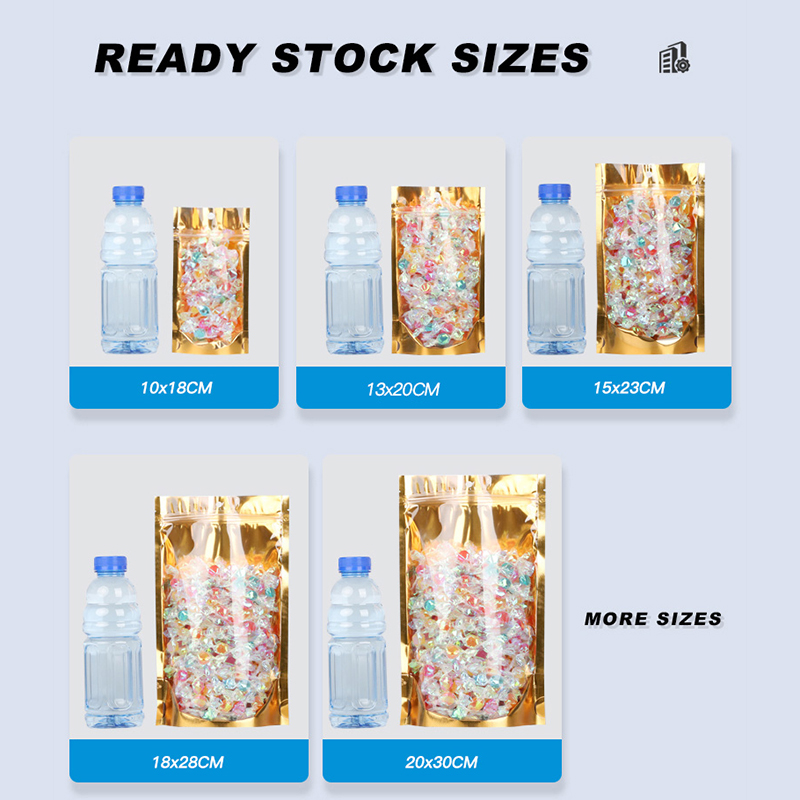
Transitioning to custom food packaging bags provides remarkable flexibility. These formats suit a wide array of goods. They remain ideal for salty snacks, frozen vegetables, specialty coffee, and dry baking mixes. The flexible industry has advanced significantly over the last decade.
Feature evaluation becomes critical here. You can incorporate highly functional closures directly into your designs. Press-to-close zippers allow consumers to reseal snacks easily. Tear notches ensure clean, frustration-free opening. One-way degassing valves let freshly roasted coffee release carbon dioxide without letting stale air inside.
The return on investment often appears quickly. You achieve significantly lower warehousing demands. Flexible materials vastly reduce your inbound freight footprint. You can store millions of unformed bags in the same space required for just a few thousand rigid jars.
| Format Category | Best Suited Products | Storage Footprint | Key Features Addable |
|---|---|---|---|
| Stand-up Pouches | Coffee, Granola, Jerky | Extremely Low | Zippers, Tear Notches, Valves |
| Rigid Glass Jars | Jams, Pickles, Sauces | Very High | Tamper-Evident Lids |
| Thermoformed Trays | Fresh Meats, Produce | Medium | Modified Atmosphere (MAP) |
| Sachets / Stick Packs | Drink Mixes, Condiments | Extremely Low | Easy-Tear Film |
Safety compliance represents a non-negotiable baseline. You must ensure all contact layers comply fully with FDA standards. Regional equivalents apply if you export goods globally. Direct food contact materials require specific chemical clearances. You cannot simply use any industrial-grade plastic for edible goods.
Hazardous chemicals can leach into consumables under stress. You must actively verify your chosen materials. Migration testing ensures inks, curing adhesives, and base polymers remain stable. Laboratories test these materials under expected temperature ranges. A retort pouch heated to 121°C requires entirely different adhesives than a bag destined for the freezer aisle.
Your supplier's operational hygiene matters immensely. Always source from suppliers maintaining recognized Global Food Safety Initiative (GFSI) standards. Prominent certifications include SQF (Safe Quality Food) and BRCGS. These rigorous frameworks guarantee the supplier manufactures your wrappers in clean, pest-controlled, and highly audited environments.
Recalls happen despite our best preventative efforts. You must ensure your partner offers strict batch and lot traceability. If a contamination event occurs, you need to isolate the affected units immediately. Forward and backward traceability programs prove essential for recall readiness and brand survival.
Even the most beautiful design fails if it jams your production line. You must meticulously evaluate material behavior on existing equipment. Moving from rigid jars to flexible webs changes everything. We evaluate several physical dynamics during trial runs.
Material availability dictates your production schedule. You must assess supplier lead times critically. Relying solely on overseas suppliers introduces distinct transit risks. Port strikes, container shortages, and customs delays can halt your factory.
Many successful brands balance domestic and international sourcing. Consider setting up vendor-managed inventory (VMI) programs. Under VMI, the supplier monitors your usage and replenishes stock automatically. This approach prevents sudden stock-outs and keeps your lines running smoothly without excessive safety stock.
Finding the right container remains a highly calculated compromise. You must carefully balance robust product protection, precise machinery capabilities, and realistic unit economics. Ignoring barrier requirements invites rapid spoilage. Ignoring machinery constraints causes devastating production bottlenecks. Success requires methodical testing and a clear understanding of your physical supply chain.
Take actionable steps before committing to commercial volumes. First, request detailed Technical Data Sheets (TDS) from prospective suppliers. Second, order physical prototypes to verify aesthetic and structural expectations. Finally, run a limited machine trial on your actual equipment. Small initial tests prevent catastrophic failures during high-speed, high-volume production runs.
A: MOQs vary heavily by printing method (digital vs. flexographic) and format, typically ranging from 1,000 units for digital to 10,000+ for flexo.
A: Request sample rolls or pouches from the supplier and conduct accelerated shelf-life testing, seal integrity tests, and migration analyses in a lab environment.
A: Yes, if utilizing mono-material structures (like 100% PE), though these may lack the high oxygen barriers of multi-layer laminates. Store drop-off recycling is typically required.
A: Food-grade means the material itself is approved for food contact. Food-safe means the finalized package, in its specific use case (temperature, food type), will not create a hazard.