

In recent years, Stand Up Pouches have emerged as a leading packaging solution across various industries. Their distinctive design, featuring a stable base that allows them to stand upright, provides a practical and attractive option for a wide range of products. Stand Up Pouches are commonly used for packaging food, beverages, cosmetics, and household products, offering superior protection against moisture, light, and air, which helps preserve the quality and freshness of the contents. As consumer demand for more sustainable and cost-effective packaging grows, Stand Up Pouches have become even more popular. This demand is further fueled by their ability to be easily customized with branding and features like resealable zippers, making them a highly versatile choice in the packaging industry. The ongoing shift toward eco-friendly materials and recyclable options is driving innovation, making Stand Up Pouches an increasingly essential part of the modern packaging landscape.
The foundation of Stand Up Pouches lies in the choice of plastic materials. The most commonly used plastics include:
Polyethylene (PE): Widely used for its flexibility, moisture resistance, and low cost, PE is often found in mono-material pouches and provides a good balance of protection for many products.
Polypropylene (PP): Known for its strength and heat resistance, PP is commonly used in pouches that need higher temperature durability or added strength.
Polyester (PET): Often used for its excellent barrier properties against oxygen and moisture, PET is typically used in multi-layer pouches for products that require long shelf lives, such as snacks or dry foods.
Each type of plastic provides specific benefits, making it essential to select the right one based on the product's needs and the pouch’s purpose.
To enhance the protective qualities of Stand Up Pouches, laminates and foils are often incorporated:
Laminates: These are created by fusing multiple layers of materials, such as plastics, paper, and foil, to create a strong, flexible pouch. Laminates provide a combination of strength, moisture resistance, and barrier protection.
Aluminum Foil: Foil is used to provide excellent barrier properties against light, oxygen, and moisture, making it ideal for preserving the freshness of food products, such as coffee or dry snacks. The foil layer helps extend shelf life and maintain product quality.
The use of laminates and foils ensures that Stand Up Pouches are both durable and capable of protecting sensitive contents from environmental factors, which is critical for long-lasting products.
In addition to the primary materials, additives play an important role in enhancing the functionality and user experience of Stand Up Pouches:
Zippers: Resealable zippers are commonly added to Stand Up Pouches, allowing consumers to easily open and close the pouch while maintaining freshness. These are particularly useful for products that require repeated use, such as snacks or pet food.
Spouts: For liquid products, such as beverages or cleaning solutions, spouts are incorporated into the pouch design. They provide a convenient pouring feature and help avoid spills, making the product more consumer-friendly.
Gussets: Gussets are used to create a stable base that allows the pouch to stand upright. These side or bottom pleats provide additional volume, increasing the capacity of the pouch and improving its ability to stand on store shelves for better display.
These additives not only improve the functionality of Stand Up Pouches but also enhance consumer convenience, making them more attractive in competitive retail environments.
The shape of a Stand Up Pouch is key to ensuring stability on shelves. Gussets, or pleated folds, are added to the sides or bottom to create a strong base:
Bottom Gusset: Expands horizontally to help the pouch stand upright, particularly for larger products.
Side Gussets: Increase the pouch’s volume, providing flexibility and better product containment.
Gusset design maximizes space while ensuring the pouch remains stable and sturdy.
Custom features can improve functionality and consumer appeal:
Windows: Transparent sections allow customers to view the product, boosting trust and visibility.
Handles: Useful for larger or heavier products, making the pouch easier to carry.
Resealable Closures: Zippers or other seals ensure freshness and convenience for products like snacks and liquids.
These additions enhance the pouch’s practicality and attractiveness.
Choosing the right size is crucial for functionality and shelf appeal:
Product Fit: The pouch should match the product’s volume, reducing excess air and preventing spills.
Consumer Experience: Pouches should be easy to use—smaller ones for individual servings and larger ones for bulk.
Shelf Appeal: Proper sizing helps maximize branding space and makes the pouch stand out on shelves.
Correct sizing ensures the pouch fits both the product and consumer needs, optimizing display and usability.
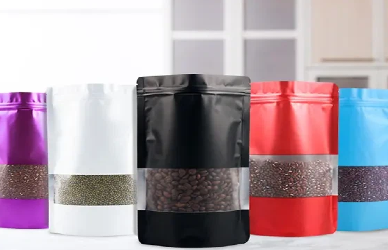
The first step in manufacturing Stand Up Pouches is selecting and preparing the right materials. Typically, a combination of plastic films, laminates, and foils are chosen based on the product’s needs (e.g., moisture protection, durability, shelf life). The materials are then processed and treated to ensure they’re ready for printing and lamination. This step may involve cleaning and pre-heating the materials for better adhesion during later stages.
Once the materials are prepared, printing is the next step. Graphics, logos, and branding elements are printed onto the pouch material using techniques like flexographic printing or rotogravure printing. High-quality printing ensures vibrant colors, clear text, and sharp designs, which are crucial for attracting customers and conveying the brand’s message. Printing can be done on both the front and back of the pouch to provide ample space for product information.
After printing, the material undergoes lamination, where different layers of materials (plastics, foils, etc.) are bonded together to create a stronger and more protective pouch. Heat sealing is then used to ensure the layers are fused together, creating a durable structure. The lamination process is essential for providing barrier properties, such as protection from moisture, air, and light, which helps preserve the product's freshness.
Once the materials are laminated and sealed, they are cut into the desired pouch size and shape. This involves precision cutting to ensure that each pouch has consistent dimensions. The shape of the pouch is formed by using dies that stamp or cut the material, often creating a flat pouch shape that can be transformed into a stand-up design later in the process. This step also involves creating the bottom gusset that allows the pouch to stand upright.
The final step in the manufacturing process is adding custom features like gussets, zippers, spouts, or windows. Gussets are added to the sides or bottom to provide extra volume and stability, allowing the pouch to stand upright. Zippers or spouts are added for convenience, making it easy for consumers to reseal the pouch or pour the product. Other customizations, such as adding transparent windows for product visibility or handles for easy carrying, can also be incorporated at this stage.
Stand Up Pouches are typically made from polyethylene (PE), polypropylene (PP), or polyester (PET). These are often combined with laminates or foils for added strength and protection, helping to block moisture, air, and light. The material choice depends on the product's need for durability, flexibility, and barrier properties.
Custom features like gussets, resealable zippers, spouts, and window panels can be added during manufacturing. These features enhance functionality, making the pouch more convenient for consumers, and can also include branding options for a unique appearance.
Gussets help create a stable base, allowing the pouch to stand upright. They also increase volume, enabling the pouch to hold more product while maintaining a compact shape, ideal for larger items and shelf stability.
Durability is achieved through lamination, heat-sealing, and quality control tests. Lamination bonds multiple layers for strength, while sealing ensures the pouch is tightly closed. Rigorous testing ensures the pouch can withstand stress and maintain its barrier properties.
Creating a Stand Up Pouch involves a series of precise steps, from material preparation and printing to lamination, cutting, and adding custom features like zippers and gussets. Each step plays a vital role in ensuring the pouch is durable, functional, and attractive, providing the necessary protection for a wide range of products. The customization options, such as adding windows, handles, or resealable closures, not only enhance the pouch’s usability but also improve its visual appeal on the shelf, making it more likely to attract consumers. Ultimately, the benefits of custom-designed Stand Up Pouches lie in their ability to offer tailored solutions for different products, ensuring both product preservation and an enhanced consumer experience, all while supporting brand differentiation in a competitive market.


