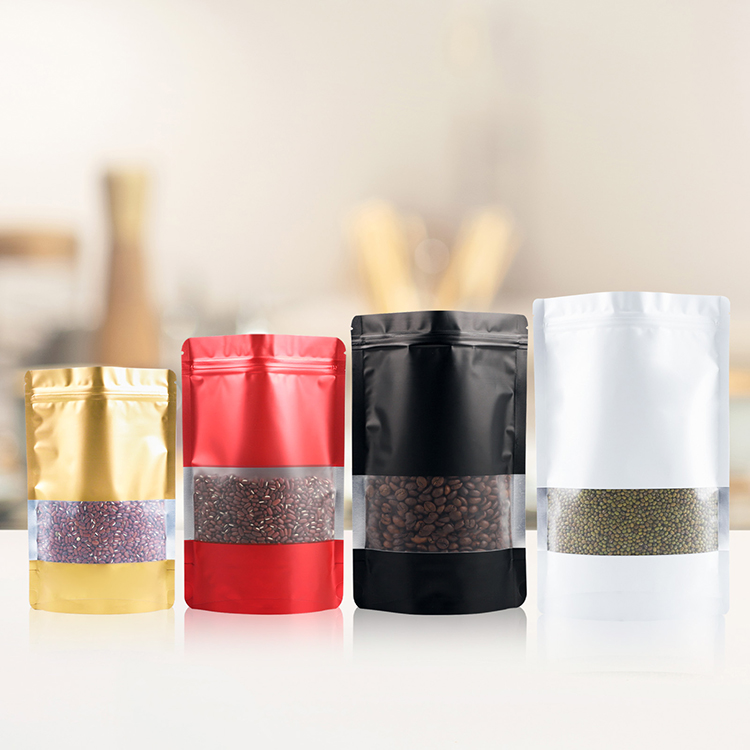
Author: Site Editor Publish Time: 14-06-2026 Origin: Site
The packaging industry is rapidly shifting away from heavy rigid containers like glass and thick plastics. Brands increasingly favor flexible formats to slash exorbitant freight costs and boost critical shelf differentiation. Stand up Pouches are visually ubiquitous across modern retail environments. They look effortless sitting on the store shelf. However, utilizing them effectively demands careful alignment behind the scenes. You must accurately match complex product chemistry and strict barrier requirements to your existing filling-line capabilities. Failure to do so causes expensive production delays and spoiled inventory.
This guide bridges the critical gap between conceptual packaging design and harsh procurement realities. We will help you evaluate if your brand should safely transition to this flexible format. You will learn how to specify proper materials, dodge common production roadblocks, and maximize your product’s retail impact.
Switching packaging formats involves substantial strategic planning. Procurement teams rarely abandon legacy jars or boxes without compelling financial incentives. The transition to flexible formats directly targets supply chain inefficiencies and modernizes brand presentation.
Shipping rigid containers often means shipping dead air. Palletizing empty glass jars consumes massive warehouse square footage. Transitioning to flexible formats solves this spatial inefficiency immediately. Empty pouches ship completely flat in compact corrugated boxes. This drastically lowers incoming pallet counts. You reduce Less-Than-Truckload (LTL) and Full-Truckload (FTL) freight costs overnight. The volume-to-weight ratio advantage is undeniable for procurement budgets. A single truckload of unformed flexible packaging often equals fifteen truckloads of empty rigid jars. You free up valuable warehouse racking space for actual finished goods.
Sustainability discussions require objective nuance. Multi-layer pouches admittedly complicate standard curbside recycling streams. Different bonded polymers are difficult to separate mechanically. However, they drastically reduce shipping emissions overall. They also minimize material waste directly at the source. Lightweight plastic materials require far less thermal energy during manufacturing. They need significantly less diesel fuel for national distribution. The lifecycle greenhouse gas emissions drop substantially compared to heavy glass or metal alternatives. Brands achieve meaningful carbon footprint reductions by simply transporting less dead weight.
Consumer brands fiercely compete for limited visual attention. Rigid containers often restrict your design space to a small paper label. Conversely, flexible packages provide a powerful billboard effect. They offer continuous front-and-back printable surface area. You do not need to manage secondary labeling operations on your assembly line. High-definition graphics wrap entirely around the package body. This creates a visually striking presence on crowded retail shelves. Tactical finishes like matte coatings or spot gloss elevate the perceived product value.
Food products demand rigorous environmental protection. You must engineer specific barrier layers to preserve freshness and prevent costly spoilage. Different food categories dictate entirely different film structures.
| Material Abbreviation | Full Name | Primary Function in Packaging |
|---|---|---|
| PET | Polyethylene Terephthalate | Provides excellent printability and exterior scuff resistance. |
| AL | Aluminum Foil | Offers the absolute highest barrier against oxygen, moisture, and UV light. |
| EVOH | Ethylene Vinyl Alcohol | Delivers superior oxygen resistance without blocking package transparency. |
| LLDPE | Linear Low-Density Polyethylene | Acts as the heat-sealable inner layer safe for direct food contact. |
Flexible formats continue to expand rapidly outside the grocery aisles. Industrial and cosmetic brands leverage these solutions to solve unique logistical challenges.
Bath salts, face masks, and cosmetics are aggressively shifting formats. Brands increasingly offer sustainable refill pouches for liquid hand soaps. Powdered collagen supplements require ultra-high-barrier films. Hygroscopic powders absorb ambient moisture rapidly. Effective barrier layers keep these expensive powders dry and flowable. The cosmetics industry heavily favors soft-touch matte laminations. These premium tactile finishes signal high quality to beauty consumers.
Detergent pods pack highly concentrated industrial chemicals. Granular sink cleaners also need robust environmental protection. Chemical resistance is crucial for these applications. The pouches require aggressive child-resistant closures (CRC) to meet strict safety regulations. You must specify chemically inert sealant webs. This proactive engineering prevents the harsh cleaning product from degrading the interior package lining over time.
Agricultural goods face exceptionally tough retail environments. Seed bags and fertilizer packaging often sit outdoors under direct weather exposure. UV resistance becomes a primary structural concern. Direct sunlight degrades standard commodity plastics rapidly. You also need heavy puncture-proof durability. Seventy-pound bags of soil must survive rough handling in retail garden centers without splitting open.
Packaging procurement requires objective format comparisons. You must weigh upfront material costs against downstream marketing advantages.
Vertical display fundamentally changes consumer interaction. Stand up formats utilize an engineered bottom gusset for structural expansion. This unique geometry accommodates higher internal product volumes. They stand proudly vertical on retail shelves. Flat pouches lack this expandable gusset completely. They are strictly limited to smaller capacities. We mostly see flat bags used for single-use items, beef jerky, or promotional sample sizes. Flat pouches are marginally cheaper to produce because they use less overall film. However, they sacrifice critical retail visibility. They lay awkwardly flat on shelves unless merchandised inside secondary display cartons.
Transitioning formats significantly impacts production floor operations. Switching from rigid jars to flexible films often requires new machinery. You might need to purchase Vertical Form Fill Seal (VFFS) machines. Alternatively, you might invest in automated pre-made pouch fillers. This upfront capital expenditure requires careful budgetary planning. However, the lifecycle logistics savings quickly offset equipment costs. E-commerce logistics heavily penalize large, lightweight shipping boxes. Flexible packaging minimizes dimensional weight (DIM) charges. You ship the actual dense product, not bulky protective air.
How do you specify the correct package architecture? Guessing leads to catastrophic product failures. Let us walk through a proven procurement framework.
Adopting stand up pouch packaging introduces specific operational risks. Identifying these hurdles early prevents massive manufacturing delays.
Do not buy packaging inventory blindly. Buying pre-made pouches carries inherent mechanical risks. They might not run efficiently on your legacy automated packaging lines. Friction coefficients (COF) dictate exactly how smoothly plastic films move through steel machine guides. Unpredictable static electricity issues cause massive jamming problems. High static makes the bag mouths stick together during automated opening steps. You must test unprinted material samples on your actual equipment before placing large bulk orders.
Weak heat seals destroy brand reputations instantly. They cause messy liquid leaks inside delivery trucks. They lead to stale, ruined dry goods on grocery shelves. Airborne powder contamination often ruins seal integrity. Powders generate airborne dust during high-speed filling. This loose dust settles heavily on the inner zipper track. It prevents the machine heat-seal bars from melting the plastic together cleanly. You must install dust collection vacuums on the filling line. Rigorous burst and drop testing protocols are absolutely mandatory. A dropped package must survive sudden concrete impacts without splitting at the side seams.
Printing methods dictate your minimum order quantities (MOQs) and upfront costs. Digital printing technology offers incredibly low MOQs. It handles high SKU counts and multiple flavor variations easily. You achieve much faster initial market entry. However, digital ink costs remain relatively high. Traditional rotogravure printing requires massive MOQs and expensive custom printing cylinders. It involves longer lead times. However, rotogravure delivers the absolute lowest per-unit cost at mass scale. Choose the printing technology matching your current sales volume.
Transitioning packaging formats requires diligent technical planning. Stand up Pouches are not a universal magic fix. They are highly engineered technical solutions designed to optimize complex logistics. They actively extend product shelf life and maximize valuable retail real estate.
We advise packaging buyers to establish a strict shortlisting logic. First, cleanly define your required product shelf-life. Next, thoroughly understand your existing filling line constraints. Do this long before requesting complex material structures from suppliers. This ensures alignment between marketing desires and engineering realities.
Take proactive steps today. Encourage your team to request a material sample kit. Consult directly with a qualified packaging engineer early in the design process. Always test the material's structural integrity using your actual physical product before launching.
A: Yes, when properly specified. The FDA approval process focuses strictly on the inner sealant layer. This specific layer physically touches your food. Manufacturers typically use LLDPE (Linear Low-Density Polyethylene) for this purpose. The LLDPE film must meet explicit FDA compliance standards. The exterior print and middle barrier layers do not touch the food directly.
A: Yes, it is entirely possible. However, it requires highly specific engineering. You must request retort-grade or hot-fill compatible film laminations. Standard films will fail under extreme heat. Specialized structures withstand high filling temperatures without shrinking, melting, or delaminating. Always disclose your exact fill temperature to your packaging supplier beforehand.
A: Sizing depends heavily on product density and volume, not just measured weight. Eight ounces of dense coffee beans takes up far less physical space than eight ounces of fluffy popcorn. We strongly recommend prototyping with your physical product. Avoid relying solely on generic dimension charts. Test fill empty pouches to guarantee optimal fit and head-space.