Author: Site Editor Publish Time: 25-06-2026 Origin: Site
For production managers and procurement officers, selecting the right web material is rarely a simple purchasing decision. Instead, it serves as a critical variable. This choice dictates machine uptime, product shelf life, and unit economics. Mismatched materials introduce severe operational risks to your facility. You might experience unexpected seal failures, costly web tracking issues, or compromised barrier integrity. These failures directly translate into product spoilage and wasted production hours.
Production environments demand precision. Even slight variations in web tension can halt an entire line. Therefore, choosing your materials wisely protects your bottom line. This article bridges the gap between material science and production line realities. We will provide a technical and commercial framework for evaluating your options. You will learn how to match film architecture to machinery requirements and navigate procurement confidently.
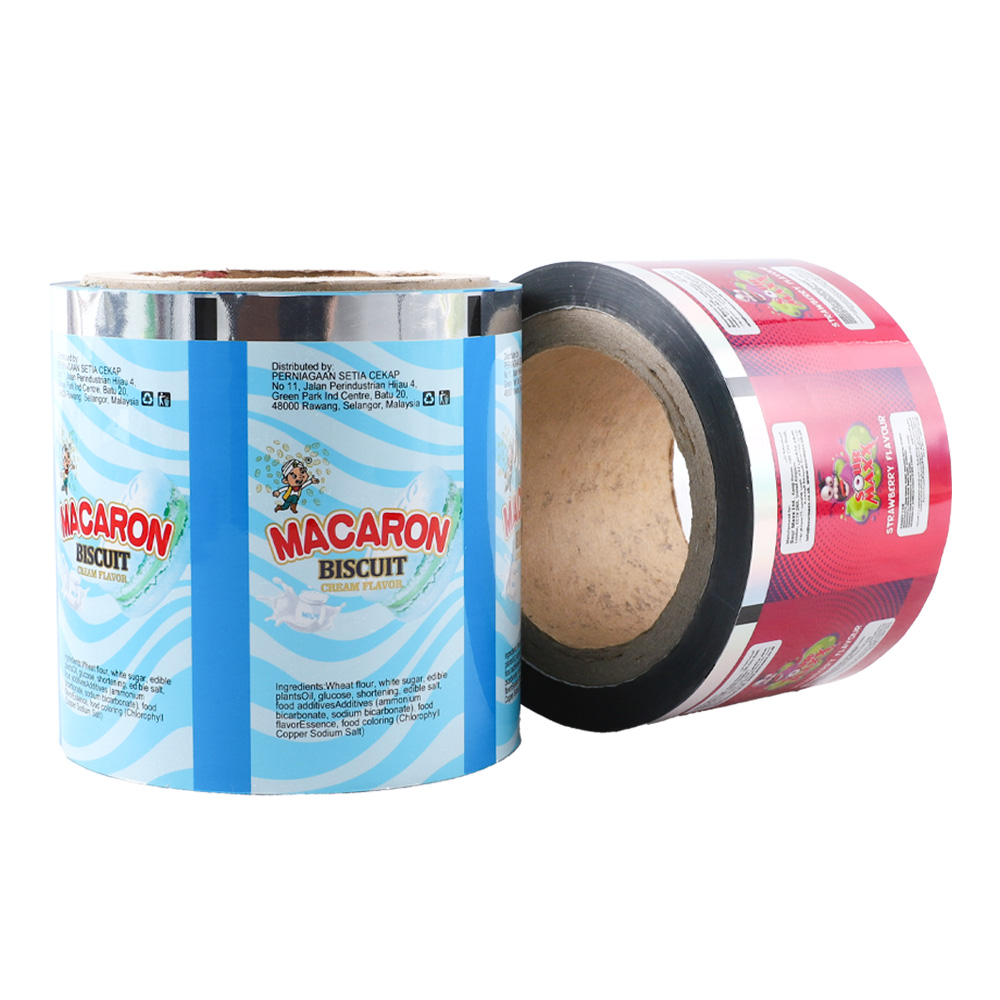
At its core, Roll Film refers to flexible packaging material wound onto a rigid core. Suppliers deliver this material in a continuous sheet. Facilities then load these rolls directly onto automated machinery. The machinery forms the sheet into a specific shape, fills it, and seals it in one fluid process. This continuous web approach contrasts sharply with using individual, pre-made pouches.
Choosing between continuous web stock and pre-made pouches represents a classic capital expenditure (CapEx) versus operational expenditure (OpEx) decision. You must evaluate this based on your facility's volume.
Understanding the "resin to roll" manufacturing process helps explain why quality varies among suppliers. Converters melt raw polymer resins through extrusion dies. They then stretch, cool, and often laminate multiple layers together. This extrusion process strictly dictates gauge tolerance. If a converter lacks precise extrusion controls, the resulting material will have thick and thin bands. These structural inconsistencies cause uneven rolls. Uneven rolls then lead to severe tracking issues on your production line.
Modern flexible packaging rarely consists of a single material. Converters laminate different substrates together to achieve targeted functional properties. Mono-layer structures work well for simple applications like produce wrap. However, complex applications require multi-layer architectures.
Common substrates serve very specific roles within the lamination architecture. PET (Polyethylene Terephthalate) provides excellent printability and high tensile strength. BOPP (Biaxially Oriented Polypropylene) offers exceptional clarity and moisture resistance. EVOH (Ethylene Vinyl Alcohol) acts as a specialized oxygen barrier. PE (Polyethylene) usually serves as the inner sealant web because it melts easily at lower temperatures. Foil provides the ultimate barrier against light, oxygen, and moisture.
Engineers must calculate barrier requirements objectively. You cannot guess how much protection a product needs. You must evaluate the Oxygen Transmission Rate (OTR) and Water Vapor Transmission Rate (WVTR). These metrics determine how much gas or moisture permeates the material over 24 hours.
Food scientists use specific testing frameworks, like ASTM D3985 for OTR, to measure permeation. Aligning OTR and WVTR with specific shelf-life mandates prevents food spoilage. It also prevents chemical degradation in industrial products. If you over-engineer the barrier, you waste money. If you under-engineer it, your product spoils on the retail shelf.
Sourcing materials requires strict attention to regulatory compliance. You must request up-to-date documentation from your suppliers. This is non-negotiable for direct food-contact packaging roll film. Demand FDA (such as 21 CFR compliance letters), USDA, or ISO certifications. Trusted suppliers provide these documents readily. Relying on verbal assurances opens your facility to immense liability during safety audits.
| Substrate | Primary Function | Moisture Barrier (WVTR) | Oxygen Barrier (OTR) | Sealability |
|---|---|---|---|---|
| PET | Strength, Print Surface | Fair | Good | Poor |
| BOPP | Clarity, Moisture Control | Excellent | Poor | Poor |
| EVOH | Oxygen Protection | Poor | Excellent | Poor |
| LLDPE | Heat Sealing | Good | Poor | Excellent |
| Aluminum Foil | Absolute Barrier | Absolute | Absolute | None |
Integrating continuous webs into your facility transforms production speeds. Automated machinery dynamics rely on consistent material behavior. The two primary systems handling these materials are VFFS and HFFS platforms.
Continuous rolls minimize machine changeovers compared to manual pouch loading. A single heavy roll can produce thousands of units without human intervention. This continuity dramatically increases units per minute (UPM). By keeping the jaws moving and the web tracking properly, facilities maximize their yield metrics. They turn packaging from a bottleneck into a high-efficiency output driver.
Procurement teams often face challenges when comparing quotes from different converters. Comparing materials solely on price per pound leads to disastrous run conditions. You must evaluate quotes based on critical specification dimensions.
Thickness (Gauge/Mil): You must balance puncture resistance with material yield. Thicker materials resist tearing and puncturing. However, thicker webs yield fewer impressions per roll. This increases your cost per unit. Specify the exact gauge required to survive distribution without paying for unnecessary thickness.
Coefficient of Friction (COF): COF measures how slippery the material surface is. Converters use slip additives to adjust this. Why do slip additives matter for machine speeds? If the COF is too high, the material grips the metal forming collar. The web jams, tearing the structure. If the COF is too low, the material becomes too slippery. Drive belts fail to grip it, and the web slips out of registration.
Sealability: You must specify the correct sealant web layer for your facility's specific heat sealing jaw temperatures. LLDPE (Linear Low-Density Polyethylene) remains the standard. However, older machines with poor temperature control might require metallocene PE for a broader sealing window. If the sealant requires higher temperatures than your jaws can maintain, you will experience channel leaks.
You need a skeptical-friendly checklist for vetting converters. Do not simply trust marketing brochures. Investigate these key operational metrics:
Even perfectly specified materials can cause issues if handled improperly on the plant floor. Operators must mitigate common run risks proactively.
Telescoping rolls represent a frequent headache. Telescoping occurs when the layers of the wound roll slide sideways, resembling a collapsed telescope. This usually happens due to uneven tension during the converter's winding process or rough transit handling. Operators must verify roll winding quality immediately upon receipt. Once loaded, maintaining even web tension is crucial. Uneven tension forces the material to wander off the forming collar, causing crooked seals.
High-speed unwinding generates massive static electricity. This becomes particularly problematic in dry plant environments or during winter months. Static causes lightweight products (like powders or thin flakes) to cling to the inner seal area. When the heated jaws clamp down, they melt the trapped product into the seal. This compromises barrier integrity and causes leaks. You must specify anti-static treatments during procurement. You should also install static eliminator bars on your FFS equipment.
Never buy full minimum order quantities (MOQs) blindly. Adopting new materials requires a structured phase-in process. We highly recommend requesting a "trial roll" first. Run this trial material under actual plant conditions. Test the print registration at target machine speeds. Validate seal integrity by submerging finished packages in a vacuum leak tester. Only authorize bulk production once the trial roll passes all internal quality checks.
Optimizing continuous web packaging requires an ongoing balance between material engineering and mechanical efficiency. Success demands moving beyond basic price comparisons. You must align barrier properties, friction coefficients, and sealing layers with your facility's specific hardware.
Take actionable steps today. Audit your current VFFS or HFFS machine specifications, paying close attention to jaw temperatures and pull belt tension. Next, consult a flexible packaging engineer to review your existing substrate architectures. Request targeted samples based on updated OTR and WVTR calculations, and always mandate a structured trial phase before issuing bulk purchase orders.
A: Roll stock is a continuous sheet of unformed material run on automated machines (FFS) that form, fill, and seal on demand. It requires higher equipment investment but offers lower per-unit costs and higher speeds. Pre-made pouches arrive already formed. They require cheaper filling equipment but carry significantly higher per-unit material costs.
A: You must calculate the total dimensions required to form the package. The math includes the forming collar size (package face width and back width), plus the seal overlap (usually 0.5 to 1 inch), plus any side gusset requirements. Your machine manufacturer provides specific formulas for their collars.
A: Yes. The industry is shifting toward mono-material structures, primarily all-PE (Polyethylene) laminations, which are store-drop-off recyclable. Compostable barrier materials exist, but they face realistic limitations regarding high barrier protection (moisture/oxygen) and require industrial composting facilities to break down properly.
A: An eye-mark is a printed rectangular block located on the edge of the web. Machine photo-sensors read this mark as the material unwinds. The sensor uses this block as a reference point to guarantee the jaws cut and seal exactly in the right spot between printed designs.