Author: Site Editor Publish Time: 14-06-2026 Origin: Site
For tea brands scaling production, packaging represents more than a mere aesthetic choice. It acts as a critical barrier against moisture, oxygen, and UV light. These environmental factors directly dictate your product's shelf life. Today, consumer scrutiny regarding microplastics and sustainable disposal shifts how brands evaluate material sourcing. Shoppers demand transparency alongside absolute freshness. You must address these rising expectations without compromising infusion quality.
This guide breaks down the essential technical specifications and compliance requirements governing tea packaging. We also explore the business realities of selecting materials for both the inner mesh and the outer retail packaging. You will learn how to balance optimal infusion rates against strict food safety standards. By understanding the nuanced differences between traditional papers, synthetic nylons, and bioplastics, you can make highly informed procurement decisions. Let us explore how the right material choices protect sensitive volatile oils while ensuring smooth machinery operations on your production line.
Selecting the inner mesh material forms the foundation of your customer's brewing experience. This material directly touches the hot water. Therefore, it requires strict adherence to food safety standards. You must balance visual appeal, structural integrity, and infusion performance.
Traditional filter paper remains a staple in the tea industry. Manufacturers create this porous material using a blend of abaca fibers (Manila hemp) and natural wood pulp. These fibers provide exceptional high wet-strength. The material resists tearing even under boiling water conditions. Suppliers offer filter paper in both oxygen-bleached (white) and unbleached (brown) variants. Oxygen bleaching eliminates the risks previously associated with harmful chlorine processes.
In business applications, filter paper perfectly suits fannings and standard black or green teas. It offers the lowest cost per unit among all mesh options. Furthermore, paper runs effortlessly on traditional heat-seal or crimp-seal machinery. However, this material carries a distinct limitation. It provides poor visibility. Consumers cannot see premium whole-leaf teas inside the bag. This opacity often diminishes the perceived value of high-end herbal blends.
Food-grade nylon, or PET (Polyethylene Terephthalate), offers a visually stunning alternative. This synthetic polymer mesh is highly transparent. It allows brands to showcase colorful botanicals and large tea leaves. Historically, nylon became the absolute standard for premium whole-leaf teas. The rigid structure perfectly supports the popular pyramid bag shape. This geometric design allows optimal water flow and maximum leaf expansion during steeping.
Despite its performance benefits, nylon introduces a major risk factor today. Brands face increasing consumer pushback regarding synthetic materials. Studies suggest nylon can shed microplastics during high-temperature steeping. This reality creates severe user-generated content (UGC) and brand PR vulnerabilities. Many health-conscious consumers now actively avoid PET-based mesh.
PLA (often branded as Soilon) represents the current industry standard for eco-conscious brands. Manufacturers derive this plant-based bioplastic from renewable resources like cornstarch or sugarcane. PLA visually mimics the transparent, silky texture of nylon. It supports pyramid structures beautifully while allowing excellent water flow.
However, implementation realities require careful planning. PLA behaves differently on the production line. You generally cannot use traditional heat sealers. PLA requires ultrasonic sealing equipment to cut and bond the edges cleanly. Additionally, brands must navigate marketing claims carefully. PLA is industrially compostable, not home compostable. You must clarify this distinction on your packaging. Vague "biodegradable" labels often trigger greenwashing claims from savvy consumers.
Material Comparison Chart: Inner Mesh Options
| Material Type | Visibility | Ideal Tea Type | Sealing Method | Compostability |
|---|---|---|---|---|
| Filter Paper | Low (Opaque) | Fannings / Dust | Heat / Crimp Seal | Home Compostable |
| Nylon (PET) | High (Clear) | Premium Whole Leaf | Ultrasonic | Non-compostable |
| PLA (Bioplastic) | High (Clear) | Premium Whole Leaf | Ultrasonic | Industrial Only |
The exterior packaging serves as the primary defense system for your product. A single Tea Bag remains highly vulnerable to environmental degradation if left exposed. Outer packaging relies heavily on composite multi-layer laminates.
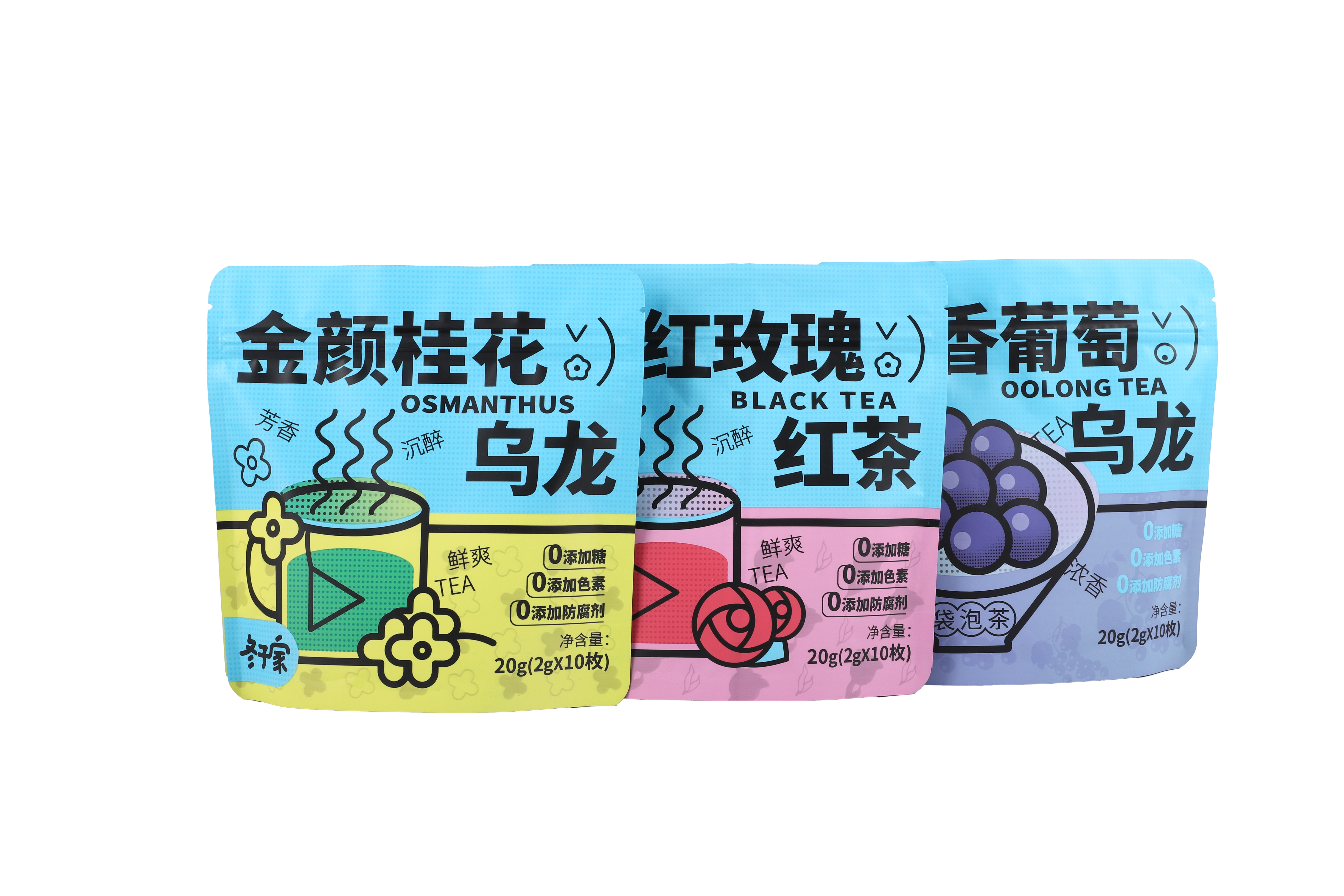
A single material rarely provides both structural integrity and absolute barrier protection. For example, plain paper looks natural but absorbs ambient humidity. Standard polyethylene flexes well but allows oxygen permeation. Engineering a highly functional custom tea pouch solves this dilemma. Manufacturers laminate different films together. Each specific layer performs a dedicated function. The outer layer provides printability. The middle layer acts as a barrier. The inner layer ensures food-safe heat sealing.
This combination remains a dominant choice across the specialty tea sector. The outer kraft paper provides an organic, artisanal tactile experience. It signals natural ingredients to the consumer. Beneath this paper sits a crucial protective layer. Manufacturers use either pure aluminum foil or metallized PET (VMPET). This internal lining provides a rigid barrier against moisture and UV light.
You will frequently see this laminate in loose-leaf retail applications. It also perfectly houses multiple naked tea bags inside a single master pouch. The foil ensures delicate volatile oils, like bergamot in Earl Grey, do not evaporate before reaching the consumer.
High-volume retail environments demand durability. Flexible plastic laminates combine PET (Polyethylene Terephthalate) and LLDPE (Linear Low-Density Polyethylene). This structure offers exceptional puncture resistance. The material survives rough shipping conditions and dense grocery shelf displays.
Moreover, PET provides an excellent surface for vibrant, full-bleed custom designs. If your brand relies on complex graphics or photographic elements, this material yields superior print fidelity. Brands frequently use this structure for durable stand-up pouches or individual envelope wrappers.
Environmental concerns now drive innovation in outer packaging films. Mono-materials represent a massive leap forward. A pouch made entirely of 100% PE can enter specific flexible plastic recycling streams. Alternatively, fully compostable high-barrier films utilize wood-pulp-based cellulose layers.
These sustainable alternatives come with distinct trade-offs. You will typically face higher minimum order quantities (MOQs). The unit costs run significantly higher than standard plastics. Furthermore, compostable films often present a narrower window for optimal heat-sealing temperatures. Your production team must calibrate machinery precisely to prevent melted or weak seams.
Sourcing materials based solely on aesthetics often leads to disastrous product failures. You must evaluate technical metrics and machinery limitations before issuing a purchase order.
Scientific metrics determine a package's ability to preserve freshness. You must evaluate materials based on Oxygen Transmission Rate (OTR) and Water Vapor Transmission Rate (WVTR). Lower numbers indicate better protection.
Tea acts like a sponge for ambient odors and moisture. High-oil teas, such as peppermint or chamomile blends, require strict foil-lined barriers. Without this barrier, a phenomenon called "flavor scalping" occurs. The packaging material actually absorbs the volatile oils from the tea. This process leaves the brewed cup tasting flat and stale.
Your chosen material must run efficiently on filling equipment. Vertical form fill seal (VFFS) machines pull material from a roll, form a pouch, fill it, and seal it simultaneously. Not all films perform well on high-speed lines.
Follow these checks to ensure machinery compatibility:
Trustworthy packaging requires documented proof of safety. Always demand official documentation from your suppliers.
Procuring custom packaging involves substantial financial investment. You must navigate supplier constraints while managing supply chain vulnerabilities. Planning ahead mitigates expensive delays.
Custom printed multi-layer films traditionally require high MOQs. Manufacturers often set minimums at 10,000 units or more. Rotogravure printing requires creating expensive copper cylinders for each color in your design. This setup cost makes short runs economically impossible.
If you need lower quantities, seek out digital printing. Digital presses do not use physical cylinders. This technology allows suppliers to offer much lower MOQs. However, you will pay a higher cost-per-unit. Evaluate your cash flow and storage capacity carefully when choosing between these printing methods.
Never commit to a bulk production order without testing physical material samples. Your specific tea blend interacts uniquely with different packaging structures. Implement a rigorous testing protocol.
Many brands source specialized paper or PLA mesh from overseas vendors. Chinese supply chains, for example, offer deep expertise and lower unit costs. However, offshore sourcing introduces distinct risks.
You must factor extended lead times into your production schedule. Ocean freight can add several weeks to your timeline. Furthermore, you must calculate potential import tariffs. Sometimes, a domestic supplier with a higher upfront unit cost actually saves money by eliminating shipping delays and customs duties.
Selecting the optimal tea packaging requires a holistic approach. You must match your inner mesh material directly to your leaf grade and consumer expectations. Simultaneously, your outer pouch must align with strict shelf-life requirements and your overarching brand positioning. Transitioning to eco-friendly materials demands careful attention to machinery capabilities and sealing technologies.
Audit your current packaging setup immediately. Look for barrier failures, aroma loss, or consumer friction points regarding disposal. Next, request technical data sheets and physical unprinted samples from certified packaging manufacturers. Run these samples through your filling equipment to verify compatibility before committing to a final design.
A: Studies indicate that PET (nylon) bags can shed microplastics when exposed to boiling water. Many commercial brands are migrating to PLA or unbleached paper to mitigate this risk and address consumer concerns.
A: A multi-layer laminate featuring an aluminum foil or VMPET core provides the highest barrier against oxygen, moisture, and UV light, ensuring maximum freshness for volatile tea oils.
A: Generally, no. PLA requires ultrasonic sealing technology to create a secure, clean edge without melting or degrading the bioplastic mesh.
A: Only if they are 100% paper or lined with a certified compostable bio-film. Most standard kraft pouches are lined with plastic or foil for barrier protection, rendering them non-biodegradable.