Author: Site Editor Publish Time: 04-06-2026 Origin: Site
Navigating the retail tobacco market requires balancing two notoriously conflicting priorities. Manufacturers face stringent global compliance mandates alongside an uncompromising need for product preservation. You must satisfy government regulators without sacrificing product freshness. Brands and supply chain managers simply cannot afford packaging failures. Poor barrier properties lead directly to staleness, degraded consumer trust, and immediate revenue loss. Furthermore, non-compliance with emerging plain packaging laws routinely results in market blockages and massive fines. This dynamic leaves no room for trial and error in material selection.
This guide breaks down the standard packaging categories, specific material configurations, and strict evaluation frameworks you need. We detail exactly how to assess different formats and shortlist the most capable suppliers for your retail tobacco products.
Modern packaging strategies must function as high-performance barriers. They must simultaneously operate strictly within legally mandated aesthetic and structural boundaries. You cannot prioritize one mandate over the other.
Tobacco remains highly hygroscopic. It absorbs and releases moisture readily. Packaging must stabilize internal moisture levels completely. If conditions become too humid, the product will inevitably mold. If the environment becomes too dry, you risk severe combustion volatility and irreversible flavor loss. Protecting the essential oils and moisture content is your primary preservation imperative.
Simultaneously, you face a harsh compliance reality. In markets like the UK, Australia, and parts of the EU, packaging cannot serve as a marketing vehicle. It must adhere to standardized sizing and drab colors. Regulators often mandate specific shades like Pantone 448 C. You must also incorporate exact health warning ratios across all printable surfaces.
A successful packaging strategy minimizes supply chain spoilage rates. It also ensures zero regulatory friction across your target distribution regions. Achieving this balance defines operational success.
Factory-made cigarettes rely heavily on rigid structures. They dominate retail shelves and offer distinct protective advantages throughout the global supply chain.
Below is a quick chart summarizing the functional layers of standard rigid cigarette packaging:
| Packaging Component | Primary Material | Core Function |
|---|---|---|
| Outer Seal | BOPP Film | Final moisture block; tamper evidence. |
| Structural Body | SBS Paperboard | Crush resistance; regulatory text substrate. |
| Inner Liner | Aluminum Foil / Metallized Paper | Aroma retention; immediate moisture defense. |
Flexible formats represent the preferred solution for Roll-Your-Own (RYO), loose leaf, and chewing tobacco products. They offer unique advantages in portability and material reduction.
These formats rely entirely on multi-layer laminations. Engineered film structures combine different polymers to block external elements. A common configuration includes PET, VMPET, and PE layers. They replicate the intense barrier properties of rigid boxes at a significantly lower weight. This footprint reduction aids logistics substantially.
High-barrier films protect against rapid oxygen ingress and UV light degradation. The sun can degrade loose leaf products quickly. Furthermore, resealability is non-negotiable here. Integrating press-to-close zippers or advanced hook-and-loop closures prevents dry-out after the initial opening. Consumers demand lasting freshness from flexible formats.
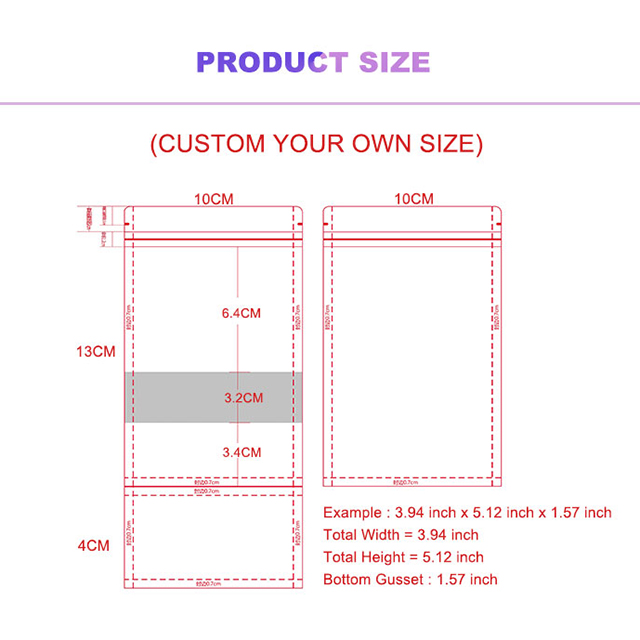
You must balance customization with standardization. Even when sourcing custom tobacco bags for markets with less stringent laws, careful design is required. Manufacturers must map out exact spatial requirements. You have to accommodate mandatory health warnings and tax stamps perfectly. If ink or stamps cross into the seal area, the entire pouch can fail.
Selecting materials requires rigid empirical testing. You cannot rely on supplier promises alone. You must validate claims through standardized industry protocols.
Barrier performance testing is your first hurdle. Assess supplier specifications for Oxygen Transmission Rate (OTR) and Moisture Vapor Transmission Rate (MVTR). Do not accept theoretical data. You must require empirical testing under accelerated shelf-life conditions. These tests simulate high heat and extreme humidity over prolonged periods.
Regulatory adaptability is equally critical. Packaging structures must physically support standardized layouts. You must ask if the substrate can handle specialized matte inks. Can it support tactile warning triangles without smudging or delamination? Poor ink adhesion leads to immediate regulatory rejection.
Machinability and scalability dictate production success. You must evaluate how materials behave on form-fill-seal (FFS) machines. Cheaper films often exhibit inconsistent coefficients of friction (COF). This inconsistency causes frequent line jams. It results in unacceptable downtime during high-volume production runs.
Child-Resistant (CR) compliance is expanding rapidly. For products requiring CR packaging, strict testing applies. This is common in adjacent markets or specific smokeless variants. You must ensure the closure mechanisms pass ISO 8317 or 16 CFR 1700.20 standards.
| Evaluation Metric | Industry Standard / Protocol | Failure Consequence |
|---|---|---|
| Moisture Vapor Transmission (MVTR) | ASTM F1249 | Product molding or severe dry-out. |
| Coefficient of Friction (COF) | ASTM D1894 | Automated line jams; production downtime. |
| Child Resistance (CR) | ISO 8317 / 16 CFR 1700.20 | Market recall; regulatory penalties. |
| Oxygen Transmission (OTR) | ASTM D3985 | Flavor degradation; aroma loss. |
Transitioning materials or suppliers introduces significant risk. Careful planning mitigates delays and prevents catastrophic product spoilage.
You must account for lead time volatility. Sourcing multi-layer barrier films often involves complex global supply chains. Factor in supplier minimum order quantities (MOQs). Always audit their historical lead-time reliability. A stockout of compliant film halts your entire operation immediately.
Expanding into newly regulated markets poses unique challenges. The switch from branded to standardized plain packaging involves heavy re-tooling. You face severe misalignment risks here. If a supplier's printing capabilities cannot meet strict government color mandates perfectly, customs will reject the shipments. Font sizes and matte finishes must be flawless.
Sustainability trade-offs also present a modern dilemma. Regulatory pressure urges brands to adopt recyclable mono-materials. However, these materials often struggle to match the MVTR performance of traditional mixed laminates. If you adopt an eco-friendly Tobacco Packaging alternative, you must verify the shelf-life remains intact. A recyclable pouch that allows product spoilage is a failed investment.
Vendor selection is the final operational hurdle. You must filter out inexperienced manufacturers early in the procurement process.
Start by auditing the supplier’s specific track record. Prioritize manufacturers with deep experience in highly regulated industries. Look for vendors who actively supply the tobacco, pharmaceutical, or agrochemical sectors. They understand compliance tolerances better than generic packaging suppliers.
Always request extensive prototyping. You must require physical samples. Run these materials through your existing packaging machinery before committing to commercial volumes. This validates the film's machinability.
Execute these next step actions to formalize your procurement process:
Selecting tobacco packaging is fundamentally a rigorous risk-management decision. You cannot isolate marketing from compliance or preservation from machinery constraints.
Balancing uncompromising regulatory compliance with stringent moisture barrier requirements remains your primary objective. This balance is the only way to protect product margins and mitigate brand liability simultaneously. The wrong material ruins the product, while the wrong aesthetic halts distribution entirely.
We encourage buyers to audit their current packaging specifications immediately. Compare your existing structures against upcoming regional regulations. Initiate empirical barrier-testing conversations with certified suppliers to ensure your upcoming production runs remain flawless.
A: Cigarette packaging utilizes a standard tri-part system. It features solid bleached sulfate (SBS) paperboard for external structure and crush resistance. Inside, an aluminum foil or metallized paper liner acts as the primary moisture and aroma barrier. Finally, a Biaxially Oriented Polypropylene (BOPP) outer film provides the final external moisture seal.
A: Plain packaging laws restrict visual marketing severely. While you can customize the physical shape and internal barrier properties for preservation, the external surface is strictly regulated. Colors, typography, and the absence of logos must strictly adhere to the destination market's legal templates, often requiring specific drab colors like Pantone 448 C.
A: Unopened rigid tins often provide superior long-term shelf life, sometimes exceeding two years, due to hermetic seals. Flexible pouches typically offer 12 to 18 months unopened. However, once opened, pouches utilizing high-quality press-to-close zippers often rival tins for short-term moisture retention and daily freshness.
A: It is a current industry challenge. Brands want mono-material recyclability, but these structures struggle to meet the strict moisture and oxygen barrier rates required for tobacco. While functional sustainable innovations exist, thorough accelerated shelf-life testing is absolutely mandatory before replacing traditional multi-layer laminates.