

Author: Site Editor Publish Time: 07-01-2026 Origin: Site
In the North American market, logistics and transportation are no longer just about "delivering goods." High transportation costs, frequent damage claims, labor shortages, and increasingly stringent delivery deadlines are continuously squeezing profit margins for businesses. For manufacturers, distributors, and e-commerce sellers, logistical stability has become a key factor affecting customer satisfaction and cash flow.
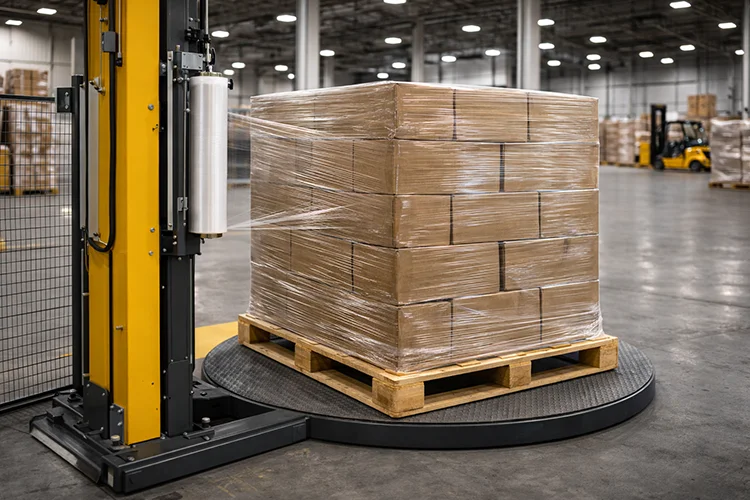
Pain Point 1: Long Transportation Distances and Increased Risk of Damage
North America is a vast country, and goods often need to undergo interstate and even international transportation. Prolonged vibrations, sudden braking, and frequent loading and unloading make palletized goods highly susceptible to displacement, collapse, or damage to outer packaging.
Many companies have found that the problem is not with the transportation itself, but with insufficient pallet stability.
Solution: By improving the overall stability of a single pallet (such as proper selection of stretch film, wrapping methods, and tension control), the risk of displacement during transportation can be significantly reduced.
Pain Point 2: High Labor Costs and Packaging Efficiency Bottleneck
The North American warehousing and logistics industry has long faced labor shortages and rising labor costs. The instability, slowness, and lack of standardization in manual packing directly lead to:
Inconsistent pallet quality
Increased rework rates
Decreased shipping efficiency
Solution: Adopt packaging solutions more suitable for automated or semi-automated equipment, and use highly elastic and stable materials to reduce manual intervention time and improve overall operational efficiency.
Pain Point 3: Frequent Shipping Claims and Customer Complaints
In the retail, e-commerce, and B2B distribution sectors, damage claims have become a significant hidden cost.
Common issues include:
Damaged outer packaging
Scattered goods
Inconsistent arrival and departure conditions
These problems not only increase direct compensation costs but also damage brand reputation.
Solution: Establishing a "problem-prevention packaging" mindset at the outbound stage, through stable unitized packaging, reduces mid-transit intervention and human risk, which is key to lowering the claim rate.
Pain Point 4: Rising Transportation Costs Force Businesses to Cut Detail Costs
The increasing costs of fuel, labor, and warehousing have prompted North American companies to re-evaluate every aspect that can be optimized.
Many companies have realized that:
Packaging is not a cost center, but rather an efficiency tool that can be optimized.
Solution: By reducing packaging material waste and improving the safety factor per pallet, overall logistics costs can be reduced without increasing transportation costs.
Pain Point 5: Multi-channel Fulfillment Requires Higher Packaging Consistency
The North American market commonly employs integrated warehousing and distribution + multi-channel fulfillment (retail, e-commerce, and wholesale in parallel).
This places higher demands on packaging:
The same pallet must adapt to different transportation scenarios.
Packaging must balance stability and flexibility.
Solution: Adopting standardized, replicable packaging solutions helps maintain consistent transportation performance across different channels.
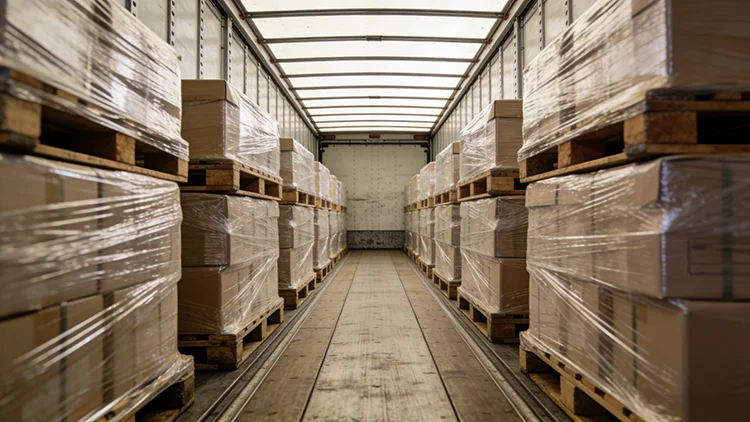
Key Findings
The core of North American logistics issues lies not just in "transportation," but in the adequacy of pre-transport preparation.
Pallet stability, packaging consistency, and material performance directly impact damage rates and delivery experience.
By systematically optimizing packaging solutions, businesses can significantly improve logistics reliability without increasing shipping costs.
Practical Advice for North American Businesses
Reassess whether existing palletizing methods are suitable for long-distance transportation.
Incorporate "reducing cargo damage" into logistics KPIs, not just transportation costs.
Choose packaging materials and solutions that improve overall unit stability.
Establish replicable, standardized packaging processes at the warehouse level.


