Author: Site Editor Publish Time: 22-06-2026 Origin: Site
High-quality ingredients demand packaging visually communicating their value on crowded retail shelves. Shoppers form immediate impressions based purely on exterior aesthetics. If you sell luxury items, your exterior must match the contents inside. Standard stand-up pouches often fail to maintain structural shape. They also struggle to provide adequate branding space for high-margin items. Pouches sag, wrinkle, and fall over easily. Consequently, brands lose perceived value before the consumer ever opens the product. The eight seal format, often called a flat-bottom or box pouch, represents a strategic structural upgrade. It seamlessly balances visual dominance alongside strict barrier preservation. Provided product margins justify the investment, you can elevate your brand perception substantially. Read on to discover material selection strategies, filling machine compatibility, and structural advantages. We will outline everything you need to transition successfully into this format.
Many specialty food brands face a frustrating shelf-presence deficit. Lightweight or irregularly shaped products consistently cause traditional pouches to sag. Think about loose-leaf teas, specialty granolas, or whole bean coffee. Gravity pulls these irregular items down, creating a bulky base and a wrinkled top panel. This distortion diminishes brand perception rapidly. Shoppers inherently associate flimsy packaging alongside lower-quality ingredients. To combat this, companies often search for a structural upgrade.
You must establish clear success criteria before transitioning to a premium food packaging bag. We recommend evaluating three specific business benchmarks:
Another compelling financial argument involves secondary packaging elimination. Traditional thin bags often require supplementary cardboard cartons to stand upright and look professional. The structural rigidity of eight distinct side seals removes this requirement entirely. Your bag becomes the primary and secondary container simultaneously. This consolidated approach offsets the initially higher pouch costs, streamlining your inventory management.
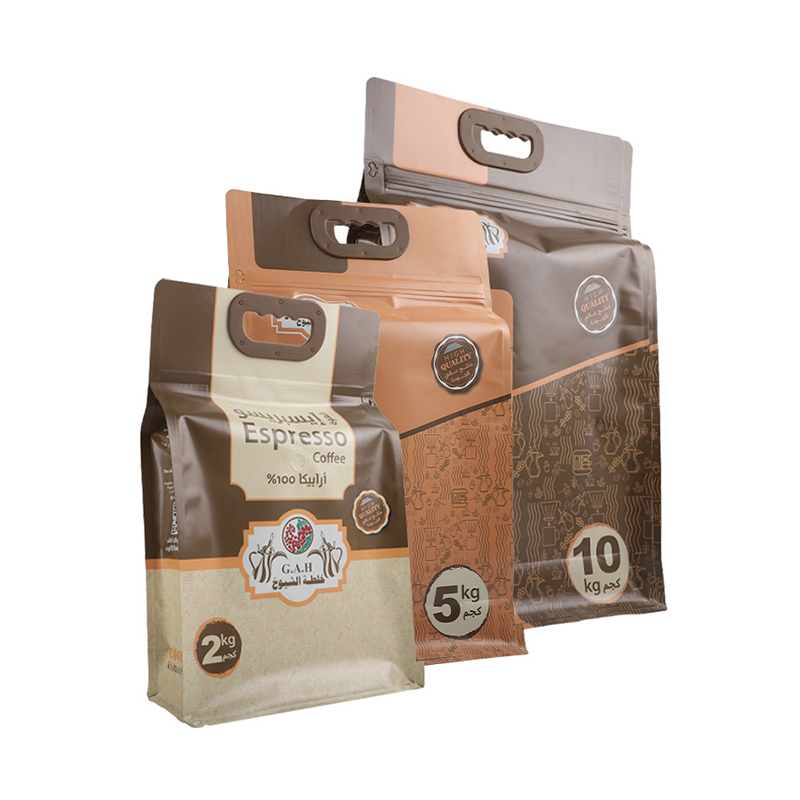
Understanding the design framework reveals exactly why this packaging performs so well. The geometry breaks down into eight distinct seals. Four seals construct the flat bottom, while two seals frame each side gusset. This specific distribution of bonded edges creates unparalleled structural stability. When filled, the internal outward pressure distributes evenly across the rigid corners.
To highlight the differences clearly, we have compiled a structural comparison chart:
| Feature | Eight Seal Bag | Quad Seal Bag | Stand-Up Pouch (Doyen) |
|---|---|---|---|
| Base Structure | True box-like shape, completely flat base. | Lacks a fully flat bottom; base folds over itself. | Doyen seal creates a curved, bulging bottom. |
| Stability | Zero distortion when filled; highly stable. | Less stable for lighter weight products. | Prone to tipping if the product weight shifts. |
| Printable Panels | Five distinct panels (Front, Back, 2 Sides, Bottom). | Four panels (Front, Back, 2 Sides). | Two primary panels (Front, Back). |
Choosing an Eight Seal Bag delivers a distinct advantage over quad seals and standard doyen pouches. It provides a completely flat base ensuring it never tips over on display. Furthermore, this architecture supports robust consumer experience features. Manufacturers easily incorporate easy-tear notches for quick access. You can add pocket zippers, often called pull-tab zippers, keeping the aesthetic clean while offering resealability. Degassing valves integrate flawlessly into the front or back panels. These additions occur without compromising the bag's core structural integrity.
Translating structural features into actual preservation outcomes requires careful material selection. Packaging films dictate how long your product remains fresh. Moisture and oxygen barriers prove critical for highly perishable specialty foods. Utilizing AL (Aluminum Foil) or VMPET (Vacuum Metallized Polyethylene Terephthalate) laminations blocks oxygen transmission effectively. Roasted coffee heavily relies on these specific layers to lock in volatile aromatic compounds.
Puncture resistance matters just as much for dense or sharp products. If you package beef jerky, dog bones, or brittle pasta, soft plastics fail quickly. Specifying Nylon (NY) or heavy-duty PE (Polyethylene) inner layers prevents these sharp items from piercing the exterior. Furthermore, you must consider light protection. Premium nuts and confections suffer from photo-oxidation when exposed to harsh store lighting. Adding UV-blocking opaque layers prevents this degradation entirely.
Brands must also evaluate these materials through strict compliance and safety lenses. You should always verify FDA-approved food-grade contact layers. Ask your supplier for BPA-free certifications. Ensure they operate within ISO-compliant manufacturing environments. Safety documentation protects your brand from costly recalls.
Finally, we must address sustainability assumptions honestly. The industry faces growing pressure to adopt recyclable formats. Recyclable PE/PE mono-material structures exist today. However, they present a slight reduction in barrier efficacy compared to traditional multi-material laminates. You must balance the marketing value of recyclability against the practical need for extended shelf life.
Upgrading your packaging format heavily impacts your daily operations. You must evaluate your existing automated pouch-packing lines against manual or semi-automatic filling workflows. Flat bottom bags present a specific mechanical risk. They require wider mechanical gripper clearances than standard pouches. You must assess retrofitting needs for your current filling machine before purchasing large material runs.
Thermal sealing requirements also change significantly. You need a deep understanding of the heat-seal profile required for multi-layer gusseted tops. Because the gusset folds inward, your sealing jaws must penetrate four layers of thick film simultaneously. Improper temperature or pressure calibration causes common sealing failures. Pinpoint leaks frequently occur right at the gusset transition point, destroying your carefully planned oxygen barrier.
Despite these operational hurdles, storage and logistics offer massive advantages. Bags ship entirely flat from the manufacturer. This drastically reduces inbound freight costs compared to rigid containers like glass jars or metal cans. You can fit thousands of unformed pouches onto a single pallet. Additionally, density metrics improve post-production. Calculating pallet efficiency for the finished, filled product reveals significant gains. The square, box-like footprint stacks perfectly, eliminating dead space inside shipping master cartons.
Approaching suppliers without precise data guarantees delays and inaccurate quotes. You must define your technical specifications rigorously. Document exact dimensions, volume requirements, and product density. An 8oz bag holding dense salt requires different dimensions than an 8oz bag holding lightweight popcorn. Calculate your specific volume needs before requesting templates.
Printing technologies and Minimum Order Quantities (MOQs) dictate your initial investment. Digital printing works best for market-testing and multi-SKU rollouts. It offers lower MOQs and eliminates setup fees. Conversely, rotogravure printing becomes necessary for ultra-high-definition graphics and large volume cost-efficiency. However, rotogravure requires high initial cylinder fees, demanding a larger upfront capital commitment.
You need a reliable supplier vetting framework to protect your investment. Implement these actionable steps:
Your most actionable next step is simple. Order blank prototypes directly from the shortlisted manufacturers. Run these unprinted bags through your specific filling equipment. Validate the mechanical grip, fill volume, and thermal seal integrity before committing to expensive printed runs.
The eight seal format stands as an engineered solution for brands looking to legitimize a premium price point. It guarantees superior barrier protection alongside structural shelf dominance. By moving away from sagging pouches, you visually communicate the high quality of your internal ingredients.
We recommend weighing the higher upfront unit cost against long-term operational savings. Freight density improvements and secondary carton elimination often balance the initial investment. Furthermore, the projected retail growth from better shelf positioning typically justifies the switch.
Take action today by mapping your product density to specific bag dimensions. Request a sample pack featuring varied material laminations from a trusted supplier. Test these samples rigorously to ensure complete compatibility with your specialty food product.
A: There is no structural difference. Block bottom bag, flat-bottom pouch, and eight seal bag act as industry synonyms. They all refer to the identical structure featuring four bottom seals and two seals on each side gusset, creating a completely flat, box-like base.
A: Yes, provided you specify the correct laminations. Vacuum packaging requires heavy-duty Nylon (NY) layers to withstand immense pressure and prevent puncture. Freezing requires specialized cold-crack resistant Polyethylene (PE) blends to prevent the bag from shattering or suffering freezer burn over time.
A: You must calculate volume rather than just weight. Product density strictly dictates bag dimensions. For example, 16oz of heavy flour requires a much smaller bag than 16oz of airy granola. Always request blank sizing prototypes to physically test your product's fill line.
A: Yes, but with limitations. Current compostable films struggle to match the high oxygen and moisture barrier strength of traditional foil or PE mono-materials. They often feature shorter shelf lives and weaker seal strengths. You must test compostable options rigorously if your product is highly perishable.