Author: Site Editor Publish Time: 05-06-2026 Origin: Site
Organic product viability in the tobacco industry depends entirely on strict moisture control. The moment harvested leaves leave the curing facility, they face a barrage of environmental threats. Exposure to fluctuating humidity levels during global transit and storage directly impacts sensory profiles. It alters burn rates. Ultimately, it jeopardizes overall product safety. Manufacturers cannot rely on standard wrapping to solve these complex logistical challenges. Selecting high-barrier materials goes far beyond standard quality assurance measures. It represents a critical business decision dictating shelf-life validity, regulatory compliance, and brand equity. By integrating advanced solutions like robust Tobacco Packaging, you secure product integrity from the factory floor to the consumer's hands. In this article, you will learn how moisture fluctuation damages organic matter and how to evaluate barrier metrics. We will also explore material selection strategies and highlight implementation realities for automated production lines.
Excess moisture poses a severe financial risk to any manufacturing operation. When ambient humidity breaches protective film layers, microbial growth accelerates rapidly. Mold spores thrive in damp organic matter. This biological reaction leads to immediate batch rejections at the distribution level. In worst-case scenarios, it triggers highly visible product recalls. Such events drain capital resources and invite intense regulatory scrutiny. You cannot simply reverse moisture damage once it occurs. It permanently ruins the batch.
Conversely, moisture loss creates equally damaging consequences. Organic material relies on retained water weight for structural integrity. When environments lack sufficient humidity, leaves turn brittle. They shatter during secondary processing or rough transit. This structural breakdown presents multiple issues:
Packaging failure directly damages brand reputation and long-term ROI. Consumers expect a consistent sensory experience every time they open a fresh pack. If the contents taste stale, harsh, or overly damp, repeat-purchase rates plummet immediately. Retailers lose trust in your brand's shelf stability. They may allocate premium shelf space to competitors offering superior freshness guarantees. We must view barrier integrity as a vital cost-prevention mechanism. It protects the physical product while actively safeguarding your long-term market positioning. Investing in superior films upfront mitigates massive downstream losses.
Moisture Vapor Transmission Rate (WVTR) stands as the objective standard for comparing packaging solutions. It measures exactly how much water vapor passes through a specific area of material over a 24-hour period. You cannot rely on subjective marketing claims like "waterproof" or "highly resistant." You need quantifiable data measured in grams per square meter per day (g/m²/day). A lower WVTR value consistently indicates a stronger barrier against environmental moisture exchange.
Supply chain realities dictate your exact WVTR requirements. You must align material specifications with intended transit routes and storage environments. Products shipping to high-humidity tropical climates require vastly different protection levels than those heading to arid, desert regions. Desired shelf-life timelines also play a crucial role in this calculation. A premium cigar designed for three years of retail display demands superior barrier performance. Fast-moving consumer rolling blends might tolerate a slightly higher transmission rate due to rapid turnover.
Demanding empirical data from manufacturers separates reliable packaging vendors from mere material brokers. You should never accept purely theoretical material specs. An experienced packaging engineer will demand rigorous laboratory proof. Request accelerated aging tests based on established ASTM testing standards. Demand real-time environmental chamber results. These lab-verified metrics prove how the materials perform under sustained thermal and humidity stress. Thorough testing prevents catastrophic failures once products enter complex global distribution networks.
| Barrier Material Type | Average WVTR (g/m²/day) | Ideal Shelf-Life Application |
|---|---|---|
| Standard Polyethylene (PE) | 5.0 - 10.0 | Short-term / Fast turnover (< 3 months) |
| Metallized PET (VMPET) | 0.5 - 1.5 | Medium-term / Standard retail (6 - 12 months) |
| Aluminum Foil Laminate (AL) | < 0.01 | Long-term / Extreme climates (12 - 36+ months) |
Modern packaging relies heavily on sophisticated multi-layer laminates. Standard barrier films often utilize a PET/AL/PE architecture. Each individual layer serves a highly specific mechanical function. The Polyethylene Terephthalate (PET) provides an excellent, durable surface for high-resolution printing. The Polyethylene (PE) inner layer ensures reliable heat sealing on high-speed equipment. The aluminum foil (AL) layer delivers the absolute physical barrier. Foil comprehensively blocks all moisture, oxygen, and UV light. Metallized films offer a functional middle ground. Manufacturers deposit a microscopic layer of aluminum vapor onto plastic substrates. This technique reduces overall material weight and cost while maintaining strong, though not absolute, atmospheric protection.
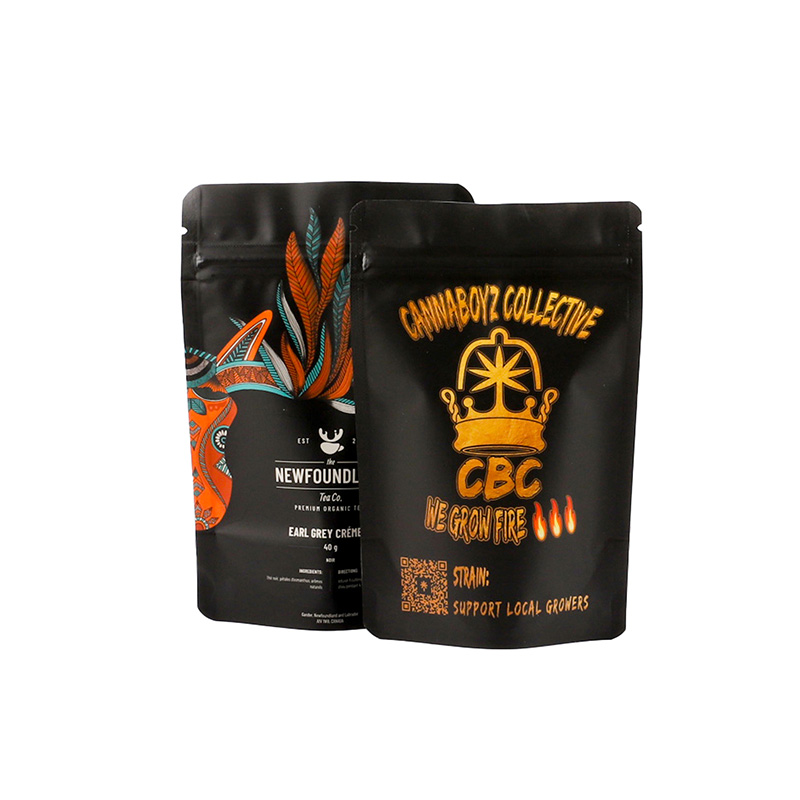
We are currently witnessing a massive industry shift toward flexible retail formats. The moisture proof tobacco pouch now dominates the rolling tobacco and smaller cigar markets. Flexible pouches drastically reduce shipping volume compared to rigid tins or boxes. More importantly, they integrate advanced resealable technology directly into the structure. Press-to-close zippers maintain the internal microclimate long after the initial opening. This functionality is crucial. The pouch protects the remaining product over weeks of consumer use, preventing the accelerated drying that ruins user experience.
A significant tension exists between achieving optimal barrier strength and adopting sustainable structures. Modern brands frequently request mono-material or recyclable options to meet environmental compliance goals. Moving away from traditional aluminum foil involves complex performance trade-offs. Mono-materials utilizing specialized barrier coatings like AlOx (Aluminum Oxide) or EVOH offer impressive recyclability profiles. However, their barrier efficiency rarely matches heavy-duty aluminum laminates under extreme stress. You must transparently weigh your corporate environmental goals against the genuine risk of reduced shelf life. Failing to protect the product negates any sustainability gains if the goods ultimately spoil and enter landfills.
Selecting the right barrier material only solves half the problem. Higher barrier films often behave very differently on automated packaging lines compared to standard commodity plastics. High-speed equipment requires specific coefficient of friction (COF) levels. If the film lacks optimal slip properties, it causes severe production friction. This friction leads to film curling, tracking errors, or catastrophic webbing jams. Poor heat conductivity presents another common hurdle. Thicker foil laminates require higher sealing temperatures or longer dwell times. This thermal reality can drastically slow down throughput speeds, reducing overall factory efficiency.
A protective barrier remains only as effective as its weakest seal. Even the most advanced, expensive foil laminate fails instantly if the seal cracks. You must meticulously evaluate the inner heat-seal layers. Engineers should test for microscopic channel leaks on a routine basis. Small variations in sealing jaw pressure or temperature can create invisible gaps. These tiny channels allow ambient moisture to bypass the primary barrier entirely.
Materials must strictly adhere to regulatory compliance standards. They require verified food-grade and consumable-safe certifications. Furthermore, barrier films must possess neutral organoleptic properties. Some industrial adhesives or low-grade plastics impart chemical odors into the sealed environment. This chemical transfer phenomenon, known as scalping, taints the organic material. Ensuring chemical neutrality guarantees the consumer only tastes the intended aromatic profile, free from synthetic contamination.
Partner selection heavily defines the ultimate success of your packaging strategy. First, evaluate a vendor's ability to maintain rigid production consistency. High-volume commercial runs demand uniform material gauge and consistent WVTR values across millions of units. A minor fluctuation in film thickness directly compromises the protective envelope. Look for documented statistical process control records from previous manufacturing runs. You need proof they can replicate lab results at an industrial scale.
Certifications and audits reveal a manufacturer's true operational capabilities. Prioritize facilities holding recognized international standards like ISO 9001 and ISO 22000. Cleanroom manufacturing capabilities ensure uncontaminated roll stock, which is vital for consumable goods. Rigorous internal quality assurance and quality control protocols demonstrate a commitment to precision. You want a manufacturing partner who proactively tests every master roll before authorizing shipment to your facility.
Prototyping mitigates massive enterprise-scale risk. Always request pilot-run materials before signing long-term contracts. You must test these material samples directly on your proprietary production lines.
Laboratory data does not always translate perfectly to legacy bagging equipment. Testing short lead-time prototypes allows your engineers to adjust heat settings or tension rollers proactively. It prevents costly downtime during commercial launches.
Optimal tobacco preservation relies on a calculated balance of accurate WVTR metrics, robust structural integrity, and supply chain resilience. High-quality barrier laminates effectively block detrimental humidity shifts while locking in essential volatile aromatic oils. Transitioning to advanced flexible pouch formats provides modern consumers with extended post-purchase freshness. Meanwhile, executing rigorous seal testing guarantees your product survives complex global shipping routes without degradation.
To implement these strategies, start by auditing your current product spoilage and return rates to identify specific supply chain vulnerabilities. Next, demand verified WVTR data sheets and physical laminate samples from prospective packaging providers. Finally, mandate comprehensive automated line testing to ensure seamless operational integration before rolling out any new structural format.
A: The ideal moisture content typically sits within a strict 12–14% threshold. This narrow range preserves structural integrity and sensory profiles. High-barrier films lock this precise moisture level inside the package, preventing environmental humidity from causing mold or excessive drying.
A: A sealed flexible pouch provides a continuous, unbroken primary barrier. It also integrates resealable zippers to maintain protection after opening. Traditional rigid boxes rely heavily on thin inner liners and outer BOPP overwraps, which lose all barrier efficacy the moment a consumer breaks the seal.
A: High-barrier metallized coatings like AlOx or SiOx on mono-materials are closing the performance gap. They offer excellent recyclability. However, traditional multi-layer aluminum foils still lead the industry in providing absolute, extreme-condition protection over multi-year shelf lives.