
Author: Site Editor Publish Time: 26-01-2026 Origin: Site
In the fiercely competitive retail market, choosing packaging is no longer just an "aesthetic issue," but a matter of data logic. If you're searching for "How to make a stand-up pouch," you've probably already realized the potential of this packaging format. But from a data perspective, what is its true return on investment (ROI)?
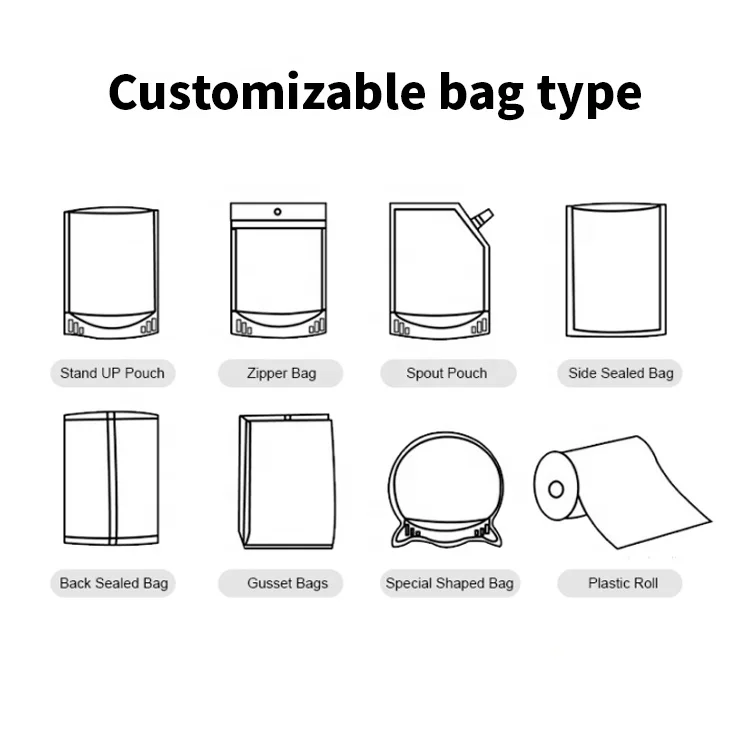
According to logistics data analysis, traditional rigid packaging (such as glass bottles and plastic cans) has an extremely high "empty load rate" during transportation.
Comparative Data: Transporting the same volume of product requires 15%-20% fewer trucks than rigid containers.
Storage Efficiency: In its unfilled state, 1000 stand-up pouches occupy only 1/10 of the space of the same number of plastic cans.
Conclusion: Changing packaging formats can directly optimize your supply chain costs and reduce your carbon footprint.
Packaging is not just a protective shell, but also a marketing tool. Data research shows that stand-up pouches have a significantly higher stop-and-watch rate on shelves than flat bags.
| Bag Type | Vertical display area (sq.in) | Average consumer gaze duration |
| Bake Seal Bag | 12.5 | 1.2 s |
| Stand Up Pouch | 28.4 | 3.8 s |
The "display wall" effect provided by stand-up pouches gives brands more space to print QR codes, nutrition facts labels, or brand stories, thereby increasing the depth of interaction between brands and consumers.
Drop Resistance Test: Stand-up pouches made of composite materials (such as PET/NY/PE) have a near-zero breakage rate when dropped from a height of 1.5 meters.
Preservation Performance: Introducing AL (aluminum foil) or high-barrier films can reduce the oxygen permeability (OTR) to as low as $0.1 cm^3/(m^2·24h·0.1MPa)$, which means the product's shelf life can be extended by more than 30%.
During the manufacturing process, the following three key KPIs must be considered:
Coefficient of Static Friction (COF):** Determines the smoothness of the pouch on an automated filling line. It is generally recommended to control it between $0.2 and $0.3.
Seal Strength:** Ensures that the bottom gusset (bottom pleats) will not burst under load.
Barrier Coefficient:** Precisely match the thickness of the composite layer (e.g., 80 microns vs. 120 microns) based on the product's fat content and water activity.
Data doesn't lie. Stand-up pouches have become the most cost-effective flexible packaging solution by reducing transportation costs, increasing shelf turnover, and minimizing product spoilage.
In the modern packaging industry, stand-up pouches are undoubtedly a major trendsetter. Whether it's their upright presence on supermarket shelves or their space-saving design in kitchen cabinets, they perfectly balance aesthetics and practicality.
But have you ever wondered how a flat piece of plastic film transforms into a packaging bag that stands steadily and provides moisture protection and freshness? Today, we'll break down the "birth story" of the stand-up pouch.
The strength of stand-up pouches lies in the fact that they are not made of a single material, but rather a multi-layered composite.
Outer layer: Usually PET, responsible for printing exquisite patterns.
Middle layer: May be aluminum foil (AL) or metallized film (VMPET), responsible for blocking oxygen and moisture.
Inner layer: Usually PE or CPP, responsible for heat sealing, ensuring the bag is airtight.
These materials are pressed together using an adhesive in a laminating machine, creating a high-performance "layered cake."
This is the secret to how stand-up pouches stand upright. After the roll of material enters the bag-making machine, the bottom is folded into a special W-shape or round bottom gusset.
Key point: This gusset is the "foot" of the stand-up pouch. When the bag is filled with product, gravity opens the bottom, allowing it to stand steadily.
Once the shape is folded, the heat sealing blades come into play.
Side sealing: The sides of the bag are firmly welded together.
Zipper installation: If it's a resealable bag, a zipper is heat-sealed onto the opening.
Valve (optional): If packaging coffee beans, a one-way degassing valve needs to be added.
Finally, high-speed cutting blades precisely cut the bags that are connected in a row. Each bag undergoes tensile strength testing and seal integrity checks to ensure that it is flawless when it reaches the customer.
1. PET/PE: High transparency, basic moisture resistance, low cost. Suitable for: Candy, nuts, grains, stationery, jewelry.
2. BOPP/Kraft Paper/PE: Matte texture, vintage and environmentally friendly. Suitable for: Coffee beans, tea, handmade cookies, dried goods.
3. PET/VMPET/PE: Good light-blocking and barrier properties. Suitable for: Puffed foods, pet food, instant powders.
4. PET/AL/NY/PE: Extremely strong barrier properties, puncture resistant. Suitable for: Wet wipes, essential oils, electronic components, high-end chemicals.
5. PET/NY/RCPP: Resistant to high-temperature cooking. Suitable for: Ready-to-eat meats, soups, pre-cooked meals, baby food.
6. Matte OPP/PE: Frosted texture. Suitable for: Face masks, clothing accessories, high-end snacks.
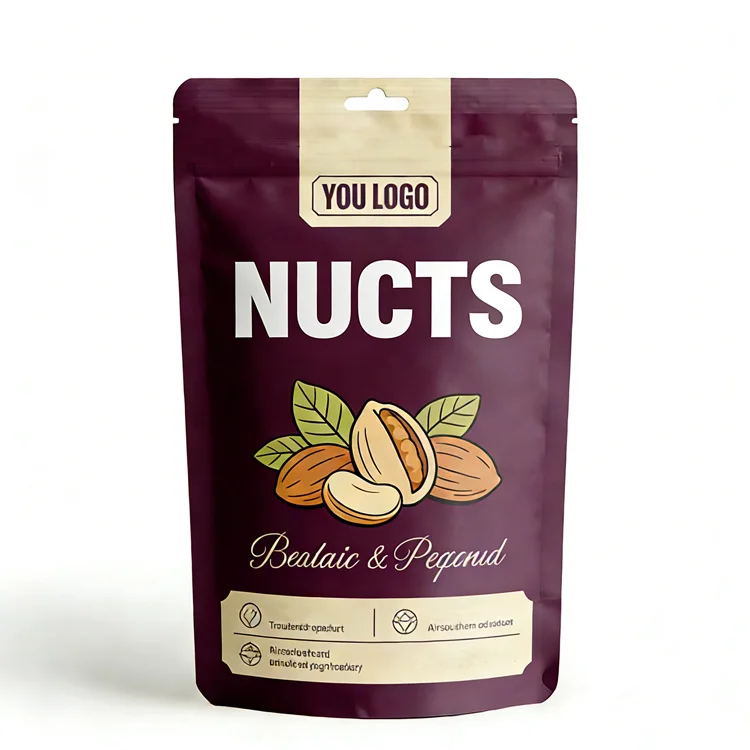
Brand exposure: Vertical display is more effective than flat bags.
Logistics advantages: Compared to bottles and jars, stand-up pouches are lighter and take up less space during transportation.
Environmental trend: For the same capacity, stand-up pouches typically use about 75% less plastic than rigid containers.


