


Author: Site Editor Publish Time: 25-11-2026 Origin: Site


The clock starts ticking on optimal freshness the exact moment a batch drops from the roaster. Left exposed to the elements, the complex and volatile compounds that give your morning cup its distinct flavor profile vanish into thin air. This harsh reality fuels an ongoing debate among specialty roasters, facility managers, and everyday consumers regarding the most effective preservation methods.
We often see production facilities making a critical error. They assume all barrier bags are created equal and can be used interchangeably. However, the physical and chemical behaviors of whole beans versus pre-ground coffee differ on a fundamental level. Consequently, engineered Coffee Bean Packaging differs significantly from its ground counterpart. This comprehensive technical guide explores the structural nuances of flexible packaging. By understanding these principles, you can make informed decisions to preserve product quality, extend shelf life, and elevate your brand presentation.
Active off-gassing: Freshly roasted whole beans require pouches equipped with one-way degassing valves. This safely vents carbon dioxide and prevents the bag from rupturing under pressure.
Rapid oxidation risks: Because of the pulverized cellular structure, ground coffee possesses a massive surface area. This makes it highly susceptible to instant flavor degradation.
Precision engineering matters: The sensitivity of a venting mechanism must be precisely tailored to the specific roast profile and bag volume.
Barrier materials dictate shelf life: Both physical formats require multi-layer laminates to achieve a near-zero oxygen transmission rate and block UV light.
Strategic formatting boosts ROI: Selecting the correct pouch structure directly impacts both manufacturing line efficiency and retail shelf appeal.
To understand why storage engineering diverges, we must examine the fundamental chemical transformations coffee undergoes post-roast. Specifically, the physical form of the product directly dictates how it interacts with the surrounding environment.
The science of preservation is heavily dependent on surface area. As the Grind Level becomes finer, shifting from a coarse French press texture to a highly fine espresso powder, the cellular structure of the bean is completely pulverized. This exponential increase in exposed surface area means ambient oxygen can penetrate the particles almost instantly. Conversely, whole beans effectively act as their own protective capsules. The intact cellular structure naturally traps volatile compounds and oils inside. This natural barrier significantly slows down the degradation process.
Oxygen remains the primary adversary on any packaging line. When oxygen molecules interact with delicate lipids and aromatics, lipid oxidation occurs. This leads swiftly to staleness and a rancid cup profile. Because of its shattered structure, Aroma Loss happens within mere minutes of milling if the powder is left exposed to the open air. The delicate floral, fruity, and acidic notes evaporate into the facility rather than staying in the final brew. Therefore, this extreme vulnerability makes specialized, airtight defense mechanisms an absolute necessity for pre-ground inventory.
Technical Specification | Whole Bean Packaging | Ground Coffee Packaging |
|---|---|---|
Degassing Valve | Mandatory standard valve | Requires specialized valve with nylon dust filter or no valve |
Atmosphere Modification | Nitrogen flushing recommended | Strict vacuum sealing or aggressive nitrogen flushing |
Primary Threat | Bag rupture from CO2 buildup | Rapid lipid oxidation and aroma dissipation |
Ideal Shelf Life Target | 6 to 12 months | 3 to 6 months |
Securing freshly roasted whole beans presents a unique set of physical challenges for packaging engineers. The primary concern is managing the heavy volume of gases actively emitted by the beans post-roast while simultaneously keeping external contaminants out.
During the thermal roasting process, complex carbohydrates break down. This generates a massive amount of carbon dioxide trapped within the core of the bean. Over the subsequent days and weeks, this gas is slowly released in a process known as degassing. If freshly roasted beans are sealed in a completely airtight container without a pressure release mechanism, the accumulating gas will cause the bag to bloat like a balloon. Eventually, the heat seams will rupture on the retail shelf. To circumvent this disaster, a one-way degassing valve is heat-welded into the pouch. This tiny piece of engineering allows built-up pressure to escape once internal PSI reaches a specific threshold. Furthermore, it completely blocks harmful ambient oxygen from creeping backward into the bag.
It is crucial to recognize that not all venting mechanisms are identical. The Valve Size and its venting capacity must perfectly match both the internal volume of the bag and the specific roast profile. Darker roasts are far more porous and release gas much faster than lighter, denser roasts. Consequently, they require a mechanism with a higher venting capacity. The internal mechanics typically rely on a precision rubber disc and a thin layer of sealant fluid like silicone oil. Cheap or improperly sized components frequently fail to reseal properly after burping gas. This mechanical failure leads to silent oxygen ingress and premature staling.
When shifting our operational focus to pre-ground inventory, the strategic approach must fundamentally pivot. Engineers must compensate for the extreme fragility of the milled product.
The overarching goal here is aggressively locking in volatile aromatics. Because pulverized coffee releases its trapped carbon dioxide almost immediately, often during the milling process itself, the prolonged degassing phase is drastically shortened. In many commercial facilities, the product is allowed to degas fully in massive industrial silos prior to final packing. In these specific production scenarios, Ground Coffee bags frequently skip the degassing valve entirely. Instead, they rely on absolute airtight seals and high-barrier laminates to prevent any flavor degradation.
To mount a robust defense against oxidation, packaging lines typically rely on two primary atmospheric modification techniques. Vacuum sealing involves mechanically extracting all ambient air from the pouch before heat-sealing the top. This creates the classic, rigid brick aesthetic often seen in supermarket aisles. It effectively halts oxidation until the consumer breaches the seal. Alternatively, nitrogen flushing is the gold standard in the specialty sector. This premium method pushes ambient oxygen out of the bag and replaces it with inert nitrogen gas just milliseconds before the sealing jaws close. Nitrogen does not react with delicate lipids, thereby preserving the intricate flavor profile without compressing the grounds into a hard, unyielding block.
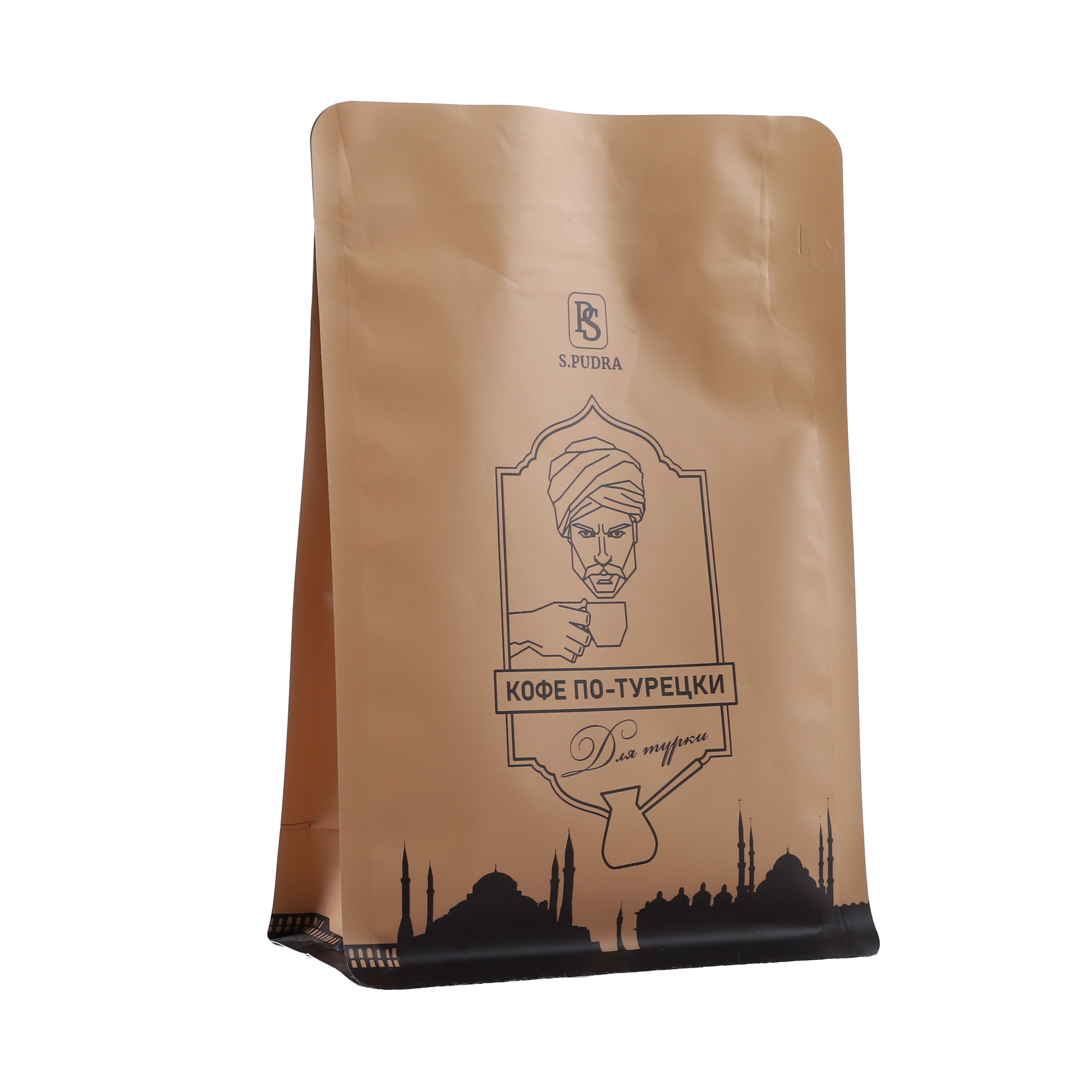
While the internal atmospheric demands differ wildly between whole beans and grounds, the external barrier requirements share common ground. Both formats demand formidable defense mechanisms against environmental degradation. Even the most advanced venting technology cannot save a batch if the pouch material itself is porous.
Premium storage solutions must act as an impenetrable shield against four primary adversaries. Oxygen causes lipid oxidation. Moisture degrades soluble compounds and invites mold growth. Ultraviolet light accelerates the breakdown of chemical structures via photo-oxidation. Finally, heat acts as a catalyst for all these degrading reactions.
To achieve an elite level of protection, modern manufacturers rely on engineered multi-layer film structures. A single material is rarely sufficient to block all environmental threats. Typically, high-performance bags utilize a layered approach. The outer layer utilizes natural Kraft paper or Matte PET to provide structural integrity, puncture resistance, and a pristine canvas for branding. The middle layer acts as the ultimate high-barrier defense. This core often employs a 7-micron aluminum foil or metallized film to stop nearly 100 percent of oxygen and UV light transmission. Finally, the inner layer consists of a 90 to 110-micron food-safe polyethylene. This ensures safe direct contact and provides excellent heat-sealability to maintain structural integrity during rough transit.
Selecting the optimal pouch requires a delicate balancing act between technical preservation needs and aggressive marketing goals. For roasters aiming to scale their operations, investing in professional-grade materials ensures that the exterior presentation matches the artisanal quality of the roast inside.
From an engineering perspective, the structural style of the pouch dictates filling line efficiency and retail shelf presence. Stand-up pouches, featuring a bottom gusset, are incredibly cost-effective and ideal for standard 250g to 340g retail volumes. Side gusset bags expand on the sides and are highly efficient for maximizing volume in shipping boxes. This makes them the traditional choice for larger 1kg wholesale batches. Meanwhile, flat-bottom box pouches combine the best of both worlds. They offer a sturdy, perfectly flat base and five distinct panels for expansive branding. This structure commands a premium presence widely favored by high-end specialty roasters.
Because whole beans are typically consumed over a period of weeks rather than days, user-friendly resealability is critical for long-term consumer satisfaction. Features like pocket zippers, integrated tin ties, and press-to-close mechanisms allow home brewers to easily re-seal the pouch after each morning routine. This minimizes ongoing oxygen exposure and maintains peak freshness long after the initial opening.
Analyzing recent search trends and market data, the industry is experiencing a massive paradigm shift. Modern consumers actively favor brands that prioritize eco-conscious practices. Consequently, packaging engineers are under immense pressure to develop sustainable solutions that do not sacrifice vital oxygen transmission rate performance.
Historically, creating a pouch that is both environmentally friendly and capable of blocking oxygen has been a significant engineering hurdle. Traditional aluminum foil laminates are notoriously difficult to recycle. However, recent innovations have spurred the widespread adoption of mono-material structures made entirely of recyclable polyethylene. These advanced pouches can be processed at standard soft plastic recycling facilities. Furthermore, the market is seeing a rise in high-barrier compostable bags utilizing plant-based films like PLA, paired with eco-friendly degassing valves. This ongoing technological trend allows roasters to align seamlessly with sustainable consumer values while fiercely protecting their product's integrity.
Procurement teams and independent roasters frequently encounter pitfalls that can severely compromise product quality and damage brand reputation. Avoiding these operational errors on the production line is essential.
A notoriously costly error is utilizing a standard whole-bean valve for finely pulverized coffee. The microscopic dust generated during milling can easily get sucked into the delicate mechanical workings of the valve. This clogs the rubber disc, causing the mechanism to stick in an open position. The catastrophic result is continuous oxygen ingress, leading to severe flavor degradation. Pre-ground inventory requires specialized valves equipped with integrated nylon filters to keep dust out of the mechanism entirely.
In an effort to trim overhead costs, some brands opt for thinner films with a lower micron count. However, roasted beans possess sharp, brittle edges. During shipping and handling, friction causes these edges to create micro-punctures in flimsy films. Even a microscopic tear completely compromises the barrier, rendering expensive vacuum seals and nitrogen flushes utterly useless. Always opt for a robust thickness that guarantees structural integrity from the warehouse to the kitchen counter.
The physical and chemical disparities between whole beans and pre-ground coffee mean their storage solutions are absolutely not interchangeable. Whole beans demand active degassing via specialized pressure-release valves. In contrast, pulverized coffee requires aggressive, airtight defense mechanisms like nitrogen flushing to combat rapid oxidation. By investing in the correct structural materials, roasters safeguard their meticulous craft, ensuring that every cup brewed delivers the exact flavor profile intended.
Take the time today to critically evaluate your current storage infrastructure. Ready to upgrade your packaging line with professional, high-barrier solutions tailored to your specific roast and texture? Explore the extensive range of flexible packaging options at Mstar Packaging to guarantee your product stands out in a crowded market for all the right reasons.
It largely depends on your specific production workflow. If the batch is allowed to degas fully in industrial silos prior to grinding, a valve isn't strictly necessary. In this case, vacuum sealing is often the preferred route. However, if you are packing the product immediately after the milling process, a specialized valve equipped with a protective dust filter is absolutely required to prevent the pouch from rupturing.
When housed in high-quality, nitrogen-flushed pouches featuring a one-way valve, whole beans can maintain their peak freshness for anywhere from six to twelve months unopened. In contrast, pre-ground varieties degrade at an accelerated rate due to their shattered cellular structure. They typically hold their peak quality for only three to five months even under ideal, unopened conditions.
While physically possible on the filling line, it is highly unadvisable from an engineering standpoint. The fine microscopic particles can easily clog a standard one-way valve, rendering it defective. Furthermore, a standard bean pouch may not provide the rigorous vacuum or nitrogen-flushed environment necessary to halt the rapid loss of volatile aromatics.
Absolutely. An improperly sized valve or one with an incorrect sensitivity rating might fail to vent carbon dioxide fast enough. This causes the pouch to bloat and stresses the heat seams. Conversely, a valve that vents too easily or lacks sufficient sealant fluid might fail to keep ambient oxygen out completely, triggering premature staling.
These specific packages have undergone a rigorous vacuum-sealing process. During production, all the ambient air, and consequently the harmful oxygen, is mechanically sucked out before the final heat seal is applied. This halts oxidation in its tracks. Once the consumer snips the bag open and breaks the vacuum, the package becomes soft, and the contents should ideally be transferred to an airtight container for ongoing daily use.
That small hole is actually the exterior vent of the one-way degassing valve. It is a critical engineering feature designed to let carbon dioxide escape from freshly roasted beans while preventing outside oxygen from entering. Without this tiny hole and the valve mechanism behind it, the bag would inflate and potentially burst.
Yes, aluminum foil or metallized films offer the highest barrier properties available in flexible packaging. They provide a near-zero oxygen transmission rate and completely block UV light. Both of these are primary catalysts for coffee degradation. For maximum shelf life, a multi-layer structure incorporating a foil core is considered the industry gold standard.


