


Author: Site Editor Publish Time: 04-08-2026 Origin: Site


Packaging failures at the retail level carry significant financial and reputational costs. Compromised barrier integrity, poor shelf stability, and misaligned artwork lead to product spoilage, retailer chargebacks, and a loss of consumer trust. When a package fails to perform on the shelf or in the hands of the end-user, the underlying issue often stems from a disconnect during the design and specification phase. Transitioning a product from a concept to physical retail shelves requires navigating complex trade-offs. Brands must balance material performance, structural design, manufacturing constraints, and unit economics. A pouch that looks great on a flat dieline might warp or tip over once filled. A material chosen purely for aesthetics might fail to protect the product from moisture or oxygen degradation. This guide serves as a technical framework for product managers and packaging engineers. It provides the necessary criteria to evaluate, specify, and finalize designs for stand up pouches that meet strict compliance standards and deliver reliable retail performance.
Barrier matching is non-negotiable: Material selection must be dictated by the product's specific Oxygen Transmission Rate (OTR) and Water Vapor Transmission Rate (WVTR) requirements, not just aesthetics.
Structure dictates stability: The choice of bottom gusset (Doyen, K-Seal, or Plow) directly impacts the pouch's ability to remain upright under specific product weights and volumes.
Functionality drives retention: Integrating the correct closures, such as spouts or specialized zippers, is critical for user experience but requires strict adherence to filling line tolerances.
Print specifications require structural foresight: Artwork must account for physical distortion when the pouch is filled; flat dielines do not accurately represent the final 3D retail footprint.
Before selecting materials, audit the product's chemical makeup. Identify the acidity, moisture content, and sensitivity to UV light or oxygen. Highly acidic foods require different sealant layers than dry powders. Products sensitive to oxidation need high barrier films to prevent rancidity. Understanding these variables ensures the packaging protects the product throughout its intended shelf life. You must test the product against various film structures in a controlled lab environment. Accelerated aging tests help determine how the product interacts with the inner sealant layer over time. If you skip this step, you risk delamination, where the layers of the pouch separate due to chemical incompatibility.
Define the physical footprint requirements for the retail space. Consider shelf height and depth limitations. Determine if the product requires peg-hole hanging or if it will utilize freestanding displays. A pouch that is too tall may not fit on standard grocery shelves. One without a hang hole misses out on impulse-buy pegboard placements. Retailers often have strict guidelines regarding package dimensions. You need to request the retailer's routing guide before finalizing your pouch dimensions. This ensures your product fits perfectly within their planograms. Failure to comply can result in your product being placed on a bottom shelf or rejected entirely.
Packaging must survive the journey from the filling line to the retail shelf. Detail the temperature fluctuations and atmospheric pressure changes expected during shipping. This is especially important for air freight or high-altitude transport. Evaluate the impact resistance required to withstand vibration and drops during transit without seal failure or material puncture. Palletization adds another layer of stress. Pouches at the bottom of a pallet bear the weight of the products above them. If the seals are weak or the gusset is improperly designed, the bottom pouches will burst. You must conduct drop tests and vibration simulations to validate the structural integrity of your design.
Different product categories demand specific packaging functionalities to maintain quality and usability. We see distinct requirements across various sectors.
Industry | Key Performance Requirements | Common Failure Points |
|---|---|---|
Coffee & Tea | High gas barriers, degassing valves, UV protection | Valve failure, flavor loss due to poor OTR |
Pet Food & Treats | Puncture resistance, fat-resistance, robust reclosability | Grease staining, zipper track clogging |
Cosmetics | Chemical compatibility, precise dispensing fitments | Active ingredient migration, delamination |
Liquids & Purees | High burst strength, drop-test survival, spill resistance | Seal blowouts, spout leakage |
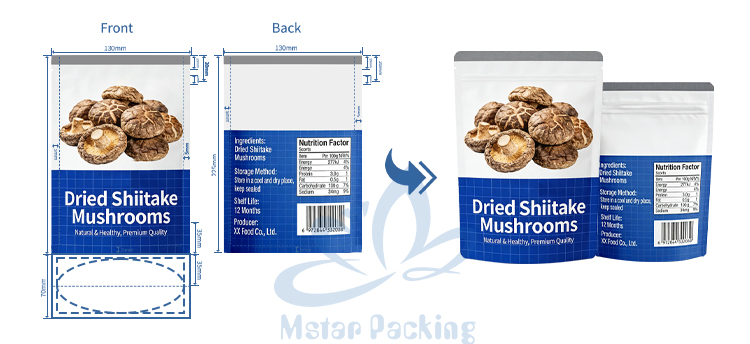
For maximum protection, evaluate aluminum foil and metalized polyester (VMPET). These materials offer exceptional defense against light, moisture, and oxygen. They are ideal for sensitive products. However, they lack transparency, preventing consumers from seeing the product inside. When product visibility is required, consider clear barrier films utilizing EVOH (Ethylene Vinyl Alcohol) or ALOx/SiOx coatings. These structures provide substantial protection while allowing for window designs in high barrier stand up pouches. You must balance the need for visibility with the required shelf life. Clear barriers often have slightly higher transmission rates than foil. You need to factor this into your expiration date calculations.
A kraft stand up pouch offers a natural, organic aesthetic but requires structural reinforcement. Kraft paper alone provides no barrier properties. It must be laminated with internal polymer or foil layers to protect the product. Address the risks of scuffing, moisture absorption on the outer layer, and tearing during transit. Implement mitigation strategies, such as applying matte varnishes, to enhance durability while maintaining the desired look. The paper layer can also cause issues during heat sealing if the temperature is too high, leading to scorching. You must calibrate your sealing jaws specifically for paper-laminated structures.
The industry is shifting toward mono-material structures, primarily 100% PE (Polyethylene), to achieve Store Drop-Off recyclability. While beneficial for end-of-life disposal, these materials often exhibit reduced barrier performance and lower heat resistance during sealing compared to multi-material laminates. Compostable films, such as PLA and cellulose-based options, present limitations regarding shelf-life degradation. They require specific industrial composting conditions to break down effectively. When specifying sustainable materials, you must adjust your filling line parameters. Mono-materials have a narrower sealing window, increasing the risk of melted film or weak seals if the temperature is not precisely controlled.
The Doyen gusset features a U-shaped seal that provides a stable base. This design is best suited for lightweight products under one pound and low volumes. While it offers excellent stability for smaller items, the U-seal limits the internal volume compared to other gusset formats. It is less ideal for bulky goods. The Doyen style is common in snack foods and small confectioneries. The curved seal helps the pouch stand upright even when partially empty. However, the manufacturing process requires precise alignment to ensure the U-seal is perfectly centered.
Ideal for medium-to-heavy products ranging from one to five pounds, such as pet food or bulk powders. The K-Seal design utilizes diagonal seals at the corners, which reduces stress on the bottom film. This structural reinforcement prevents blowouts during transit or if the pouch is dropped. It ensures the package remains intact under moderate weight. The K-Seal provides a flatter bottom profile than the Doyen, allowing for more efficient use of internal volume. This makes it a preferred choice for granular products that need to settle evenly at the base of the pouch.
Necessary for heavy, dense products over five pounds, including liquids, soils, or bulk granular items. In a Plow bottom design, the product's weight rests directly on the bottom of the pouch rather than on the seals. This configuration offers maximum structural integrity, preventing seal failure under heavy loads. The Plow bottom is essentially a single piece of film folded to create the base. This eliminates the bottom seal entirely, removing the most common failure point for heavy products. It is the standard for large format packaging in the lawn and garden sector.
Standard zippers can fail when used with fine powders. Specialized flanged zippers are necessary for baking mixes, protein powders, or spices to prevent track clogging and ensure reliable resealability. For pharmaceuticals, cannabis, or chemical products, Child-Resistant (CR) closures are regulatory requirements. Integrating CR zippers impacts overall pouch dimensions and requires specific opening instructions. You must account for the extra headspace required to accommodate the zipper profile. If the zipper is placed too close to the product fill line, the sealing jaws may crush the zipper during the final closure process.
When designing a spouted stand up pouch, match the spout inner diameter (ID) to the product's viscosity. Thin liquids require smaller diameters, while thick purees need wider openings for efficient dispensing. Consider placement options carefully. Top-center spouts are best for automated filling through the spout. Corner spouts maximize the printable area on the front panel and allow for standard top-filling before sealing. The integration of the spout requires specialized heat sealing equipment. The film must melt evenly around the rigid plastic spout to create a hermetic seal. Any variation in temperature or pressure will result in micro-leaks.
One-way degassing valves are a mechanical requirement for coffee or fermented products. They release off-gassed CO2 without allowing ambient oxygen to enter, preventing the pouch from bursting while maintaining freshness. Evaluate laser scoring versus standard punched tear notches. Laser scoring provides precise, clean-tear capabilities across the pouch, enhancing the consumer opening experience. Analyze retail display hanging features based on merchandising strategy. Euro-holes (sombrero style) offer stability on peg-boards, while round hang holes are standard for simple displays. For heavy, bulk formats, integrate die-cut handles to create consumer-friendly carrying options.
Digital printing is best for short runs, multiple SKUs, and rapid prototyping. It carries a higher per-unit cost but eliminates plate fees. Flexographic printing serves as the industry standard for medium-to-large runs, offering a balance between setup costs and per-unit efficiency. Rotogravure printing is required for ultra-high volume and photographic image quality, though it demands a significant initial investment in metal cylinders. You must select the printing method based on your volume projections and artwork complexity. Digital is excellent for market testing, while rotogravure is necessary for established brands requiring absolute color consistency across millions of units.
High-gloss surface finishes provide maximum shelf pop and color saturation. Matte coatings offer a premium, organic feel. Utilize spot UV and tactile varnishes to apply selective gloss highlights on matte surfaces, drawing focus to branding or specific product callouts. Metallic and cold foil embellishments involve printing over metalized substrates to create high-end visual accents without compromising the pouch's barrier properties. These finishes require precise registration during the printing process. If the spot UV layer is misaligned with the printed artwork, the final product will look defective and unprofessional.
Design artwork with the fill volume in mind to account for 3D distortion. Elements placed too close to the gusset or side seams will warp when the pouch expands. Define safe zones and non-print areas required for heat sealing, tear notches, and zipper integration to ensure critical artwork remains visible and functional. You must request a 3D rendering or a physical mockup of the filled pouch before approving the final artwork. This allows you to verify that logos and text remain legible when the pouch takes its final shape on the retail shelf.
Mandate vector-based text and logos to avoid pixelation during printing.
Transition artwork from RGB/CMYK to the Pantone Matching System (PMS) to maintain brand consistency.
Ensure barcodes are scaled correctly and placed vertically (ladder style) in areas of low curvature.
Verify that all fonts are outlined to prevent substitution errors during pre-press.
Confirm that bleed areas extend at least 1/8 inch beyond the dieline to account for cutting shifts.
Pre-made pouches offer a lower barrier to entry and require standard pouch-filling equipment. They are ideal for complex structures involving spouts or custom shapes. Rollstock for Form-Fill-Seal (FFS) machines is highly efficient for massive scale but requires significant capital expenditure in machinery and limits structural complexity. When using pre-made pouches, you must ensure the pouches open easily on the filling line. Static electricity or blocking (where the inside layers stick together) can cause the pouches to misfeed, leading to line jams and product spillage.
Understand how dwell time and temperature affect seal integrity. The thickness of the pouch, especially at the side-gusset transition points where multiple layers meet, requires precise heat control to prevent weak seals or melted film. You must conduct seal strength tests using a tensiometer to verify that the seals meet the required specifications. If the sealing temperature is too low, the pouch will leak. If it is too high, the film will distort and weaken, leading to blowouts during transit.
To successfully launch a stand up pouch, focus on specific technical requirements rather than just visual design. Verify material specifications against product demands. Test structural formats with actual fill weights. Confirm filling line capabilities before finalizing closures.
Audit your product's chemical and physical properties to define exact barrier requirements.
Request physical prototypes and conduct drop tests with the actual product weight.
Verify your artwork against a 3D distortion grid to ensure logo visibility.
Calibrate your filling line sealing jaws to match the specific thermal properties of your chosen film.
A: Analyze your product's sensitivity to oxygen, moisture, and light. Review the required Oxygen Transmission Rate (OTR) and Water Vapor Transmission Rate (WVTR) to select appropriate foil, metalized, or clear barrier films.
A: Flat dielines do not account for the 3D expansion of a filled pouch. Keep critical design elements away from gussets and side seams to prevent warping when the package expands.
A: A Doyen uses a U-shaped seal best for lightweight items under one pound. A K-Seal uses diagonal corner seals to reduce stress, making it suitable for medium-to-heavy products up to five pounds.
A: No. Standard zippers easily clog with fine powders, preventing a secure seal. Use specialized powder-proof flanged zippers to ensure reliable resealability for baking mixes or protein powders.
A: Kraft paper alone offers no barrier protection. It must be laminated with polymer or foil layers, which often makes the final pouch non-recyclable unless specific mono-material or certified compostable structures are used.


