


Author: Site Editor Publish Time: 20-08-2026 Origin: Site


Supply chain survivability and consumer-facing aesthetics constantly compete for resources. Packaging inefficiencies directly erode profit margins across warehousing and transportation networks. Companies face a dual challenge: preventing transit damage while maintaining shelf appeal and brand integrity. Solving this problem often results in either over-packaging or compromised product safety. High damage rates drive up reverse logistics costs. Conversely, excessive materials inflate freight charges and warehouse handling times.
You must distinguish between retail and logistics layers to optimize dimensional weight, ensure compliance, and streamline omnichannel distribution. Aligning these layers strategically eliminates dead space and reduces material waste. This approach protects the product from the manufacturing floor to the retail shelf without sacrificing the consumer unboxing experience. Understanding the distinct engineering requirements for each packaging type is the first step toward building a resilient, cost-effective supply chain.
Retail packaging prioritizes consumer engagement, brand communication, and point-of-sale protection (primary and secondary layers).
Transport packaging focuses strictly on logistics efficiency, load stability, and environmental protection during transit (tertiary layers).
OEM packaging serves as a specialized subset of commercial packaging, stripping away retail accessories to maximize enterprise transit density.
Evaluating commercial packaging requirements requires balancing material costs against the total cost of damage, warehousing bottlenecks, and freight inefficiencies.
Designing both packaging types in tandem reduces dimensional weight (DIM) costs, minimizes void fill, and accelerates warehouse handling.
Packaging operates in a strict hierarchy. Each layer serves a distinct operational function. Mixing the requirements of these layers leads to structural failures or bloated material costs. You must define the boundaries of each layer to engineer effective solutions that survive the physical realities of modern distribution networks.
Primary packaging is the material in direct contact with the product. Examples include glass beverage bottles, aluminum cans, flexible pouches, or plastic blister packs for electronics. This layer provides immediate containment and protection from contamination. It acts as the first line of defense against moisture, oxygen transmission, and light degradation. Primary packaging also carries mandatory regulatory information, such as nutrition facts, ingredient lists, or chemical warnings.
Secondary packaging groups primary units together for retail display and consumer purchase. Think of branded folding cartons, display boxes, or shrink-wrapped multi-packs. This layer sits directly on the retail shelf. It serves as the primary marketing vehicle, capturing consumer attention through high-fidelity graphics, spot UV coatings, and complex structural designs. Success criteria for retail packaging include visual impact, unboxing experience, regulatory labeling compliance, and tamper evidence. Structural integrity at this level only needs to withstand manual handling by retail associates and consumers. It is not designed to survive a drop from a forklift or the vibration of a long-haul truck.
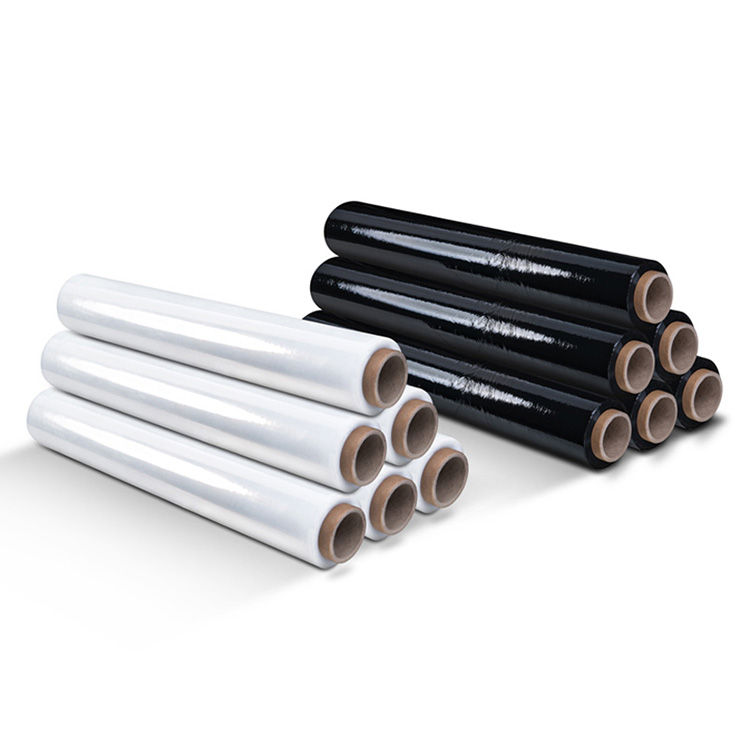
Tertiary layers handle the brutal realities of the supply chain. Transport Packaging acts as the exterior shell used for bulk handling, warehouse storage, and freight shipping. Common materials include corrugated master shippers, timber pallets, stretch wrap, steel strapping, and edge protectors. This layer rarely reaches the end consumer, meaning aesthetic considerations hold zero operational value.
The success criteria here focus entirely on logistics and physics. Tertiary packaging must maintain structural integrity under massive compression loads during warehouse stacking. When you stack pallets three-high in a distribution center, the bottom boxes bear hundreds of pounds of static load. It requires moisture resistance to survive fluctuating humidity in ocean containers or uninsulated trailers. Palletization efficiency dictates how well the boxes cube out on a standard 48x40 GMA pallet. Furthermore, this layer must feature high-contrast barcode and RFID scannability to ensure automated sorting systems can route the freight without manual intervention.
Original Equipment Manufacturer (OEM) packaging operates differently than traditional retail formats. It functions as a specialized subset of Commercial Packaging engineered strictly to protect components during transportation between manufacturing facilities. When shipping raw materials, automotive parts, or electronic sub-assemblies, aesthetic appeal is irrelevant.
OEM packaging intentionally omits excess retail materials. You will not find consumer manuals, glossy display accessories, or high-end graphics here. Stripping away these elements reduces unit costs and maximizes pallet density. Engineers focus solely on part isolation. They use customized foam inserts, molded pulp trays, or anti-static bags to prevent abrasion and electrostatic discharge between precision components. This utilitarian approach ensures parts arrive at the assembly line undamaged, ready for immediate integration. Returnable dunnage is also common in OEM networks, where custom-molded plastic trays cycle back and forth between the supplier and the manufacturer.
Understanding the functional divide between retail and logistics layers prevents costly engineering mistakes. You cannot evaluate a master shipper using the same criteria applied to a display carton. The physical forces acting upon them dictate entirely different material choices and testing protocols.
Logistics packaging requires rigorous engineering to survive transit hazards. Materials must provide shock absorption to protect against drops during cross-docking operations. Vibration dampening is critical to prevent product fatigue during long-haul truck transit. Engineers must also account for extreme temperature and humidity fluctuations. Corrugated board absorbs moisture from the air. In high-humidity environments, a standard box can lose up to 40% of its stacking strength. You must specify the correct Edge Crush Test (ECT) or Mullen Burst rating to counteract this degradation.
Retail packaging faces a much gentler environment. It requires scuff resistance to maintain graphic fidelity during shelf life. Structural integrity focuses on preventing crushing during manual restocking and consumer handling. A folding carton only needs enough rigidity to stand upright on a planogram.
To validate durability, logistics layers rely on strict testing protocols. The International Safe Transit Association (ISTA) and ASTM publish standardized test sequences. These protocols simulate real-world supply chain hazards using drop testers, vibration tables, and compression presses. Passing ISTA certification is a mandatory evaluation dimension for any viable transit solution.
Standardized Testing Protocols for Logistics Packaging
Test Protocol | Primary Application | Key Hazards Simulated |
|---|---|---|
ISTA 1A | Non-simulation integrity testing for products under 150 lbs | Basic shock and vibration, fixed displacement |
ISTA 3A | General simulation for parcel delivery system shipments | Random vibration, varied drop heights, top-load compression |
ISTA 6-Amazon | E-commerce fulfillment and SIOC certification | Conveyor impacts, multiple drops, loose load vibration |
ASTM D4169 | Performance testing of shipping containers and systems | Environmental conditioning, rail switching shocks, altitude |
Retail layers demand high-fidelity printing to drive consumer purchasing decisions. Brands invest heavily in litho-lamination, custom spot UV finishes, foil stamping, and intricate die-cuts. The return on investment for these features is measured in shelf visibility and brand equity. A premium unboxing experience directly influences customer retention and perceived product value.
Logistics layers reject aesthetic investments. Tertiary packaging relies on standardized, low-cost materials like kraft corrugated board. Printing is strictly utilitarian. Flexographic printing applies basic black or single-color ink directly to the board. Graphics are limited to handling instructions, routing data, and compliance marks. Spending money on multi-color printing for a master shipper wastes capital, as the box will be discarded in the retailer's backroom before the consumer ever sees it.
Follow these steps to optimize utilitarian printing on master shippers:
Limit artwork to one or two high-contrast colors, typically black or dark blue, to ensure barcode scanners can read the print easily.
Use flexographic printing directly on the kraft board rather than applying expensive litho-labels.
Place critical handling icons, such as directional arrows and fragile symbols, on at least two adjacent panels for visibility during pallet building.
Ensure all text meets minimum font size requirements for warehouse workers reading labels from a distance.
Tertiary packaging acts as the critical bridge between the warehouse and the transportation network. Engineers design these outer layers specifically for material handling equipment. Pallet dimensions must align with forklift tines. Master shippers must feature dimensions that prevent overhang on the pallet. Even a half-inch of overhang can reduce the compression strength of a unit load by 30%, leading to crushed boxes at the bottom of the stack. Automated sorters and conveyors require flat, rigid surfaces to move freight without jamming or misrouting.
Retail packaging is engineered for the human hand. It focuses on planogram compliance, ensuring the product fits perfectly on standardized retail shelving. Easy restocking by retail associates is a primary design driver. Secondary cartons often feature easy-open tabs or perforated tear-aways to speed up the shelf-replenishment process.
Packaging decisions directly impact the bottom line. Evaluating materials solely on unit cost leads to catastrophic downstream expenses. You must align packaging specifications with broader operational outcomes, factoring in freight penalties, labor rates, and damage claims.
Over-engineering retail packaging at the expense of transport durability creates massive financial exposure. A beautiful display carton means nothing if the product arrives crushed. High damage rates trigger reverse logistics costs, replacement manufacturing, and dissatisfied retailers. Conversely, over-engineering the tertiary layer wastes material and inflates shipping costs.
Evaluating commercial packaging requires a comprehensive financial framework. You must calculate the unit cost of the materials alongside the freight cost driven by dimensional weight. Factor in the historical damage rates and the labor required for assembly and packing. Balancing these variables reveals the true cost-to-serve. A slightly more expensive corrugated master shipper often pays for itself by reducing damage rates and eliminating the need for internal void fill.
Cost-to-Serve Evaluation Factors
Cost Category | Impact on Retail Packaging | Impact on Logistics Packaging |
|---|---|---|
Material Unit Cost | High (premium boards, coatings, foils) | Low (standard kraft corrugated, stretch film) |
Freight Penalties | Low (usually nested inside shippers) | High (dictates overall DIM weight and pallet cube) |
Labor to Assemble | Moderate (folding cartons, inserting product) | High (erecting boxes, taping, palletizing, wrapping) |
Damage Claims | High (scuffed graphics lead to unsellable units) | High (structural failure destroys entire unit loads) |
Omnichannel distribution shatters traditional packaging models. Using the same packaging for direct-to-consumer e-commerce and traditional brick-and-mortar retail rarely works. Brick-and-mortar relies on bulk pallet shipments handled by forklifts. E-commerce relies on single-unit parcel shipping, which subjects the product to significantly higher drop frequencies, conveyor impacts, and manual throwing by delivery drivers.
To bridge this gap, companies pursue "Ships in Own Container" (SIOC) certifications. SIOC allows a product to ship through parcel networks without requiring an additional overbox. This certification bridges the gap between retail and logistics layers. It maintains compliance with major e-tailer mandates while drastically reducing dimensional weight and material consumption. Achieving SIOC requires reinforcing the primary or secondary packaging to withstand ISTA 6-Amazon testing protocols. For example, a blender manufacturer might upgrade their retail carton from a standard folding board to an E-flute corrugated board, allowing it to survive parcel delivery without an outer brown box.
Sustainability mandates force companies to rethink single-use materials. Closed-loop systems utilizing reusable transport packaging offer a viable alternative for commercial networks. High-density polyethylene (HDPE) totes, returnable plastic pallets, and collapsible bulk containers replace disposable corrugated board and timber. These assets survive hundreds of trips, drastically reducing landfill waste and continuous procurement costs.
Scaling reuse in the retail sector requires strict operational focus. You must build the reverse logistics infrastructure needed to manage multi-trip transport assets. Tracking, retrieving, and sanitizing empty totes adds complexity to the supply chain. Companies must compare the logistics costs of asset repositioning against the continuous procurement costs of single-use recyclable retail packaging. Closed-loop systems work best in dense, highly controlled distribution networks where asset loss remains low, such as a dedicated fleet moving goods between a central distribution center and regional retail stores.
Siloed engineering creates inefficiency. When marketing teams design the retail carton and logistics teams design the master shipper independently, the result is wasted space. Tandem design integrates both layers from the start, ensuring the primary product dictates the dimensions of every subsequent layer.
Freight carriers charge based on dimensional weight, not just actual weight. DIM weight penalizes large, lightweight boxes. Designing retail and logistics layers simultaneously eliminates dead space. Engineers start with the primary product and build outward. They size the secondary carton to fit perfectly within the master shipper, which in turn cubes perfectly onto the pallet without overhang or underhang.
This inside-out approach reduces the need for dunnage. When primary cartons fit snugly inside the master shipper, products cannot shift during transit. Eliminating bubble wrap, air pillows, and kraft paper void fill lowers material costs and accelerates the packing process. A reduction of just half an inch in master shipper dimensions can significantly lower DIM weight charges across thousands of shipments.
Follow these steps to calculate and optimize DIM weight:
Measure the exact length, width, and height of the fully sealed master shipper in inches.
Multiply the length by the width by the height to determine the total cubic volume.
Divide the total cubic volume by the carrier's specific DIM divisor (commonly 139 for domestic parcel shipments).
Compare the resulting DIM weight to the actual physical weight of the package. The carrier will charge based on whichever number is higher.
Adjust the primary and secondary packaging dimensions to shave fractions of an inch off the master shipper, recalculating until the DIM weight aligns closely with the actual weight.
Retail-Ready Packaging (RRP) and Shelf-Ready Packaging (SRP) represent the ultimate integration of tertiary and secondary layers. RRP acts as a hybrid solution. It functions as a robust master shipper during transit, protecting the goods from supply chain hazards. Upon arrival at the store, retail associates use perforations to tear away the outer panels, instantly converting the shipper into a branded shelf display.
Evaluating RRP requires analyzing value influencing factors. The primary benefit is massive labor savings at the retail level. Associates no longer unpack individual units; they simply place the entire RRP unit on the shelf. However, this convenience requires increased upfront structural design costs. RRP demands higher-grade corrugated board and precise die-cutting. If the perforations are too deep, the box fails during transit. If they are too shallow, the retail worker tears the graphics, ruining the shelf presentation. Engineering the perfect tear-away requires extensive prototyping.
Deploying new packaging strategies introduces operational risk. Supply chains rely on predictability. Changing material specifications can trigger unforeseen bottlenecks if not managed correctly. You must anticipate these failures before they hit the warehouse floor.
A common risk involves compensating for weak retail packaging with excessive tertiary packaging. If the primary carton lacks structural integrity, warehouse teams often overpack the master shipper with heavy-duty corrugated and excessive void fill. This "Russian Doll" effect drives up DIM weight, increases material waste, and frustrates end consumers who have to dispose of the excess materials.
Under-packaging poses an equal threat. Stripping too much material to save costs leads to catastrophic transit damage. Mitigate these risks by conducting transit simulation testing early in the product development cycle. Do not wait until the retail carton is finalized to test the master shipper. Iterative testing finds the exact material threshold required to protect the product without adding unnecessary bulk. Test the entire unit load, including the stretch wrap and pallet, to ensure the system works holistically.
Sourcing retail cartons and master shippers from disconnected vendors creates tolerance mismatches. Manufacturing variances exist in all paper products. Paper absorbs moisture and expands. If Vendor A produces the primary carton 2mm too large, and Vendor B produces the master shipper 2mm too small, the cartons will not fit. This leads to bulging master shippers, compromised compression strength, and pallet overhang.
Mitigate this risk by partnering with integrated suppliers who manufacture both layers. If using multiple vendors, utilize packaging engineers to manage cross-vendor specifications. Establish strict dimensional tolerances and require pre-production fit tests. Unified engineering ensures all layers nest together perfectly, maintaining the structural integrity of the entire unit load. Demand physical samples from all vendors and pack them on your actual warehouse lines before approving full production runs.
Retail packaging drives revenue through customer acquisition and brand positioning. Logistics packaging protects that revenue by ensuring supply chain survivability and minimizing freight costs. Treating these layers as isolated components leads to bloated DIM weight, high damage rates, and inefficient warehousing. Integrating the engineering process aligns material costs with operational realities.
Decision-makers must evaluate packaging partners based on their ability to engineer both layers holistically. Look for partners who adhere strictly to ISTA testing standards and demonstrate a proven capacity to optimize dimensional weight. A supplier who understands the intersection of shelf appeal and pallet density provides a significant competitive advantage.
Conduct a comprehensive packaging audit to identify void space and eliminate unnecessary dunnage across your fulfillment lines.
Review historical transit damage data to pinpoint structural failures in your current tertiary layers.
Request tandem-designed prototypes from qualified packaging engineers to visualize the integration of retail and logistics layers.
Calculate your current DIM weight penalties and establish a baseline for freight cost reduction.
Execute a pre-production fit test with all vendors to eliminate tolerance mismatches before scaling production.
A: Primary packaging is the material in direct contact with the product, like a beverage bottle. Secondary packaging groups primary units together for retail display, such as a branded folding carton. Tertiary packaging is the exterior layer used for bulk handling, warehouse storage, and freight shipping, like a corrugated master shipper and pallet.
A: Standard retail boxes usually fail in parcel shipping without structural reinforcement. To use retail packaging for transit, it must achieve SIOC (Ships in Own Container) certification. This requires engineering the retail box to withstand ISTA drop and vibration testing, ensuring it survives the supply chain without an additional overbox.
A: It is the broader category encompassing enterprise packaging solutions. It prioritizes durability, bulk transit efficiency, and component protection over consumer aesthetics. This category focuses on moving goods safely through supply chains, utilizing materials like heavy-duty corrugated board, stretch wrap, and custom foam inserts.
A: OEM packaging is designed purely for component protection during transport between manufacturing facilities. It intentionally omits the consumer manuals, display accessories, and high-end graphics found in retail packaging. This utilitarian approach reduces material costs and maximizes pallet density for enterprise shipments.
A: Freight carriers charge based on Dimensional (DIM) weight, which calculates shipping costs based on box volume rather than just actual weight. Optimized tertiary packaging eliminates dead space and void fill. By reducing the outer dimensions of the master shipper, companies significantly lower their DIM weight shipping charges.
A: RRP is a hybrid tertiary and secondary solution. It protects goods during transit like a standard master shipper. Upon arriving at the store, retail associates use built-in perforations to tear away outer panels, instantly converting the box into a shelf display. This drastically reduces retail labor costs.
A: ISTA testing validates packaging performance before deployment. It uses standardized laboratory protocols to simulate real-world supply chain hazards, including drops, vibration, and compression. Passing ISTA tests ensures the packaging design will protect the product through the logistics network, reducing damage rates and reverse logistics costs.


