


Author: Site Editor Publish Time: 27-08-2026 Origin: Site


Moisture acts as the primary catalyst for kibble degradation in any storage environment. When dampness seeps into a package, it fuels rapid bacterial growth. It accelerates aggressive mold formation. It immediately causes essential fats to go rancid. The pet food industry has evolved far beyond basic paper packaging to combat this invisible threat. Decades ago, simple paper sacks dominated the market. Today, manufacturers rely on advanced multi-layer barrier solutions. They engineer these films to preserve freshness and lock in nutritional value. We will evaluate the structural mechanisms of modern dog food bags. This analysis shows exactly how they defend against aggressive ambient humidity. You will learn how to select packaging that guarantees product safety. You will understand how to comply with strict health standards. You will discover methods to maximize product shelf life. We provide a clear framework to help you navigate material choices. We explain barrier layers in simple terms. We highlight how to avoid common post-purchase storage mistakes. Protect your investment by understanding the science behind premium pet food preservation.
Dry pet food relies on a specific low-moisture profile to remain shelf-stable. When kibble absorbs ambient humidity, it quickly loses its signature crunch. This physical softening signals a much deeper chemical breakdown. Moisture acts as a trigger for accelerated lipid oxidation. Kibble relies heavily on sprayed-on fats for palatability and energy. When exposed to water vapor, these surface fats oxidize. They turn rancid rapidly. Rancidity ruins the flavor profile completely. It also destroys the nutritional integrity of the food. Water vapor actively degrades sensitive micronutrients. Your pet ultimately receives a fraction of the intended vitamins.
Safety concerns escalate dramatically when storage packaging fails. We look to standard FDA warnings regarding proper pet food storage. The agency frequently highlights the dangers of mold growth. Improperly stored pet food creates a perfect microclimate for fungi. Elevated moisture allows deadly mycotoxins to flourish. Aflatoxins represent the most common threat in damp grain-based kibble. These toxic compounds pose severe health risks to animals. They attack the liver silently. They often go completely unnoticed until pets fall seriously ill.
For businesses, poor moisture control causes significant financial damage. Moisture-compromised packaging leads to premature spoilage on retail store shelves. Consumers quickly demand refunds when they discover stale or moldy food. High return rates directly erode profit margins for manufacturers and retailers alike. Worse still, brands lose hard-earned consumer trust. A single bad experience pushes loyal buyers directly toward competing brands. Pet owners rarely forgive food that makes their animals sick. Investing in proper moisture-blocking packaging prevents these costly nightmare scenarios.
Proper preservation requires sophisticated structural engineering. A true high barrier dog food bag abandons single-material plastics entirely. Instead, it uses a multi-layer lamination architecture. Manufacturers bond three to four distinct material layers together. Each layer performs a highly specific protective function. This combined approach blocks external threats effectively.
First, we examine the structural outer layer. It usually consists of Polyethylene Terephthalate (PET) or natural kraft paper. This layer provides essential physical integrity. It prevents the bag from stretching or tearing during transit. It also serves as the canvas for high-quality printing and branding. Next, the middle barrier layer does the heavy lifting. Materials like aluminum foil (AL) or metalized polyester (VMPET) form this core defense. Ethylene Vinyl Alcohol (EVOH) also serves as a popular clear barrier. This layer dictates the Moisture Vapor Transmission Rate (MVTR). It also controls the Oxygen Transmission Rate (OTR). A lower transmission rate signifies superior protection against the elements. Finally, the inner sealant layer makes direct contact with the kibble. Manufacturers typically use Polyethylene (PE) or Cast Polypropylene (CPP). This food-safe contact layer ensures an airtight heat-seal during the manufacturing process. It prevents fats from leaking out of the bag.
Hardware matters just as much as the laminated film. After a consumer opens a bag, resealability mechanisms must take over. They maintain the moisture barrier between daily feedings. Heavy-duty press-to-close zippers keep humidity locked out effectively. Velcro-style hook-and-loop closures resist clogging from oily food crumbs. Some premium bags also feature one-way degassing valves. These valves allow trapped internal air to escape. Crucially, they do this without letting ambient moisture enter the package.
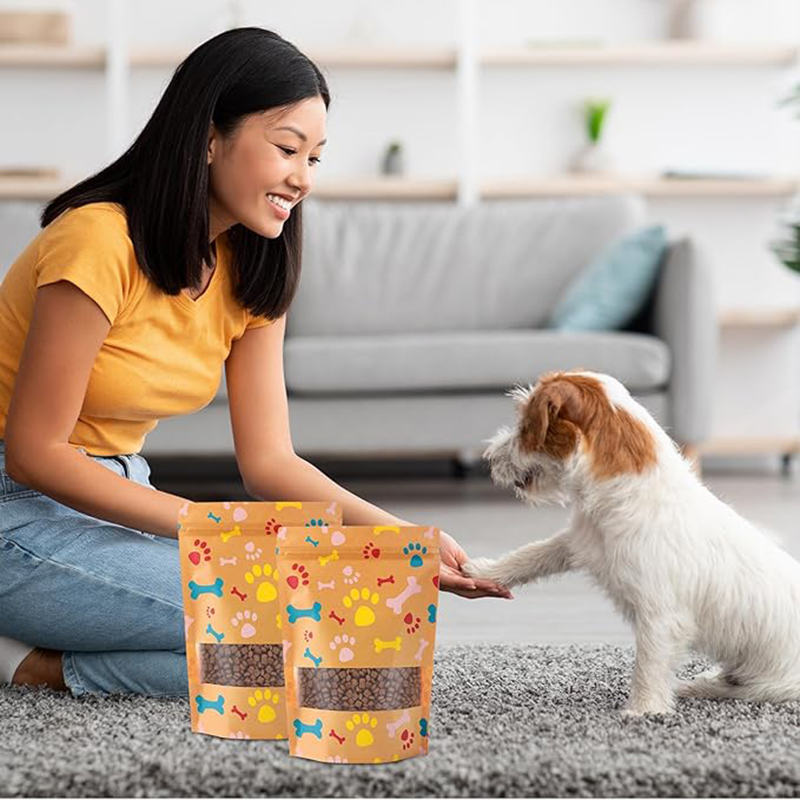
We must evaluate packaging materials across three critical dimensions. Barrier strength, physical durability, and retail shelf appeal all drive purchasing decisions. Each material offers distinct structural advantages. Each also carries inherent functional weaknesses.
Consider the increasingly popular kraft dog food pouch. It projects a premium, organic, and artisanal aesthetic. Consumers inherently trust the natural look of paper. However, we must address a major functional trade-off. Raw kraft paper offers absolutely zero moisture resistance. It acts like a sponge in humid environments. To prevent moisture ingress, manufacturers must engineer it carefully. They include an internal metalized or foil layer behind the paper. This hidden lining achieves commercial-grade moisture blocking. It successfully balances shelf appeal with strict product safety.
Standard plastics like LDPE and HDPE dominate the budget-friendly market. They remain incredibly cost-effective to produce. They also resist tearing quite well. Unfortunately, they perform poorly as barrier films. Standard plastics are highly permeable to air and moisture over long periods. They work adequately for small bags with fast product turnover. They fail miserably during extended warehouse storage.
Mylar and heavy foil-lined bags represent the industry gold standard. They provide unparalleled defense mechanisms. They completely block UV light degradation. They stop oxygen transmission dead in its tracks. They repel ambient humidity flawlessly. They excel in harsh, humid climates. They remain the top choice for long-term emergency storage scenarios.
We must operate under a transparent assumption here. No single packaging material solves every logistical problem. Highly recyclable single-source plastics often sacrifice optimal barrier strength. This requires a strategic compromise based on your expected product turnover rate.
Consumers heavily debate optimal storage methods online. You often see aggressive discussions on forums like Reddit. Many well-meaning pet owners pour kibble directly into plastic storage tubs. They believe this practice improves overall freshness. They think getting rid of the bag looks cleaner. In reality, this specific practice introduces severe contamination risks.
The micro-abrasion threat quietly ruins fresh pet food. Hard plastic storage bins develop microscopic scratches over time. Every time you scoop food out, you create tiny gouges. Unwashed bins trap residual rancid fats in these microscopic grooves. Harmful bacteria breed rapidly in these unseen oil deposits. When you pour fresh kibble into an old bin, disaster strikes. Contamination happens almost instantly. The rancid oils from previous batches coat the new food. Your pet eats spoiled kibble despite your best intentions.
We strongly advocate for the proven Bag-in-Bin method. This practical framework aligns directly with top veterinary recommendations. You should place the original large pet food storage bag directly into a secondary container. You drop the entire sealed bag into the airtight tub. This strategy leverages the manufacturer's advanced barrier technology. The engineered bag shields the food from oxygen and moisture. Meanwhile, the hard outer bin protects against curious pests. It stops rodents and pantry moths. This dual-layer approach keeps your pet safe and the food fresh.
Choosing the right packaging depends heavily on your physical storage environment. Different climates demand different structural solutions. Climate-controlled indoor pantries forgive minor packaging flaws. They maintain a stable baseline humidity. Fluctuating temperatures in garages or outdoors demand extreme barrier performance. Heat spikes cause hidden internal condensation if the barrier fails.
Sizing considerations heavily dictate your material choices. When you scale up to 30lb+ bulk bags, physics changes drastically. Puncture resistance becomes a critical safety factor. Heavy bags drop frequently during warehouse transit. Gusset strength prevents disastrous bottom blowouts on the retail floor. You need reinforced side seals to handle the sheer weight of bulk kibble.
Storage Environment vs. Packaging Requirement
| Storage Environment | Temperature Volatility | Recommended Barrier Material | Key Feature Focus |
|---|---|---|---|
| Indoor Pantry | Low (Stable) | Standard Multi-Layer (PET/PE) | Press-to-Close Zipper |
| Garage / Basement | Medium to High | Foil-Lined / VMPET | High Puncture Resistance |
| Outdoors / Shed | Extreme | Thick Mylar with EVOH | Weatherproof Velcro Seals |
To ensure optimal freshness, follow this strict buyer checklist. These next-step actions simplify your purchasing decision immensely:
Additionally, keep these industry best practices in mind:
Protecting kibble from moisture requires a strict dual approach. You need highly engineered barrier materials combined with vigilant post-purchase storage habits. Neither element succeeds without the other. Manufacturers design these bags to fight environmental threats. Consumers must respect that engineering by storing them properly. We advise prioritizing multi-layer bags featuring proven low moisture transmission rates. Robust resealable mechanisms matter far more than purely aesthetic choices. A beautiful package failing to block humidity ultimately wastes your money. It also endangers your pet. Take actionable steps today. Evaluate your current packaging solutions critically. Inspect your plastic storage bins for micro-abrasions and old oils. Transition to the bag-in-bin method immediately. Browse verified high-barrier storage options to guarantee maximum product safety and freshness for your pets.
A: We strongly advise against this practice. Extreme temperature fluctuations plague garages and outdoor sheds. These rapid temperature swings cause internal condensation to form. Even premium high-barrier bags cannot prevent moisture that generates inside the bag from heat cycling. This trapped condensation leads directly to rapid mold growth and bacterial contamination.
A: Raw kraft paper offers zero natural moisture resistance. It easily absorbs ambient humidity from the air. The internal silver lining consists of aluminum foil or metalized polyester (VMPET). This specific inner layer provides the actual moisture and oxygen barrier. It protects the kibble while maintaining the rustic paper exterior.
A: Yes, freeze-dried foods are incredibly hygroscopic. They actively absorb moisture from their surrounding environment. They require an absolute zero-moisture storage environment to survive. Manufacturers typically use ultra-thick Mylar bags paired with oxygen and moisture absorbers. Any humidity exposure causes instant textural degradation and rapid nutritional spoilage.


