


Author: Site Editor Publish Time: 19-08-2026 Origin: Site


Transit damage carries hidden financial burdens that extend far beyond direct replacement costs. When a product arrives broken, companies absorb the administrative drain of freight claims processing and the heavy overhead of reverse logistics. Compromised goods erode brand equity and drive permanent customer churn. End-users expect pristine condition upon delivery, and failing to meet this standard damages reputation. A significant gap exists between static warehouse environments and the dynamic, multi-modal realities of the supply chain. Generic, unoptimized boxes fail to account for specific transit stressors like vibration, compression, shock, and climate fluctuations. Without proper engineering, standard materials simply cannot withstand these compounding forces. Treating Transport Packaging as a strategic procurement decision rather than a consumable expense changes the operational landscape. Shifting the focus from the lowest cost per box to the lowest total cost of quality improves material handling efficiency.
Damage is Predictable and Preventable: Over 70% of transit damage stems from improper palletization, inadequate void fill, and failure to match packaging specifications to the specific logistics network (e.g., LTL vs. FTL vs. Export).
Testing Validates Investment: Utilizing standardized testing protocols (like ISTA and ASTM) removes guesswork, ensuring transport packaging meets exact fragility thresholds without unnecessary over-packaging.
The DIM Weight Trade-off: Effective logistics packaging requires balancing maximum impact protection with dimensional weight constraints to prevent escalating shipping costs and optimize storage utilization.
Tertiary Packaging is the Last Line of Defense: Proper cargo securing—through optimized stretch film tension, strapping, and edge protection—is just as critical as the primary carton.
Freight endures severe physical punishment during transit. Understanding these forces is the first step in engineering a resilient protective system. Products face four distinct categories of physical and environmental stress on the road, rails, and sea.
Shock and Impact: Sudden force application occurs during manual handling drops, forklift collisions, and aggressive braking. A forklift operator driving too fast into a pallet transfers kinetic energy directly into the product. This causes fractures or internal component failure.
Vibration: Continuous low-frequency resonance generates from truck axles, rail cars, and aircraft engines. A 53-foot trailer bouncing down a highway creates constant shaking. This movement causes material fatigue, loosens mechanical fasteners, and creates friction that abrades product surfaces.
Compression: Crushing forces develop from multi-tiered pallet stacking, clamp truck handling, and prolonged warehouse storage. Bottom-tier cartons bear the cumulative weight of the entire load above them. Clamp trucks applying too much pressure will instantly crush unreinforced corrugated boxes.
Environmental: High humidity degrades corrugated board strength rapidly, especially in ocean freight. Extreme temperature fluctuations compromise adhesive bonds and weaken stretch film integrity. A box that holds 500 pounds in a dry warehouse might only hold 250 pounds in a humid shipping container.
You cannot improve what you do not measure. Auditing current damage rates requires categorizing claims meticulously by SKU, transit lane, and specific damage type. Identifying whether a product suffers from corner crush or internal vibration damage dictates the engineering response. Tracking these metrics over a 90-day period provides a clear picture of where the highest losses occur.
Evaluate the application process on the warehouse floor. Audit how personnel apply consumables. Measure stretch film tension using a pull scale and monitor void fill volume inside outbound cartons. Differentiating between human error during application and actual material failure prevents unnecessary material upgrades. If a worker wraps a pallet with zero tension, upgrading to a thicker film will not solve the load shifting problem.
Define acceptable loss thresholds. Achieving absolute zero-damage packaging often requires excessive material investment that outweighs the cost of occasional product loss. Establish a realistic baseline that balances protection costs against acceptable risk. A 0.5% damage rate might be acceptable for low-margin consumer goods, while a 0% tolerance is required for high-value medical equipment.
Selecting internal protection starts with evaluating product fragility, commonly measured by the G-factor. Highly fragile items require low-density cushioning to decelerate impact forces slowly. Rugged items need denser materials to prevent shifting inside the box. Engineers must calculate the exact drop height the package will likely experience to specify the correct foam density.
Different materials serve distinct physical purposes. Foam-in-place offers superior shock absorption for heavy, complex geometries like engine parts or servers. Molded pulp provides excellent blocking and bracing for uniform items like glass bottles. Engineered corrugated inserts deliver high structural rigidity for heavy industrial goods. Air pillows work well for lightweight void fill but offer minimal vibration dampening for heavy items.
Material settling poses a severe risk during long hauls. Vibration causes loose-fill peanuts or poorly fitted inserts to migrate. This leaves the product exposed to the container walls. Engineered inserts eliminate this migration by locking the product firmly in the center of the carton. Custom die-cut inserts ensure the product remains suspended away from the impact zones.
Void Fill Material Comparison
Material Type | Primary Function | Best Application |
|---|---|---|
Foam-in-Place | Shock absorption, blocking | Heavy, complex geometries |
Molded Pulp | Bracing, surface protection | Uniform, fragile items |
Corrugated Inserts | Structural rigidity, locking | Heavy industrial goods |
Air Pillows | Lightweight void fill | Low-weight e-commerce items |
Corrugated boxes must match the specific load requirements of the supply chain. The Edge Crush Test (ECT) measures the board's top-to-bottom compression strength. This metric dictates stacking potential in the warehouse and trailer. Conversely, the Mullen Burst Test measures the force required to puncture the board. You need high Mullen ratings for heavy, shifting internal loads that might punch through the sidewalls during transit.
Right-sizing containers eliminates internal movement and reduces dimensional weight. Excess empty space inside a carton forces the corrugated walls to bear stacking weight without internal support. This leads to immediate collapse under pressure. Snug, right-sized boxes maximize pallet density and drastically cut freight costs. Selecting the correct flute profile—such as C-flute for general shipping or B-flute for better puncture resistance—further refines the box's performance.
Pallet stacking mechanics dictate load survival. Implementing overlapping brick patterns increases stability by tying the load together. Heavy boxes must always form the base layer to prevent crushing lighter cartons above. Column stacking offers the highest compressive strength because the corners align perfectly, but it requires secondary stabilization like stretch wrap or strapping to prevent tipping.
Pallet overhang is a severe hazard. Allowing cartons to extend beyond the wooden pallet deck reduces corrugated compression strength by up to 30%. The overhanging edges bear weight without structural support, leading to immediate creasing. Underhang, where boxes sit too far inside the pallet edge, causes load shifting and creates dangerous gaps during transit. Forklifts easily damage underhanging loads because the load shifts into the mast of the lift.
Optimizing pallet builds improves material handling equipment efficiency. Standardized, stable loads move faster through cross-docks. They integrate seamlessly into high-density warehouse racking systems without snagging or collapsing. Automated palletizers can be programmed to build perfectly square loads that maximize trailer cube utilization.
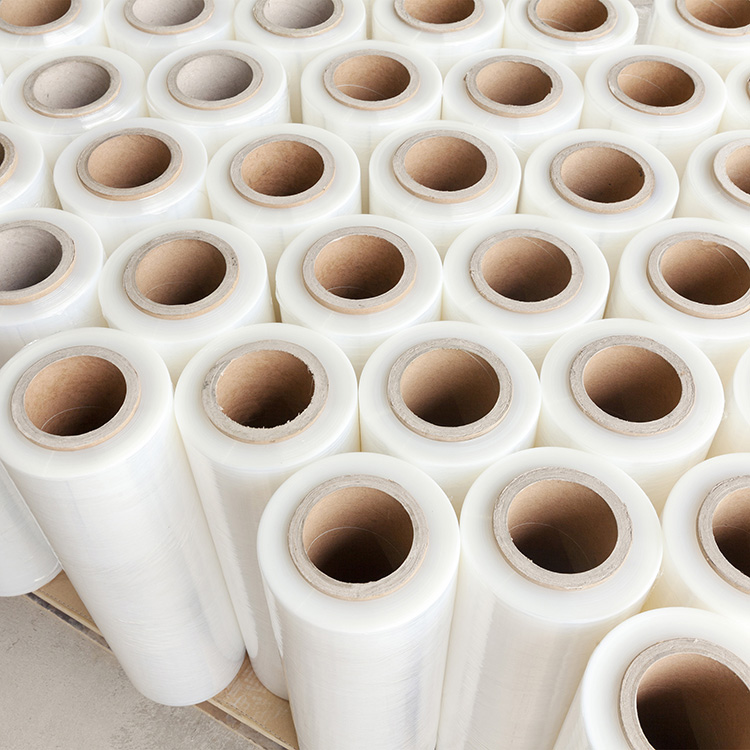
The primary carton rarely survives without robust tertiary support. Evaluating stretch film containment force is mandatory. You must monitor pre-stretch capabilities, gauge thickness, and specific wrap patterns. Proper containment force locks the load to the pallet, preventing lateral shift during sudden stops. A stretch wrapper set to 200% pre-stretch yields better load holding force than hand-wrapping, while using significantly less film. Cast film offers excellent optics and quiet unwind, while blown film provides superior puncture resistance for loads with sharp edges.
Heavy industrial loads require strapping. PET (polyester) strapping maintains tension over time and absorbs impact without snapping. This makes it ideal for settling loads like lumber or corrugated sheets. Steel strapping offers absolute maximum break strength but lacks elongation recovery. Use steel for rigid, non-compressing heavy machinery.
Rigid edge protectors distribute strap tension across the length of the carton. Without them, tight strapping slices through corrugated edges, destroying the primary box before it even leaves the dock. Edge protectors also dramatically increase the overall vertical stacking strength of the pallet, allowing for double-stacking in trailers. Integrating Logistics Packaging correctly at this stage prevents catastrophic load failures.
Different transit networks subject freight to entirely different stress profiles. Applying a universal standard across all modes guarantees failure or massive overspending. Engineers must tailor the material specifications to the exact route the product will travel.
LTL (Less-Than-Truckload): This mode requires the highest level of protection. Freight undergoes multiple cross-docking events, aggressive forklift handling, and mixed-freight stacking where heavy pallets may sit on top of lighter ones.
FTL (Full Truckload): FTL allows for optimized, uniform pallet loads. With point-to-point delivery, transit paths are predictable, and handling events are minimized, allowing for leaner material usage.
Parcel/E-commerce: Parcel networks demand high-impact resistance. Single units endure manual throws, automated sortation drops, and tumbling on conveyor belts.
Export & International Freight: Global shipping demands enhanced export readiness. Ocean freight requires moisture barriers to combat container condensation, often called "container rain." Extended transit times and rough customs handling necessitate maximum structural integrity.
Transit Mode Protection Requirements
Transit Mode | Primary Stressor | Required Packaging Specification |
|---|---|---|
LTL | Cross-docking impacts, mixed stacking | High ECT corrugated, heavy edge protection |
FTL | Vibration, load shifting | Optimized stretch film containment force |
Parcel | Drops, conveyor impacts | Internal shock absorption, right-sizing |
Export | Humidity, extended compression | Moisture barriers, maximum stacking strength |
Calculating the true financial impact of packaging requires a holistic view. You must combine material costs, labor for application, freight costs driven by dimensional weight, the historical cost of damage rates, and the estimated impact on brand reputation. Looking solely at the invoice price of a corrugated box ignores the downstream costs of failure.
Identify the tipping point where the cost of additional protective materials exceeds the cost of the mitigated damage. Adding an extra layer of heavy foam might eliminate the last 1% of transit damage. However, if that foam doubles your DIM weight and freight bill, the investment yields a negative return. Engineers must calculate the exact volume required to pass drop tests without adding unnecessary cubic inches to the outer carton.
Modern supply chains face intense pressure to shift from single-use plastics to curbside-recyclable protective materials. Engineered paper, molded pulp, and corrugated inserts now provide structural integrity comparable to EPS foam. The challenge lies in achieving this transition without increasing package volume or sacrificing shock absorption. Testing new sustainable materials against legacy plastics ensures performance remains consistent.
Navigating retailer-specific compliance mandates is mandatory for multi-channel distribution. Programs like Amazon's SIOC (Ships in Own Container) and Frustration-Free Packaging force manufacturers to engineer primary cartons that survive parcel networks without secondary over-boxing. Meeting these mandates reduces chargebacks and lowers fulfillment costs. Non-compliance results in heavy fines and delayed receiving at retail distribution centers.
Excessive void fill and oversized boxes inflate shipping costs rapidly. Carriers charge based on dimensional weight, meaning you pay for the space a box occupies, not just its physical weight. Over-packaging wastes valuable warehouse space, increases consumable spend, and creates frustrating, waste-heavy unboxing experiences for end-users.
Mitigate this risk by utilizing ISTA (International Safe Transit Association) testing. Lab testing simulates real-world drops, vibration, and compression. This data allows engineers to find the exact minimum viable specification. You strip away unnecessary materials while guaranteeing product survival. Running an ISTA 3A test for parcel shipments provides empirical data on exactly how much foam or paper is required to protect the item.
Introducing complex designs can severely slow down warehouse fulfillment rates. If a new insert requires a worker to fold it intricately for two minutes, throughput collapses. Excessive manual labor requirements negate any material savings achieved through redesign. Warehouse managers must time studies on the packing line before approving new designs.
Evaluate the automation compatibility of new materials. Implement automated carton erectors, inline void fill dispensers, and robotic pallet wrappers. Standardize worker training for consumable application to ensure that engineered designs perform as intended on the floor. This maintains high fulfillment velocity while ensuring consistent protection across all shifts.
Criteria for shortlisting suppliers must go beyond basic material supply. Look for partners with in-house testing lab capabilities and structural engineering expertise. A material-agnostic consultant will recommend the right solution—whether paper, foam, or plastic—rather than pushing a specific product line. They should audit your facility and provide data-driven recommendations.
Always pilot test a new system on a high-damage transit lane before a full network rollout. Real-world validation on your most brutal shipping routes confirms lab results. It highlights unforeseen operational friction before you commit to large-scale procurement. Monitor the pilot shipments closely and gather feedback from the receiving docks.
Initiate a packaging audit on the top three most frequently damaged SKUs to identify specific failure points.
Calculate the current baseline costs of these failures, factoring in freight claims, replacement labor, and reverse logistics.
Request a structural redesign and an ISTA transit test from prospective engineers to validate a leaner protective strategy.
Pilot test the newly engineered packaging system on a high-damage transit lane before executing a full network rollout.
A: Primary packaging is the retail-facing container holding the actual product, designed for branding and consumer appeal. Transport packaging refers to the rugged exterior materials—like corrugated master cartons, stretch film, and pallets—engineered specifically to protect the primary package and product from physical damage during supply chain movement.
A: When boxes extend beyond the edge of a wooden pallet, they lose the structural support of the deck. This overhang forces the unsupported corrugated edges to bear the stacking weight. It reduces the carton's overall compression strength by up to 30%, leading to crushed bottom layers and leaning loads.
A: ISTA testing involves standardized laboratory procedures that simulate the shocks, vibrations, and compressions of real-world shipping. It validates whether a package design will survive specific transit environments. This allows companies to prevent damage without overspending on unnecessary protective materials.
A: Calculate ROI by comparing the total cost of your current damage against the combined cost of the new engineered materials. Include replacement goods, freight claims labor, and reverse logistics in your damage costs. Factor in any changes in dimensional weight shipping fees and the labor required to apply the new materials.
A: Foam-in-place polyurethane is typically best for heavy, fragile equipment. It expands to conform perfectly to complex product geometries. This locks the item in place to prevent migration while providing excellent shock absorption and deceleration during heavy impacts or drops.
A: Carriers charge based on the volume a package occupies rather than just its actual weight. Using oversized boxes with excessive void fill dramatically increases shipping fees. Packaging choices must prioritize right-sizing and high-density cushioning to keep the external dimensions as small as possible.
A: Export freight requires maximum stacking strength for long-term container storage and robust moisture barriers. You must use high-ECT corrugated board, heavy-duty edge protectors, and desiccants or VCI bags. These prevent rust and degradation caused by extreme humidity and temperature shifts at sea.


