


Author: Site Editor Publish Time: 17-08-2026 Origin: Site


Transitioning from stock pouches with hand-applied stickers to fully printed custom coffee bags is a critical scaling milestone for coffee roasters, but it introduces significant technical complexity. Submitting incomplete or inaccurate specifications to a packaging manufacturer results in costly misprints, compromised barrier protection, delayed product launches, and non-compliance with retail standards.
To execute a flawless production run, roasters must provide a comprehensive specification brief that clearly defines structural requirements, material layers, hardware additions, and consumer-facing label data. This guide breaks down the exact information required to evaluate vendors, estimate ROI, and finalize production files.
Structural and Material Specs Dictate Shelf Life: Roasters must explicitly define barrier materials, dimensions, and hardware (like one-way degassing valves and resealable zippers) to ensure bean freshness and prevent bag rupture.
Consumer Data Drives Retail Performance: Clearly mapped origin data, roast dates, processing methods, and tasting notes are non-negotiable for specialty coffee consumers and wholesale buyers.
Compliance and Certifications Require Verification: Accurate placement of net weight, distributor information, and verified certification logos (Organic, Fair Trade) is legally required for retail distribution.
Print-Ready Files Mitigate Production Risks: Providing exact Pantone colors, vectorized dielines, and clear finish instructions (matte, gloss, spot UV) prevents costly proofing cycles and production delays.
Strategic Sourcing Impacts Total ROI: Navigating the trade-offs between domestic digital printing (low MOQs, fast turnaround) and overseas gravure printing (high plate fees, low unit cost) dictates your long-term packaging margin.
Manufacturers cannot quote or produce packaging without exact physical parameters. Vague requests lead to inaccurate dimensions and packaging that may not fit the intended volume of roasted coffee. You must define the physical architecture of the pouch before any design work begins. This ensures the final product runs smoothly through your automated weigh-fill machines and sits properly on retail shelving.
Defining the exact physical footprint of your packaging is the first step in the manufacturing process. The bag style impacts how the product sits on retail shelves and how efficiently it runs through automated filling equipment. A flat bottom bag offers a premium look with five printable surfaces, while a standard stand-up pouch (Doypack) is highly efficient for smaller volumes.
Specify the exact bag format required, such as a stand-up pouch, flat bottom, side gusset, or block bottom design.
Provide precise dimensions including width, height, and gusset depth in millimeters. Millimeters leave less room for conversion errors than inches.
Define the target fill volume or weight, accounting for the difference in volume between dense light roasts and voluminous dark roasts. A 340g dark roast requires a larger internal volume than a 340g light roast.
Bag Style | Best Application | Shelf Presence | Filling Equipment Compatibility |
|---|---|---|---|
Stand-Up Pouch (Doypack) | 250g - 340g retail bags | Good, but can tip if top-heavy | Excellent for rotary fill machines |
Flat Bottom (Box Pouch) | 340g - 1kg premium retail | Excellent, highly stable | Requires specific gripper setups |
Side Gusset | 1kg - 2.5kg wholesale | Lays flat or requires a tin tie to stand | Standard for vertical form fill seal (VFFS) |
The material layers directly dictate the shelf life of the roasted beans by blocking oxygen, moisture, and UV light. Selecting the right substrate balances freshness requirements with environmental goals. Coffee is highly sensitive to oxidation, which destroys volatile aromatic compounds within days of roasting if left unprotected.
Detail the required material structure. Traditional high-barrier multi-layer laminates like PET/ALU/PE offer the highest protection. Fully recyclable mono-materials (PE/PE) are becoming standard for eco-conscious brands.
Specify the required Oxygen Transmission Rate (OTR) and Moisture Vapor Transmission Rate (MVTR). For national grocery distribution requiring a 12-month shelf life, you need an OTR of less than 0.1 cc/m2/day.
Indicate if certified compostable materials like kraft paper laminated to PLA are required. Note that compostable films generally have higher OTRs, reducing maximum shelf life to 3-6 months.
Freshly roasted coffee releases significant amounts of carbon dioxide. Without proper hardware, bags will balloon and rupture. Hardware also dictates how consumers interact with the product after the initial opening. The placement of these elements must be mapped precisely on the dieline.
Provide exact placement coordinates for the one-way degassing valve. This is essential for a custom valve coffee bag to prevent bursting while blocking oxygen entry. The valve is typically placed 50mm to 75mm from the top edge.
Specify the closure mechanism. Pocket zippers (rip-pull zippers) offer a clean front panel, while standard press-to-close zippers are highly reliable. Tin ties are common on side gusset bags but offer poor airtight seals after opening.
Define the exact distance of the zipper from the top seal to accommodate your commercial heat-sealing equipment. Ensure your seal bars will not melt the zipper profile during the final sealing process.
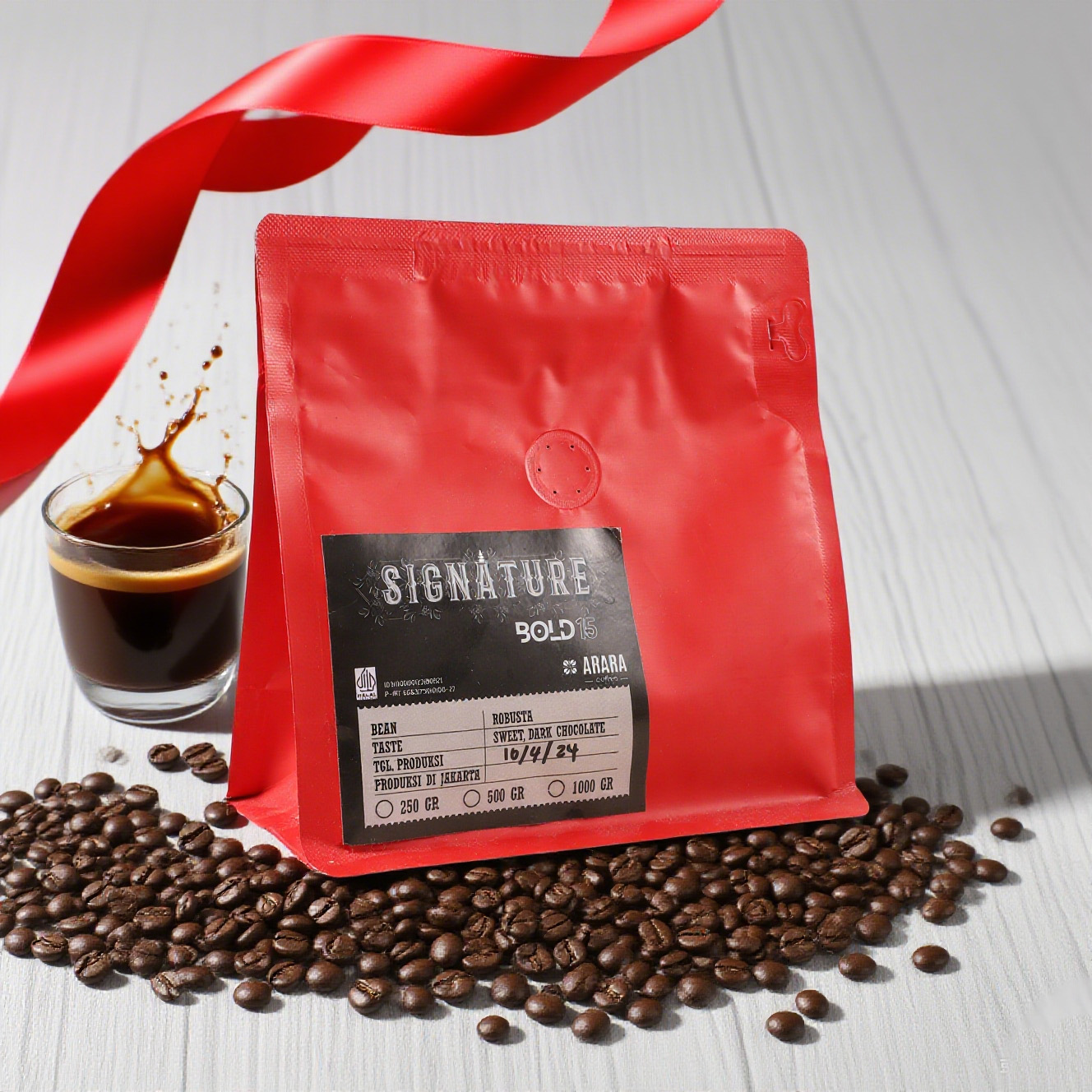
Specialty coffee consumers evaluate purchases based on transparency and brand narrative. Missing or poorly organized roast data degrades brand trust and lowers conversion rates on retail shelves. You have approximately three seconds to capture a shopper's attention and communicate the value proposition of the beans inside.
Transparency regarding origin is a baseline expectation in the specialty coffee market. Consumers want to know exactly where their coffee was grown and who produced it. This data justifies premium positioning.
List the Farm, Estate, or Cooperative name, along with the specific region and country of origin.
Include the altitude in meters above sea level (MASL) and specific coffee varietals like Bourbon, Gesha, or Typica.
State the processing method, whether Washed, Natural, Honey, or Anaerobic. Briefly explain its impact on the final cup, such as "Natural processing enhances heavy berry notes."
Flavor notes and roast dates guide the consumer's brewing expectations. Clear communication here prevents dissatisfaction caused by mismatched taste preferences. A consumer expecting a traditional chocolatey profile will be disappointed by a highly acidic, fruit-forward light roast if it is not labeled correctly.
Designate a specific space for the Roast Date. This can be printed directly via an inline thermal transfer printer, stamped manually, or written on an integrated matte finish panel.
Include a roast level indicator if applicable to the brand's target audience. While specialty roasters often avoid "dark" or "light" labels, grocery consumers rely on them.
List primary and secondary tasting notes. Avoid overly abstract descriptors. Use recognizable flavor categories like "Dark Chocolate, Toasted Almond, and Red Apple."
Clear format labeling prevents consumers from accidentally purchasing whole beans when they need pre-ground coffee, reducing return rates and customer frustration. Brewing recommendations help the consumer achieve the intended flavor profile at home.
Clearly indicate the contents as either whole bean or pre-ground on the principal display panel.
If designing a ground coffee packaging bag, specify the exact grind size and intended brew method to avoid consumer confusion. Labeling it "Medium Grind - Ideal for Drip Makers" is highly effective.
Provide suggested brew ratios outlining the ideal coffee-to-water weight. A standard recommendation is 1:15 or 1:16 for filter coffee.
Effective packaging design directs the consumer's eye to the most critical information first, using the physical structure of the bag to tell a complete brand story. Cluttered designs confuse buyers.
Front Panel: Prioritize high-impact branding, roast identity, and the main product hook. Keep text minimal.
Back Panel: Dedicate this area to the roaster's origin story, detailed brewing guides, and required regulatory panels.
Side Gussets: Maximize this space on a custom gusset coffee bag for social media handles, QR codes pointing to farm videos, or secondary brand messaging.
Failure to include legally required information can result in product recalls, rejection by wholesale distributors, or fines from regulatory bodies. Packaging must comply with the regulations of the country where the product is sold, not just where it is manufactured.
Food safety regulations mandate specific disclosures on all consumable products. These elements must be placed accurately according to local laws. In the United States, the FDA has strict guidelines for the Principal Display Panel (PDP) and the Information Panel.
Include accurate Net Weight declarations in both imperial and metric units (e.g., 12 oz / 340 g). This must be placed in the bottom 30% of the principal display panel, parallel to the base of the package.
List the company name, physical address, and contact information of the roaster, packer, or distributor on the information panel.
Provide an ingredient list. While 100% Arabica coffee does not strictly require a complex ingredient list, it is essential if producing flavored coffees or blends containing allergens or additives.
Retailers require scannable barcodes for inventory management, while certifications require verified proof before logos can be printed on commercial packaging. Misusing a certification logo can lead to severe legal action.
Supply high-resolution, compliant logos for third-party certifications like USDA Organic, Fair Trade, or Rainforest Alliance. Manufacturers will request your certificate of authority before printing these registered trademarks.
Ensure accurate placement of UPC or EAN barcodes. Barcodes require sufficient quiet zones (white space on the left and right) for reliable retail scanning. Print barcodes in pure black ink to ensure scanner contrast.
Include designated areas for batch or lot numbers to maintain strict supply chain traceability. This is critical for managing potential recalls.
Beautiful digital designs often fail in physical printing due to incorrect file formatting, resulting in muddy colors, misaligned text, or improper sealing zones. Packaging printing is highly technical and requires strict adherence to prepress guidelines.
Translating a design from a computer screen to a physical substrate requires precise color management and structural alignment. RGB colors used on screens do not translate directly to physical inks.
Specify whether the job requires CMYK process printing or specific Pantone Matching System (PMS) spot colors. PMS colors ensure brand consistency across multiple production runs and different packaging formats.
Ensure all artwork is mapped accurately onto the manufacturer's specific dieline template. Never use a generic dieline, as zipper placements and seal widths vary by factory.
Account for bleed areas, gusset creases, and seal margins. Keep critical text and logos at least 5mm away from any fold line or heat seal area to prevent them from being distorted or cut off.
Surface finishes provide a tactile experience that elevates the perceived value of the product on the shelf. The right finish also protects the printed ink from scuffing during transit.
Define surface finishes clearly. Choose between soft-touch matte, standard matte, high-gloss, or a combination. A popular premium option is a soft-touch matte finish with Spot UV gloss on the logo to create visual contrast.
Specify any metallic foil stamping, hot stamping, or embossed elements. These require custom tooling.
Include separate, clearly labeled vector layers for these specialized treatments within the master Adobe Illustrator design file. Do not flatten the artwork.
Selecting a packaging partner based solely on surface-level metrics often ignores critical implementation risks like rigid minimum order quantities, extended lead times, and inconsistent material quality. You must audit the manufacturer's production capabilities to ensure they align with your operational scale.
Different printing technologies serve different operational scales. Aligning your order volume with the correct printing method ensures production efficiency and prevents you from holding excessive dead inventory.
Printing Technology | Best Suited For | Setup Requirements | Turnaround Time |
|---|---|---|---|
Digital Printing | Micro-lots, seasonal coffees, multiple SKUs | No physical plates required | Fast (typically 2-4 weeks) |
Rotogravure Printing | Core year-round blends, high-volume retail | Requires physical printing cylinders per color | Slower (typically 6-10 weeks) |
Flexographic Printing | Mid-volume runs, simple vector graphics | Requires photopolymer plates | Moderate (typically 4-6 weeks) |
The geographic location of your manufacturing partner impacts communication, shipping logistics, and emergency inventory replenishment. Both domestic and overseas options have distinct operational advantages depending on your growth stage.
Identify domestic suppliers when rapid turnaround times, lower shipping distances, and ease of communication are top priorities. Domestic sourcing is highly beneficial when launching new products on tight deadlines.
Identify overseas suppliers for high-volume production runs. You must factor in extended lead times, customs clearance procedures, and ocean freight logistics. Always request physical samples before committing to a large overseas run to verify material thickness and zipper quality.
Accurate timeline forecasting prevents out-of-stock scenarios that disrupt wholesale accounts and direct-to-consumer subscriptions. Running out of packaging halts your entire roasting operation.
Request detailed timelines covering the prepress proofing process, physical manufacturing, and final transit. Air freight is faster but significantly more expensive than ocean freight.
Build buffer weeks into your launch schedule to account for potential customs delays, unexpected freight disruptions, or required artwork revisions after the first proof.
Establish an inventory reorder point based on the manufacturer's stated lead time plus a two-week safety buffer.
To successfully transition to fully customized packaging, take the following immediate steps:
Audit your current product lineup to determine the exact dimensions, fill weights, and barrier requirements needed for your specific roast profiles.
Compile all regulatory data, origin details, and certification proofs into a centralized specification document before engaging a prepress designer.
Request physical material samples and dieline templates from prospective manufacturers to verify structural integrity, zipper functionality, and valve placement.
Finalize your artwork files using the exact dielines provided by the manufacturer, ensuring all spot colors, cut lines, and finish layers are distinctly separated in vector format.
A: Freshly roasted coffee releases carbon dioxide over several weeks. A one-way degassing valve allows this gas to escape the packaging safely, preventing the bag from bursting. Simultaneously, it blocks outside oxygen from entering, which protects the beans from staling and oxidation.
A: Matte finishes offer a modern, premium tactile feel and reduce glare, making text easier to read under harsh retail lighting. Gloss finishes provide vibrant, high-contrast color saturation and offer slightly better scuff resistance during transit. Many roasters use a combination, applying spot UV gloss over a matte base.
A: While dimensions vary by bag style, a standard 12oz (340g) stand-up pouch typically measures around 6 inches in width by 9 inches in height, with a 3-inch bottom gusset. Always request a specific dieline from your manufacturer, as material thickness and zipper placement alter internal volume.
A: Yes, dark roasts are less dense and take up more physical volume than light roasts of the exact same weight. If you roast very dark, you must test your specific beans in physical sample bags to ensure the target weight fits below the zipper line before mass production.
A: Manufacturers require layered, vectorized files, typically in Adobe Illustrator (.ai) or high-resolution PDF formats. All text must be outlined, images embedded at 300 DPI minimum, and specific finish layers separated into clearly labeled vector layers.


