


Author: Site Editor Publish Time: 26-08-2026 Origin: Site


Launching a new product carries high stakes for any brand. Packaging often becomes the final, critical bottleneck. It frequently causes frustrating launch delays or compromises initial product integrity upon arrival. You might design a stunning pouch concept. However, misaligning your packaging specifications alongside physical production realities invites disaster. This disconnect leads to missed retail resets, damaged goods, or severely blown budgets before you even reach the shelf.
A structured procurement and prototyping plan prevents these costly delays. It ensures your final packaging aligns perfectly. You can effectively balance high-end brand expectations alongside rigorous supply chain demands. In this guide, we explore format selection, material validation, and accurate lead-time mapping. You will discover exactly how to execute a successful custom flexible packaging project from start to finish without unnecessary risks.
Modern product launches require rapid, agile supply chains. Flexible materials offer significantly lower tare weights compared to rigid alternatives like glass or heavy plastics. This weight reduction translates directly into leaner logistics. You can fit more units onto a single pallet. Furthermore, unfilled pouches require a fraction of the warehouse footprint. Empty rigid containers waste valuable storage space. Rollstock or flat pouches maximize every square inch of your facility. This space efficiency accelerates your initial rollout logistics. It allows teams to manage inventory surges effortlessly during a high-demand launch window.
Brands often struggle to balance marketing desires against operational necessities. Marketers demand high-end unboxing experiences. They want vibrant colors, matte finishes, and unique shapes for maximum shelf appeal. However, engineers require uncompromising barrier protection. A beautiful pouch fails if it allows oxygen ingress. You must bridge this gap early. Incorporating metallized layers or EVOH films provides necessary protection. Meanwhile, high-definition printing technologies deliver the visual impact marketers expect. Successful launches harmonize these competing demands. They deliver a striking visual presence while rigorously defending the internal product.
Launching unproven products carries inherent financial risk. Flexible structures help mitigate this exposure. They allow for iterative testing and phased rollouts. You avoid committing to massive inventory overhead on day one. Early stage brands can order smaller trial runs. You can test consumer reception in select regional markets. If a flavor fails, you simply pivot. You are not stuck sitting on thousands of obsolete rigid jars. This adaptable approach preserves precious capital. It empowers brands to refine their offering based on real-world market feedback before scaling up aggressively.
Many brands start their journey utilizing pre-made formats. custom printed packaging pouches serve as the ultimate go-to solution for early launches. They accommodate manual filling processes perfectly. Co-packers appreciate their inherent flexibility on the line. Stand-up and gusseted styles offer immediate retail readiness. You must carefully map closure options to consumer use-case assumptions. Consider adding press-to-close zippers for multi-serving snacks. Integrate intuitive tear notches for single-use supplements. These subtle functional additions elevate the entire user experience. They signal premium quality directly to the consumer.
As your volume grows, automation becomes mandatory. Brands shifting to automated Form-Fill-Seal (FFS) lines usually transition toward flexible packaging rollstock. This format drastically increases filling speeds. However, it introduces complex engineering variables. You must ensure strict alignment between your film specifications and the co-packer's machinery. Pay close attention to the Coefficient of Friction (COF). An incorrect slip level causes severe line jamming. You must also validate seal temperatures. Films requiring extreme heat might slow down the entire packaging line. Early communication between your film converter and the co-packer prevents these operational nightmares.
Liquids present the most demanding packaging challenges. Engineering a reliable custom liquid packaging pouch requires rigorous attention to detail. Spout fitments must bond flawlessly to the film web. High-barrier laminations prevent aggressive ingredients from degrading the pouch structure. Puncture resistance remains paramount during rough transit. You must implement mandatory compliance protocols. Demand comprehensive burst-testing (such as ASTM F2054) to guarantee leak-free performance. A single leaking pouch ruins an entire shipping case. Therefore, liquid applications tolerate absolutely zero structural compromises.
Format Selection Overview
| Format Type | Best Suited For | Key Advantages | Primary Technical Consideration |
|---|---|---|---|
| Pre-Made Pouches | Manual fill, pilot launches | Low setup barrier, flexible co-packing | Accurate zipper/closure alignment |
| Rollstock Film | High-volume automated FFS lines | Maximum throughput speed | Slip (COF) and seal temperature |
| Spouted Liquid Pouches | Beverages, purees, liquid soaps | Convenience, efficient dispensing | Burst strength and fitment seals |
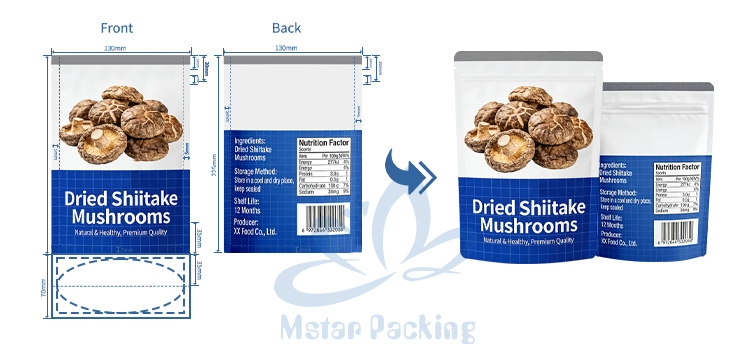
Choosing the right printing method dictates your initial cash outlay. It also impacts your minimum order quantities (MOQs). Digital printing shines during multi-SKU launches. It eliminates expensive plate tooling costs completely. You can order small batches across ten different flavor profiles. This keeps initial MOQs highly manageable. The transparent assumption here is a higher per-unit cost at scale. Conversely, conventional printing (Flexo or Rotogravure) suits established, high-volume runs. You invest heavily upfront in engraved plates or cylinders. However, you achieve superior long-term unit economics. Brands must map their volume projections against these two distinct technologies.
Digital vs. Conventional Printing Comparison
| Feature | Digital Printing | Conventional (Flexo/Roto) |
|---|---|---|
| Initial Setup Cost | Zero (No plates required) | High (Requires plate/cylinder tooling) |
| Typical MOQs | 1,000 - 5,000 units | 10,000+ units (or based on web length) |
| Multi-SKU Flexibility | Excellent (Change artwork on the fly) | Poor (Requires plate changeovers) |
| Per-Unit Cost at Scale | Higher | Significantly Lower |
Material selection defines product shelf-life. You must utilize a precise framework for choosing substrates. Standard laminations work perfectly for dry goods requiring basic protection. Metallized films become necessary when blocking UV light or extensive moisture. Today, sustainable mono-materials offer fully recyclable options. However, they sometimes sacrifice processing speeds. Tie your material choices directly to required shelf-life data. Rely on accurate Oxygen Transmission Rate (OTR) and Water Vapor Transmission Rate (WVTR) metrics. Always align these specifications alongside mandatory compliance standards. Following FDA or SQF guidelines ensures your product remains legally compliant and safe for consumption.
Brands often underestimate the pre-press phase. This critical stage frequently becomes the primary culprit for timeline bloat. Artwork formatting issues cause immediate delays. Designers may submit files lacking proper bleed margins. Color-matching presents another massive hurdle. Matching specific Pantone colors across different substrates requires multiple rounds of proofing. Proof approvals rely on busy stakeholders reviewing physical or digital samples. Every revision cycle pushes your target delivery date backward. Establish rigid pre-press guidelines immediately. Force your design team to communicate directly alongside the manufacturer's prepress department.
Never skip physical prototyping. Moving directly from a digital PDF to mass production invites catastrophic failures. Mandate a comprehensive "fill and seal" test. You should request unprinted sizing prototypes first. Use these blank pouches to verify actual product fill levels. Check the internal headspace carefully. Insufficient headspace prevents proper sealing. Verify structural integrity by performing basic drop tests. Ensure the gusset expands correctly under the product's actual weight. This hands-on validation catches engineering flaws before they become expensive manufacturing disasters.
Transparent timeline mapping prevents frantic launch-day emergencies. You must break down realistic lead times accurately. The clock starts after final art approval, not when you issue the purchase order. You must factor in multiple hidden delays.
Always build a two-week safety buffer into your master schedule. Raw material shortages or unexpected transit delays happen frequently.
Not all suppliers operate equal facilities. You must verify actual manufacturing capabilities. Ensure the supplier owns the necessary equipment in-house. Look for dedicated flexographic presses, high-speed pouch converters, and ultrasonic spout sealers. Some vendors operate merely as brokers. They outsource complex steps to third-party converters. This fragmentation increases your risk profile. It introduces communication gaps and quality control inconsistencies. Direct manufacturers provide better accountability. They control the schedule directly and solve technical challenges much faster.
Strict quality control separates reliable partners from risky vendors. Filter your potential partners by industry-standard certifications. Demand proof of their credentials. Certifications like BRC, ISO, or SQF represent non-negotiable baselines for food and pharma compliance. These frameworks ensure the facility maintains rigorous hygiene standards. They dictate proper pest control, traceability, and hazard analysis. A supplier holding current SQF certification demonstrates a proactive commitment to consumer safety. This heavily reduces your brand's liability risk upon product launch.
Assess the vendor's onboarding process immediately. Standard Operating Procedures (SOPs) reveal a company's true professionalism. A trustworthy partner will actively challenge your unrealistic specifications. They will not simply say yes to secure a quick order. They provide transparent risk assessments regarding timeline limits. If your requested film structure risks delamination, a good vendor flags the issue instantly. They offer viable alternative solutions. Look for partners demonstrating excellent communication habits. Rapid email responses and detailed technical explanations indicate a highly capable manufacturing partner.
Successful packaging launches require balancing ambitious marketing visions alongside strict engineering realities. You cannot ignore precise timeline management. Selecting appropriate pouch formats, validating barrier materials, and running physical prototypes protect your launch integrity. It prevents misaligned expectations and costly production jams.
Take proactive next steps today. We recommend initiating the NDA and prototype request phase 12 to 16 weeks prior to your target filling date. This early action provides ample runway for pre-press revisions and physical fill testing.
Do not leave your product launch to chance. Request a comprehensive material consultation or a custom prototype sample kit today. Validating your product's specific needs early guarantees a seamless transition from concept to consumer shelf.
A: MOQs depend heavily on the chosen printing technology. Digital printing accommodates lower volumes, typically ranging from 1,000 to 5,000 units per SKU. Conventional flexographic or rotogravure printing requires higher volumes. These usually start around 10,000 units or rely on master raw film minimums. Startups often utilize digital printing first before transitioning to conventional methods.
A: You should plan for a baseline of 4 to 8 weeks post-art approval. This covers standard pouch manufacturing. However, specialty structures require extended lead times. Adding custom spouts, unique die-cut shapes, or specific recyclable laminations can push delivery timelines closer to 10 or 12 weeks. Always map your timeline conservatively.
A: Yes, securing physical samples is highly recommended. You can request unprinted sizing prototypes quickly. These help verify product fit and headspace. Fully printed prototypes are also available. However, they utilize distinct digital proofing processes. Fully printed mock-ups may incur minor setup fees, but they perfectly validate final color and design intent.


