


Author: Site Editor Publish Time: 15-08-2026 Origin: Site


Global and domestic supply chains expose products to severe mechanical and environmental stresses every single day. Drops, continuous vibrations, heavy compression, and rapid temperature fluctuations constantly threaten cargo integrity from the loading dock to the final destination. Transit damage creates a compounding financial liability for any enterprise. It drives up replacement material requirements, complicates reverse logistics, escalates return rates, and destroys customer trust. Implementing proper Transport Packaging solves this core problem directly. It acts as a measurable risk mitigation tool on the warehouse floor and inside the trailer. You can balance maximum product protection with optimized freight weights, handler safety, and stowage efficiency. We will break down exactly how strategic material choices protect your physical goods, streamline your loading operations, and secure your bottom line against unpredictable transit hazards.
Transport packaging serves as the critical tertiary layer designed specifically for handling, stowage, and multi-modal transit rather than retail display.
Selecting the correct industrial packaging requires balancing protection levels against dimensional weight (DIM) pricing and container size optimization to avoid inflated shipping costs.
Standardized pre-shipment testing (e.g., ISTA protocols) is essential to validate packaging efficacy and prevent both under-packaging (damage) and over-packaging (waste).
Regulatory compliance, particularly regarding international wood treatment (ISPM 15), hazardous materials, and transport safety, dictates material selection and structural design.
Transport packaging functions as the outermost physical barrier protecting goods as they move through complex supply chain networks. Industry professionals often refer to it as tertiary packaging. Its primary role is to group smaller units together, absorb kinetic energy, and shield products from environmental hazards. This packaging layer must withstand the rigors of forklift handling, conveyor sorting, and long-haul transportation across rough terrain.
You must differentiate transport packaging from primary and secondary packaging to understand its unique requirements. Primary packaging faces the consumer directly, like a glass bottle holding a beverage. Secondary packaging groups these primary items, such as a printed cardboard tray holding twelve bottles. Transport packaging wraps around these secondary units. It prioritizes structural integrity, handling compatibility, and stowage efficiency over visual aesthetics. A stretch-wrapped pallet of corrugated boxes perfectly illustrates this tertiary layer. The goal is not to look good on a shelf, but to survive a fifty-inch drop from a forklift mast or a sudden stop in a railcar.
Industrial Packaging overlaps significantly with transport packaging but often scales up in durability and size. This category handles heavy machinery, bulk chemicals, aerospace components, and sensitive medical equipment in commercial contexts. When industrial packaging fails, the financial risk is catastrophic. A damaged retail box might result in a minor write-off, but a compromised industrial crate holding a precision turbine causes massive capital loss and project delays. Industrial solutions demand engineered wood, custom steel bracing, and specialized barrier films to ensure absolute protection during transit.
Products face relentless physical forces from the moment they leave the loading dock. Impact damage occurs during manual handling drops, forklift collisions, and sudden braking. Vibration damage presents a more insidious threat. Road surfaces, rail joints, and marine engines generate continuous resonance. If this vibration matches the natural frequency of the product, it causes internal components to fatigue and shatter. Compression damage happens in warehouses and trailer beds. Boxes stacked too high succumb to the weight above them, causing the bottom tiers to crush and collapse under the static load.
Environmental threats require equally robust defensive strategies. Moisture and humidity degrade corrugated board, reducing its stacking strength by over fifty percent in highly humid environments. Extreme temperatures melt adhesives, warp plastics, and spoil perishables. Air freight introduces atmospheric pressure changes. As cargo planes climb, pressure drops can cause sealed bags and liquid containers to expand and burst. Proper packaging acts as a shield against these invisible but destructive elements, utilizing moisture barriers and pressure-release valves where necessary.
Packaging design directly impacts the physical safety of human handlers, warehouse staff, and truck drivers. A poorly secured load becomes a deadly hazard during transit. If heavy pallets shift inside a trailer during a sharp turn, they can alter the center of gravity enough to cause the entire truck to roll over. Unstable packaging also threatens forklift operators. A shifting load can cause the forklift to tip forward or sideways during a high lift.
Structural integrity prevents localized warehouse injuries. When a corrugated box fails under pressure, the resulting spill creates slip hazards and requires manual cleanup of potentially dangerous materials. Proper load unitization keeps heavy items locked in place. Ergonomic considerations, such as adding hand holes to heavy cartons or limiting pallet heights to prevent over-reaching, reduce repetitive strain injuries for manual laborers working on the dock.
Transport packaging serves as your frontline defense against unauthorized access and opportunistic theft. Supply chains present numerous blind spots where cargo sits unattended in drop yards or cross-dock facilities. Thieves target high-value electronics, pharmaceuticals, and luxury goods when they are most vulnerable.
Effective security packaging utilizes specific deterrents to harden the target:
Opaque black or white stretch film conceals the identity of the products on a pallet, removing the temptation for opportunistic theft.
Tamper-evident security tape leaves a permanent visible message (like "VOID") on the carton if removed, alerting receivers to inspect the contents immediately.
Heavy-duty steel or polyester strapping makes it difficult to open cartons quickly without specialized cutting tools.
Unitization binds multiple small boxes into one massive, immovable block that cannot be easily carried away by hand.
Serialized plastic or metal bolt seals on shipping container doors track unauthorized entry and establish a chain of custody.
Inadequate packaging drains capital through multiple hidden channels. Direct product loss represents only a fraction of the true cost. When a product breaks, you must manufacture or source a replacement, doubling your material and labor inputs. Reverse logistics compound the issue. You pay freight to ship the damaged item back, labor to inspect it, and disposal fees to scrap it.
Administrative overhead spikes when handling freight claims. Your team spends hours gathering photographic evidence, filing paperwork, and negotiating with carriers who often deny claims based on insufficient packaging. Elevated return rates damage your brand reputation. Customers who receive broken goods lose trust and take their business elsewhere. Strategic packaging prevents these cascading financial losses by ensuring products arrive intact the first time, keeping dock operations fluid and customers satisfied.
The foundation of any transport load begins with the base structure. Pallets and skids elevate goods off the floor, allowing forklift tines and pallet jacks to slide underneath for rapid movement. You have several options depending on the application:
Wooden Pallets: The industry standard, offering high strength, repairability, and excellent friction to keep loads from sliding.
Plastic Pallets: Manufactured from high-density polyethylene (HDPE), these offer superior hygiene for food and pharmaceutical shipments and do not harbor pests.
Corrugated Pallets: A lightweight alternative for air freight, reducing overall payload weight while handling surprisingly heavy static loads.
Metal Skids: Used exclusively for extreme heavy-duty industrial applications, such as moving engine blocks or raw steel coils.
Crates and bulk containers handle items that exceed standard box capacities. Wooden crates provide rigid, heavy-duty enclosures for industrial machinery, protecting irregular shapes from side impacts. Intermediate Bulk Containers (IBCs) transport thousands of liters of liquid chemicals or food ingredients safely, featuring a plastic bladder surrounded by a steel cage. Heavy-duty corrugated gaylords, often reinforced with multiple layers of fluting (like triple-wall board), hold loose bulk items like plastic resins, metal parts, or agricultural products.
Dunnage fills the empty space inside a container and absorbs kinetic energy. Engineered foam provides precise shock absorption. Polyurethane foam offers soft cushioning for lightweight, fragile items and can be dispensed as a foam-in-place liquid that expands to map the exact contours of the product. Polyethylene foam provides dense, resilient protection for heavier goods and recovers its shape after multiple impacts. Molded pulp offers a sustainable, rigid alternative for electronics and consumer goods.
Void fill and blocking materials stop products from colliding with each other inside the master carton. Air pillows provide lightweight void fill, keeping shipping weights low while preventing migration. Kraft paper crumples to create dense blocking structures that resist compression. Rigid bracing systems, utilizing wood or heavy corrugated beams, lock heavy industrial components in place to prevent any internal movement during transit.
Protective Dunnage Material Comparison
Material Type | Primary Function | Best Application | Sustainability Profile |
|---|---|---|---|
Polyurethane Foam | Lightweight shock absorption | Fragile electronics, glass | Low recyclability, high landfill impact |
Polyethylene Foam | Heavy-duty impact resistance | Industrial parts, heavy equipment | Moderate recyclability in specialized facilities |
Molded Pulp | Rigid blocking and bracing | Consumer goods, small appliances | Highly recyclable, biodegradable |
Air Pillows | Void fill to prevent migration | E-commerce fulfillment, light items | Requires film recycling streams |
Kraft Paper | Dense void fill and cushioning | Automotive parts, mixed hardware | Highly recyclable, curbside friendly |
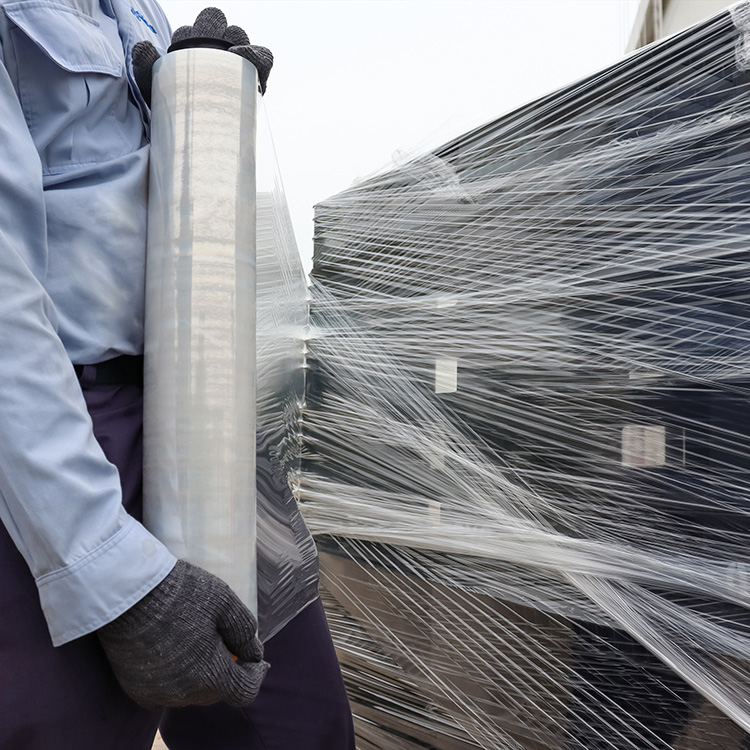
Unitization transforms hundreds of individual boxes into a single, manageable unit. Stretch wrap is the most common material for this task. It stretches around the pallet load, utilizing elastic recovery to squeeze the boxes tightly together. Cast stretch film unwinds quietly and offers high clarity for scanning barcodes, while blown stretch film provides superior puncture resistance for loads with sharp edges. Shrink film requires a heat gun or tunnel to contract tightly over a load, providing excellent weather resistance and a highly stable structure for outdoor storage.
Banding and strapping secure heavy, dense loads to pallets. Steel strapping offers the highest tensile strength, making it ideal for securing steel coils, heavy timber, or concrete blocks. Polyester (PET) strapping provides a safer, rust-proof alternative to steel, retaining high tension over long periods and absorbing impacts without snapping. Polypropylene strapping works well for lighter loads, bundling newspapers, and automated carton sealing operations.
Transit Mode Risk Analysis
Transportation Mode | Primary Dynamic Force | Major Environmental Threat | Optimal Packaging Focus |
|---|---|---|---|
Road / Highway | Continuous engine and road vibration | Temperature fluctuations in dry vans | Vibration dampening and stretch film stability |
Rail Freight | Longitudinal impact during railcar shunting | Extended transit times in unclimate-controlled cars | Heavy-duty blocking, bracing, and void fill |
Sea Freight | Compressive stress from high stacking | High humidity and container rain (condensation) | High edge-crush test (ECT) boxes and desiccants |
Air Freight | Atmospheric pressure changes | Extreme cold at high altitudes | Lightweight materials and pressure-resistant seals |
Each mode of transportation subjects cargo to distinct physical stresses. Road and rail transport generate severe vibration profiles that can loosen screws and abrade product surfaces. Rail freight also introduces violent longitudinal impacts during railcar shunting, requiring robust internal blocking to prevent the load from telescoping forward. Sea freight demands exceptional compressive strength. Containers experience pitching and rolling on the ocean, and boxes inside may be stacked high for weeks. Moisture barriers, such as Volatile Corrosion Inhibitor (VCI) films and desiccants, are mandatory to prevent rust on metal components.
Air freight prioritizes weight reduction. Every extra ounce increases the freight bill significantly. Packaging must be lightweight yet capable of surviving rapid pressure drops. Multi-modal transfers present the highest risk. As goods move from a truck to a warehouse, then to a shipping container, they endure repeated cross-docking. Forklift transfers, crane lifts, and rough manual handling require packaging that can survive multiple drops and impacts without losing structural integrity.
Modern supply chains rely heavily on automated material handling equipment. Packaging must be compatible with high-speed conveyors, automated storage and retrieval systems (AS/RS), and robotic palletizers. A box with loose strapping, excessive tape overhang, or a trailing stretch wrap tail will jam a conveyor belt photo-eye, halting warehouse operations and requiring manual intervention.
Footprint efficiency dictates how well your packaging utilizes available space. You must design packaging that cubes out standard shipping containers or truck trailers perfectly. If a pallet design leaves six inches of dead space across a 53-foot trailer, you pay to ship empty air. Maximizing space utilization reduces the per-unit freight cost, allows you to fit more product on every truck, and lowers your overall carbon footprint by reducing the number of trips required.
International shipping requires strict adherence to phytosanitary standards. The ISPM 15 regulation mandates that all solid wood packaging materials must be heat-treated to a core temperature of 56 degrees Celsius for at least 30 minutes, or fumigated with methyl bromide. This prevents the global spread of wood-boring insects. Compliant pallets and crates bear a specific wheat stamp. Customs officials will quarantine, reject, or destroy shipments lacking this certification at the border.
Hazardous materials and dangerous goods require UN-certified packaging. Transporting chemicals, flammable liquids, or lithium batteries demands rigorous compliance. The packaging must pass specific drop, leakproof, and hydrostatic pressure tests to prove it can contain the hazard during a catastrophic event. Failure to use certified packaging for dangerous goods results in severe legal penalties, carrier embargoes, and extreme safety hazards for transport workers.
Carriers use dimensional weight (DIM weight) pricing to charge for the space a package occupies, not just its physical weight. Adding excessive protective foam increases the external dimensions of the box. This drastically inflates your shipping costs. A box that weighs ten pounds but takes up the space of a thirty-pound box will be billed at the thirty-pound rate, destroying your profit margins on that shipment.
You must practice right-sizing. Right-sizing involves engineering the packaging to fit the product exactly. By utilizing high-performance, low-profile cushioning, you can shrink the external dimensions. Shaving just one inch off the length, width, and height of a master carton yields massive freight savings over the course of a year, especially in high-volume parcel shipping environments.
Procurement teams constantly weigh the benefits of highly protective single-use plastics against sustainable alternatives. Expanded Polystyrene (EPS) foam offers incredible shock absorption at a low material expense, but it is rarely recycled and faces increasing legislative bans across various municipalities. Corrugated board, molded pulp, and innovative mushroom packaging offer excellent recyclability but may require thicker profiles to achieve the same protection, which can impact DIM weight.
Closed-loop supply chains benefit from returnable and reusable packaging. Heavy-duty plastic totes, steel racks, and collapsible bulk containers require a high initial investment. However, they eliminate the recurring expense of single-use corrugated boxes and wooden pallets. You must calculate the return on investment by analyzing transit loops, return freight costs for empty containers, and the expected lifespan of the reusable asset.
Finding the optimal risk-to-cost ratio defines successful packaging procurement. Over-packaging wastes capital. You spend too much on raw materials, increase your DIM weight penalties, and frustrate end-users with excessive waste that fills their dumpsters. The product survives, but the profit margin shrinks unnecessarily.
Under-packaging presents a far worse scenario. Saving a few cents on a thinner corrugated box might result in a ten percent increase in transit damage. You waste capital on replacing damaged goods, processing returns, and losing customers. The goal is to engineer packaging that provides just enough protection to achieve a zero-damage target without adding unnecessary bulk or redundant layers.
Deploying untested packaging at scale invites disaster. If you launch a new box design without validation, you risk unpredictable damage rates and safety hazards across your distribution network. You will only discover the structural flaws after thousands of units have already shipped and customers start complaining about broken merchandise.
Mandate rigorous laboratory testing prior to any rollout. Utilize the International Safe Transit Association (ISTA) or ASTM standards. These protocols simulate the exact hazards of the supply chain in a controlled environment. Testing labs utilize drop testers, rotary motion vibration tables, incline impact sleds, and hydraulic compression presses. Passing an ISTA 3A or 3E test guarantees your packaging can survive the parcel delivery or palletized freight environment.
Relying on a single supplier for custom packaging creates a severe operational bottleneck. If that supplier faces a resin shortage, a machine breakdown, or a labor strike, your entire shipping operation halts. You cannot ship products without boxes, stretch wrap, and pallets, meaning your revenue stream stops completely.
Mitigate this risk by standardizing your packaging dimensions wherever possible. Standard sizes allow you to source materials from multiple vendors quickly without retooling. For custom-engineered components, always qualify secondary and tertiary suppliers. Maintain a diversified vendor base to ensure continuous material flow during regional disruptions or raw material shortages.
Transport packaging is not a static commodity; it is a dynamic engineering challenge. The materials and structures you choose directly impact your bottom line, product integrity, and supply chain safety. By treating packaging as a strategic asset rather than an afterthought, you protect your goods from the harsh realities of global transit while optimizing your freight spend and warehouse efficiency.
Take these actionable next steps to improve your packaging strategy immediately:
Audit your current damage and return rates to identify specific failure points in your supply chain.
Calculate your dimensional weight penalties to see if right-sizing your cartons can yield immediate freight savings.
Map your multi-modal transit routes to understand the exact physical and environmental stresses your cargo faces.
Evaluate your current stretch wrapping process to ensure you are achieving the correct containment force on every pallet.
Partner with a packaging engineer or a certified testing laboratory to conduct a comprehensive packaging audit and redesign.
A: Primary packaging holds the actual product and faces the consumer, like a cereal bag. Secondary packaging groups primary items for retail display, like the cardboard cereal box. Transport packaging, or tertiary packaging, groups secondary items for transit protection and stowage, such as a stretch-wrapped pallet of cereal boxes.
A: Right-sized transport packaging minimizes external dimensions, reducing dimensional weight freight penalties. Structurally sound packaging prevents transit damage, which directly eliminates the costs associated with reverse logistics, product replacement, and processing customer returns.
A: Industrial packaging relies on heavy-duty materials designed for extreme weight and rough handling. Common materials include engineered wood for crates, heavy-duty corrugated board, steel strapping, intermediate bulk containers for liquids, and dense polyethylene foam for shock absorption.
A: Packaging is tested in certified laboratories using ISTA or ASTM protocols. Engineers use specialized equipment to perform drop tests, simulate transit vibration on shaker tables, test compressive strength with hydraulic presses, and evaluate environmental resistance in climate chambers.
A: ISPM 15 is an international phytosanitary measure requiring all solid wood packaging to be heat-treated or fumigated. This process kills wood-boring pests. Compliant wood is stamped with an internationally recognized mark to allow safe cross-border transit.
A: Multi-modal transit subjects cargo to diverse hazards. A package might face sea container humidity, railcar impact shocks, and truck vibrations in a single journey. Packaging must be engineered with moisture barriers, robust cushioning, and strong unitization to survive multiple handling transfers.
A: Dunnage fills empty voids inside a container, preventing products from shifting and colliding during transit. By locking the load in place, dunnage absorbs kinetic energy, protects fragile components, and prevents sudden weight shifts that could cause truck rollovers or forklift accidents.


